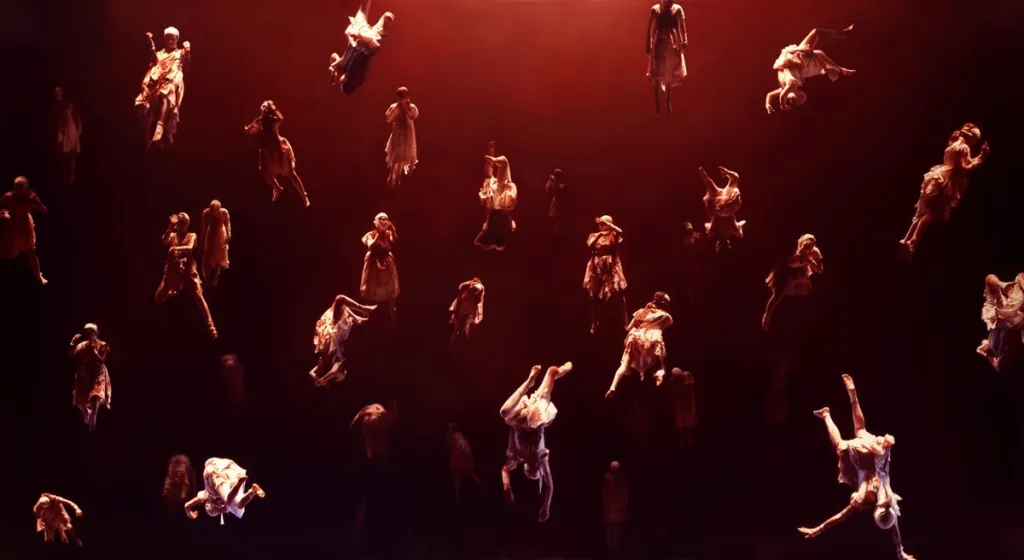
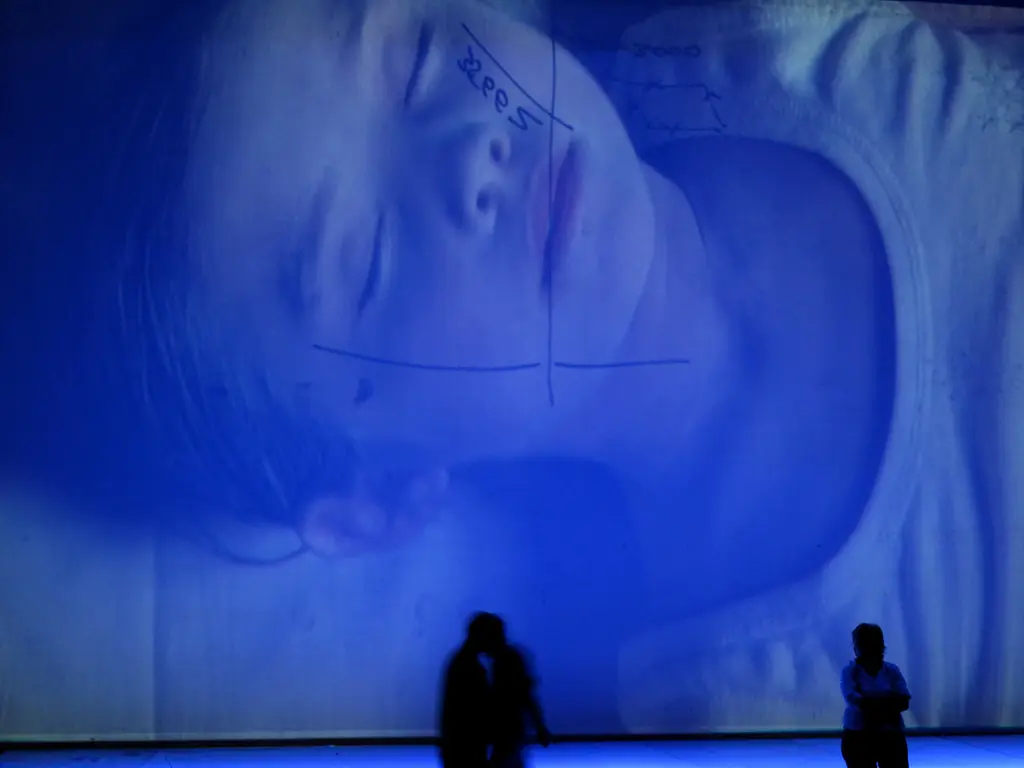
Helnwein is a renowned contemporary artist, born in Austria and now dividing his time between Ireland and the United States. In 2010 he was commissioned to serve as production designer for an original opera, “The Child Dreams,” for the 25th anniversary season of the Israeli Opera. It is based on a play of the same name by the famous Israeli playwright Hanoch Levin, who was inspired by the notorious “St. Louis” incident during which a ship filled with Jewish refugees was denied a safe port. Before his death in 1999, Levin approved it being turned into an opera.
Like Levin, Helnwein used images of endangered children as a challenge to viewers: Here is innocence betrayed and destroyed; how can we stand by and do nothing? Helnwein’s exhibition “Selektion,” originally created to commemorate Kristallnacht, was displayed in conjunction with the debut of the opera,
All of this would be of historic importance in terms of Israeli culture and the ability of Israel cultural institutions to attract world-famous artists. However, as the film makes clear, not everything went smoothly. A decision was made to use an adult performer for part of the character of the child, and Helnwein was concerned this miscasting would undercut the message of his art and Levin’s original play.
What’s interesting is that Helnwein – in arguing with the director of the production over that and other decisions – believes he is fighting not only for his own ideas but also for Levin’s. The artist had not previously been familiar with the Israeli playwright’s work and was shocked to discover someone with whom he was totally in sync. To Helnwein, Levin had been writing about the very things he had been struggling with in his own art.
As we watch the process, we also catch extended glimpses of what would become an Israeli cultural landmark. It is eerie, surrealistic and unforgettable.
“Gottfried Helnwein and the Dreaming Child” is not for everyone. The “plot” of this documentary is the argument between the director and the artist/production designer, and their competing visions for the opera. If, however, you are fascinated with how art is made, this is a film you will want to put on your must-see list.
“Gottfried Helnwein and the Dreaming Child” is available throughhttp://firstrunfeatures.com and www.amazon.com.
Daniel M. Kimmel lectures widely on a variety of film-related topics and can be reached at danielmkimmel@gmail.com.