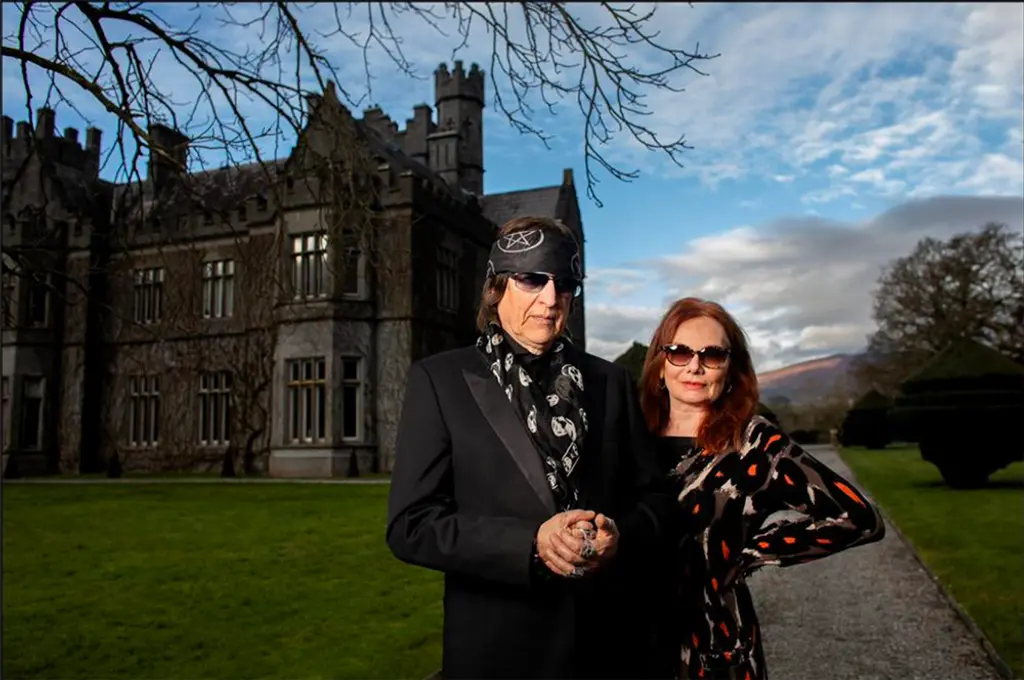
Over a humpback bridge, past a religious grotto, down a rain-swept driveway, Gurteen Castle looms in the mist. A huge Gothic door, embossed with metal and wood, creaks open and inside Gottfried Helnwein is waiting, dressed all in black, with shades and a bandana decorated with pentagrams.
With a hand weighed down with skull rings he beckons me inside, where candlelit corridors lead to grand rooms filled with his paintings: a disturbing 20ft-high take on the nativity, with Hitler as baby Jesus, surrounded by SS wise men; a sinister figure wearing a plague mask, about to ravish a dreaming body; luminously beautiful girls with blood smeared across their faces.
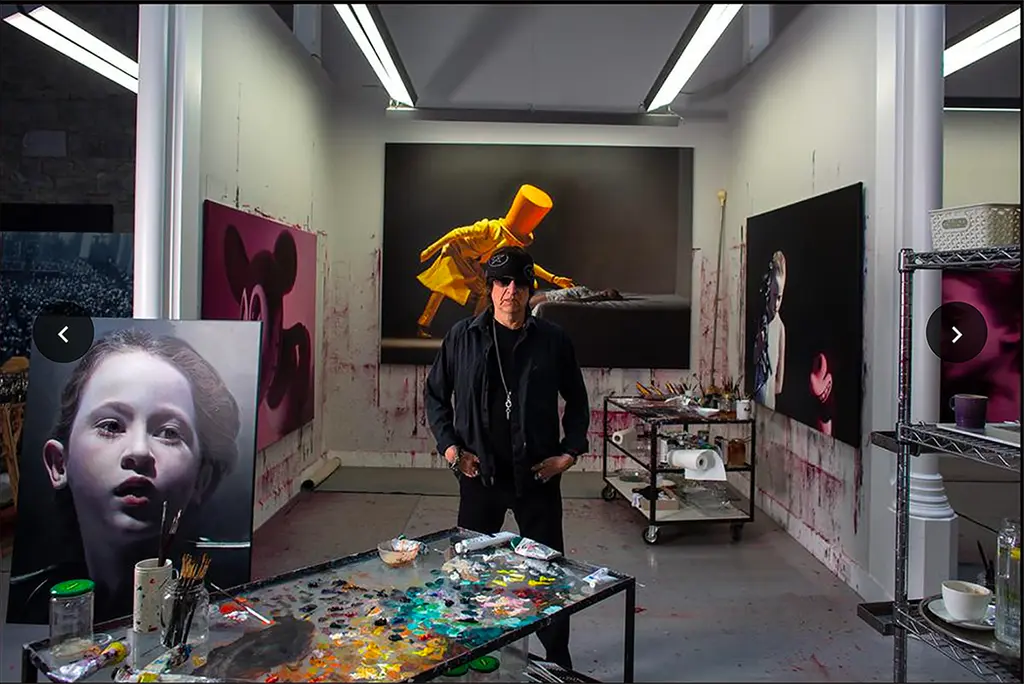
Upstairs is a room filled with files of Gottfried's photo sessions with eclectic and famous figures: Michael Jackson, Andy Warhol, Leni Riefenstahl. And out the back is the artist's studio, a rectangular room, with walls lined with priceless etchings and scattered here and there with skulls, alchemical paraphernalia ("my mystical substances") and comic books. It's all demented, dark and utterly beautiful.
After this grand tour like no other, I take a seat by a roaring log fire in the main drawing room and Gottfried tells me how he came to live in rural Tipperary.
"I had been based in LA for years but I never really fit in there, I am too European," he begins in a strong Austrian accent. "First, I wanted to go to Italy which was to me the best place in Europe but I couldn't take it, everyone's bribing everyone and it's great, it's worked for 2,500 years, but it's not for me. And so we decided to try Ireland about which I knew nothing at that point.
"At Christmas. 24 years ago. I drove with my family to the west coast. It was snowing and everyone was at home. We ended up in a little hotel with a peat fire and we all said 'this is the best country, we love it here'. Ireland is nothing special economically or militarily but its cultural influence has been wildly disproportionate and it seemed like a magical place to me. We got an apartment on Parliament Street in Dublin and I said to my wife, 'please find me a castle' and she is a great person for finding things, she goes on a mission."
Gurteen, a 40-room Elizabethan revival castle was built in 1866 for Pope Pius IX's chamberlain, Edmund de la Poer, and came from the same designer, Samuel Usher Roberts, who worked on Kylemore Abbey. It's a fitting residence for a man whose work has been wildly praised by figures as diverse as William S Burroughs and Sean Penn. Gottfried and his elegant wife, Renate, have restored it to (and, you suspect, beyond) its former glory. It's the type of place where you could imagine the eyes of the portraits following you across the room.
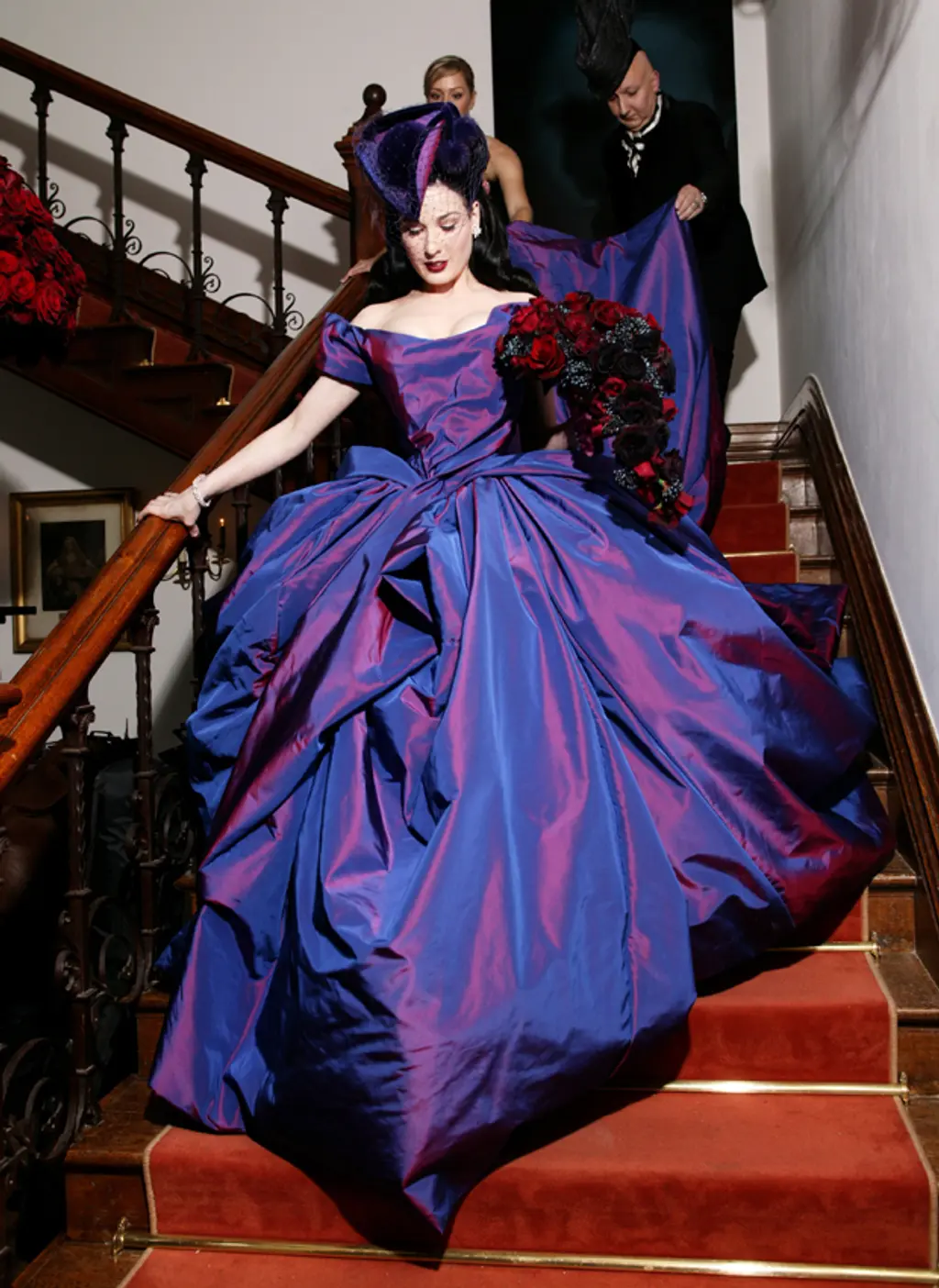
In 2005, Marilyn Manson got married to Dita Von Teese at the castle - the wedding was officiated by the surrealist filmmaker Alejandro Jodorowsky. When the floor collapsed as Von Teese was about to take a bath before the ceremony, she barely escaped with her life. Later, at dinner, Gottfried tells me, he blithely told the guests that it had merely been one of the castle's ghosts who was "jealous" of the bride, in her purple Vivienne Westwood wedding dress.
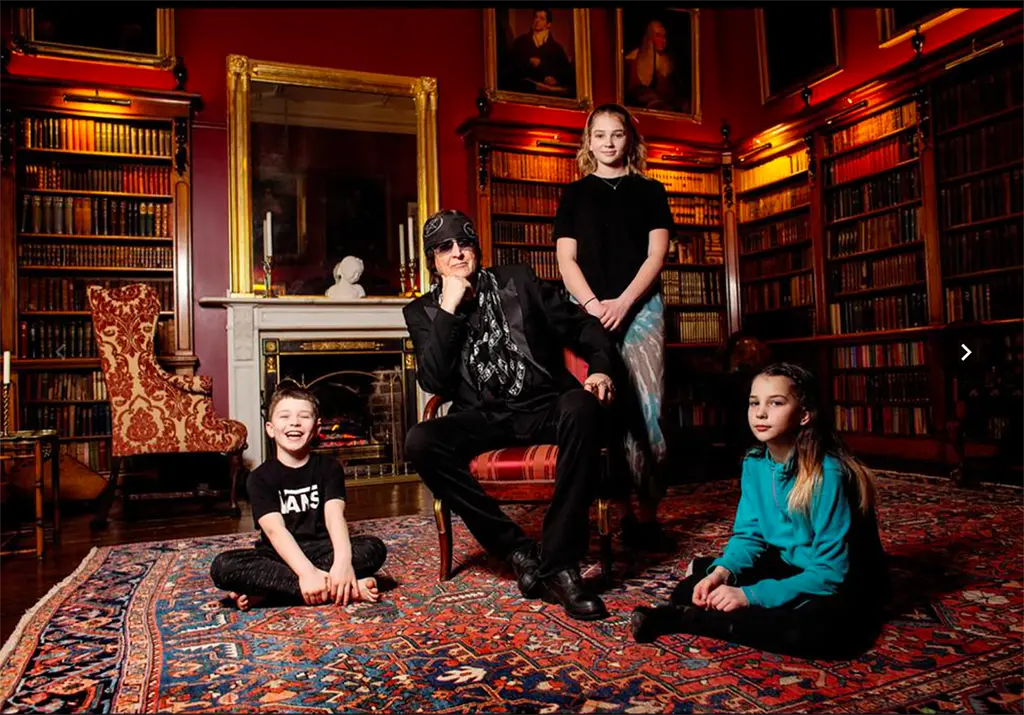
Yet, despite its Gothic arches, mischievous spirits and grand provenance, Gurteen is also what the Austrians would call gemütlich (roughly: homely) and there is a gentle warmth in the Helnwein household that belies the eccentric appearances. As Gottfried and I discuss Rembrandt, a small dog insistently taps my foot with a ball, urging me to play fetch. A grandson approaches my partner, who is waiting in an adjacent room, and hands him a piece of paper. "It's a flyer," the little boy explains. "For my performance of my song, 'Coward'. Will you be here at 7pm?"
When we explain that by then we will have left for the tedious reality outside the castle gates, the little boy silently proffers one of his comics, and he and my partner settle in to read, side-by-side.
Gottfried's own early life was light years from this idyll of childhood. He was born just after World War II in Vienna. His father worked as an official in the postal service.
"I knew something was not right. Vienna was a dark place, it felt like being born into hell because every grown-up was aggressive or grouchy or depressed," he says. "There were no children's books, no movies at the beginning, even. What I didn't understand at that point was that my parents' generation had just lost the second world war in a row and had participated in the greatest genocide in human history."
He recalls a moment from his teen years when the Holocaust perpetrator, Franz Murer, aka The Butcher of Vilnius, was put on trial in the city of Graz. "I read the horrible details of the people he had tortured and killed and it was the first time I heard about the Holocaust. Witnesses had come from Israel and had nervous breakdowns and cried. And yet there were people at the court still doing Hitler salutes. Murer was acquitted and all of the flower shops in the city of Graz were empty because everyone had brought flowers to celebrate. And this was the moment I disconnected from my parents' generation."
At 18, he moved away from home and into a rented attic. "There was a moment that year when I thought 'the only thing left is to become an artist'. Me and my friends never cared about money. We were sitting in coffee houses all day. It was wild, a lot of drinking. People seemed insane, free. It all was a reaction to the older generation."
He studied at Vienna's University of Visual Art (the very same institution that had rejected a prospective student named Adolf Hitler some 50 years previously).
From the very beginning, the theme of innocence corrupted preoccupied him. "Violence and sadism toward the defenceless, especially the abuse and torture of children, were always on my mind. I researched and saw forensic photographs of children who had been killed. I read about the abuses the Americans perpetrated in Vietnam. I was obsessed with fairness and justice, but nobody else cared about that. People of my age were just talking about f**king women."
Throughout history, most art had depicted children as serene, but Helnwein's early work featured little girls, blood spattered or with deformed faces. They represented innocence corrupted.
"The image of the wounded child has always been central to my work," he says. "Every human being is once in life a child. You can see an enormous potential, they have unlimited imagination and then they lose it through the education system, the brutality of the world."
In Austria, he used the same child model again and again, a girl called Sandra. Often she was blindfolded, an apparent symbol of repression, and Helnwein was enchanted with her dignity and independence.
"She was so tough and mean. I saw someone who is not broken, nobody messes with her. I asked her what she wanted to participate in an art project and she said 'I want a bicycle'. I photographed her on the street and inserted instruments in her mouth but I was always careful not to hurt her."
Later he did a series of self portraits, including one of himself as a "subhuman" - the Nazi designation for gypsies, Jews and gay people - and held an exhibition in Cologne in remembrance of Kristallnacht ("the night of the broken glass" - a pogrom carried out against Jews in Germany before World War II).
The nightmarish themes of his work caused outrage amongst a public still reluctant to face up to its past. One of his first exhibitions was shut down early by the gallerist, following protests by journalists, and his work was labelled "entartete Kunst" (German for degenerate art), a description that, ironically, had also been used in the Nazi era.
"I was always an outsider, but I was comfortable with that," he says. "I really believe that if art is not about protest and outcry, then it's crap and bourgeois."
Latterly, he has assumed a kind of respectability - in 2015, a retrospective at Vienna's Albertina Museum was the most successful ever by a living artist. In America, his show in San Francisco carried an age warning but the exhibition provoked a huge and cathartic outpouring of emotion in those who saw it.
He says that he is largely ignored by the bankers and investors who manipulate the art market but he certainly has his share of celebrity fans. Sean Penn says Helnwein is "as great a living artist as we have today" and his and Renate's friends have included Lou Reed and the late, great Marlene Dietrich.