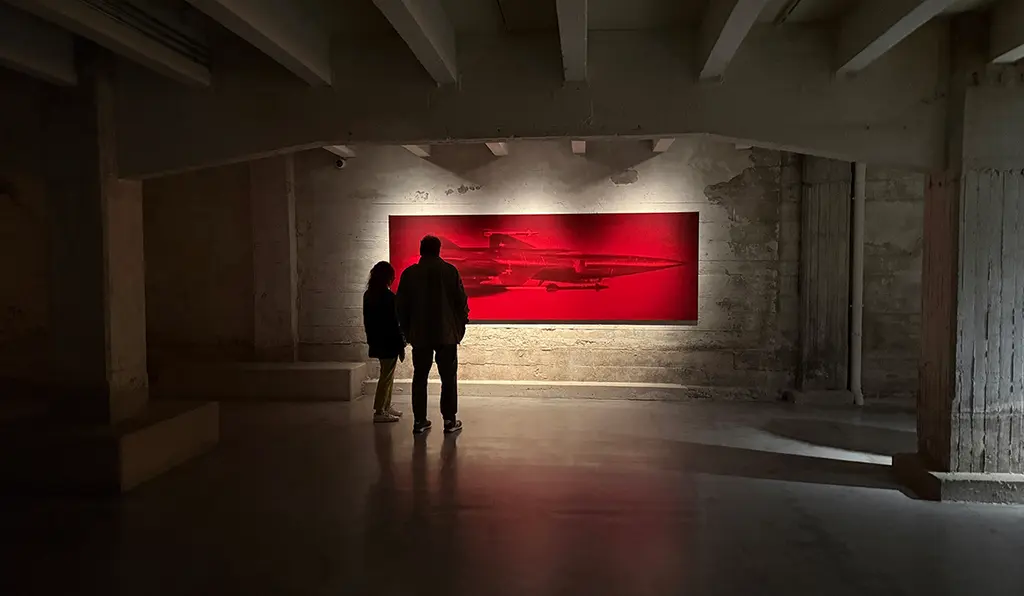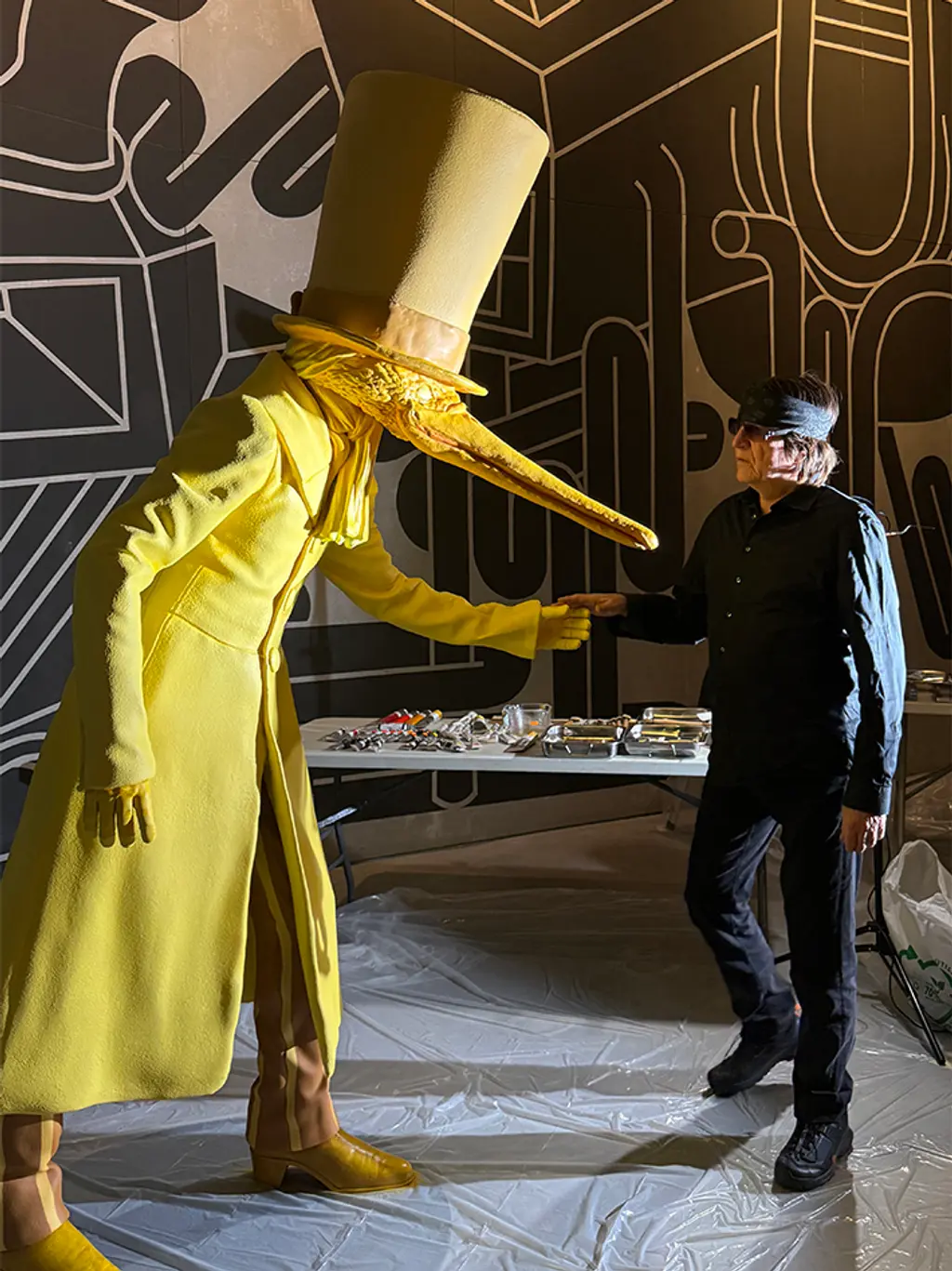
What emerges is not simply a body of work but a proposition about images themselves. Helnwein’s practice operates within a paradox. It embraces hyperrealism, a language historically aligned with fidelity and clarity, yet deploys it to produce opacity. The image appears fully given, almost excessive in its descriptive precision, and yet remains resistant to interpretation. This tension situates Helnwein within a lineage that extends from Francisco de Goya to the present, where representation no longer guarantees understanding but instead exposes the instability of perception.
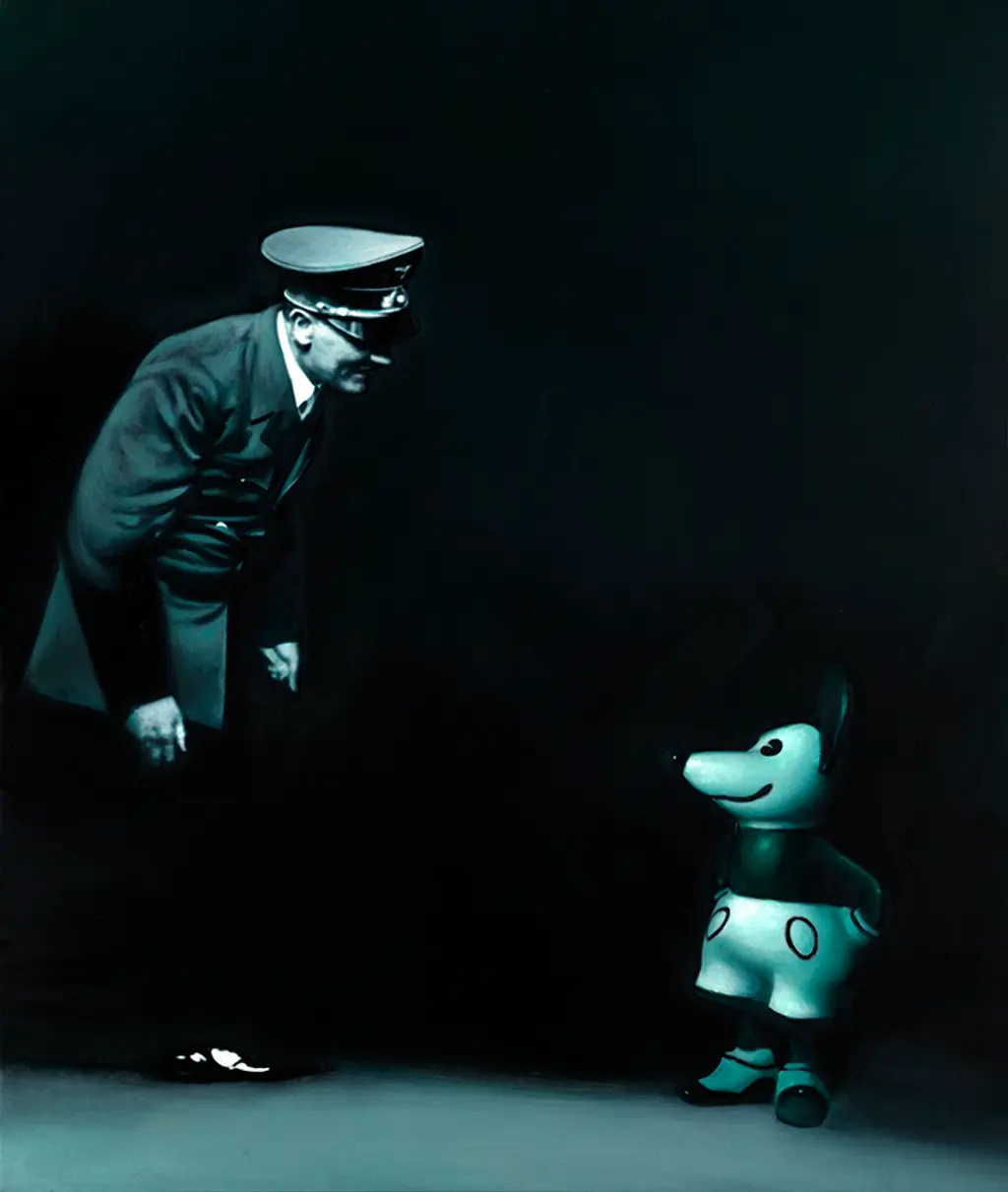
The exhibition’s title articulates a condition rather than a theme. The inverted world is not an exception but the latent structure of contemporary visuality. In this sense, Helnwein’s work does not distort reality. It reveals its underlying grammar. The appropriation of figures from popular culture becomes central to this operation. Icons such as Mickey Mouse or Donald Duck do not function as ironic gestures or postmodern pastiche. They appear as symptoms. Their displacement into contexts marked by authoritarian imagery or latent violence exposes the degree to which innocence is already compromised within the circuits of mass representation.
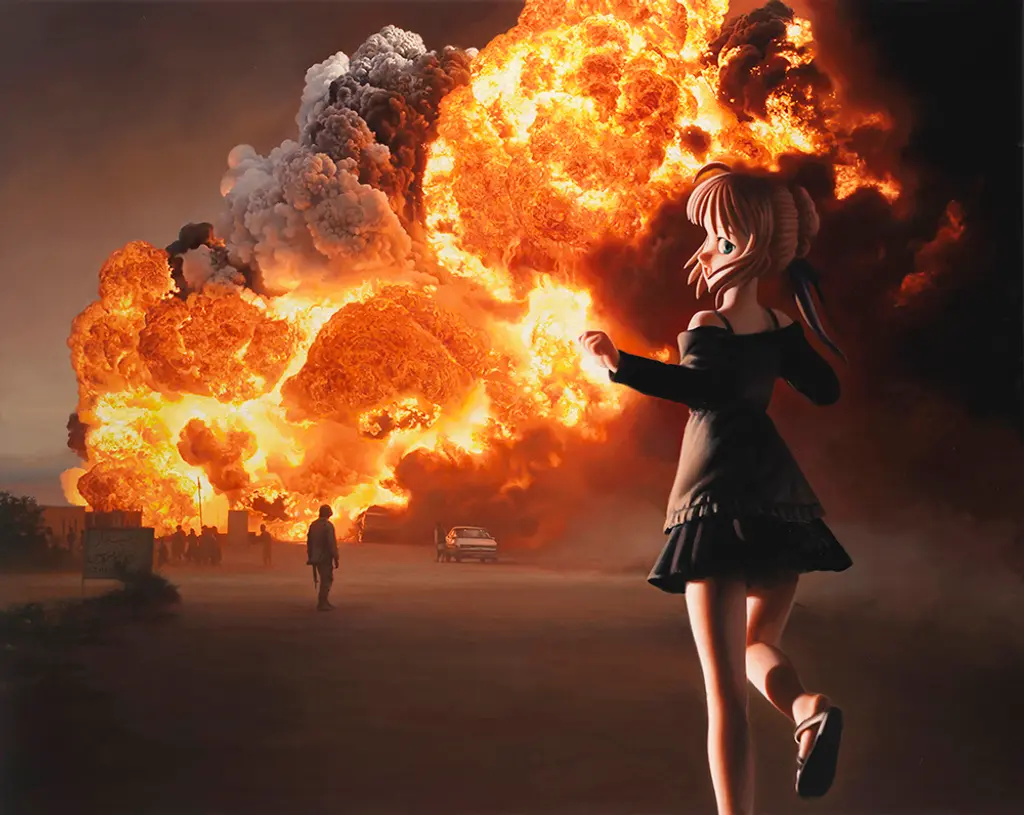
Such a strategy is the collapse of the boundary between the image as representation and the image as agent. Helnwein’s paintings do not depict violence in any straightforward sense. They enact it at the level of perception. The viewer is not confronted with an event but with a structure in which violence is normalized, aestheticized, and rendered almost invisible through repetition.
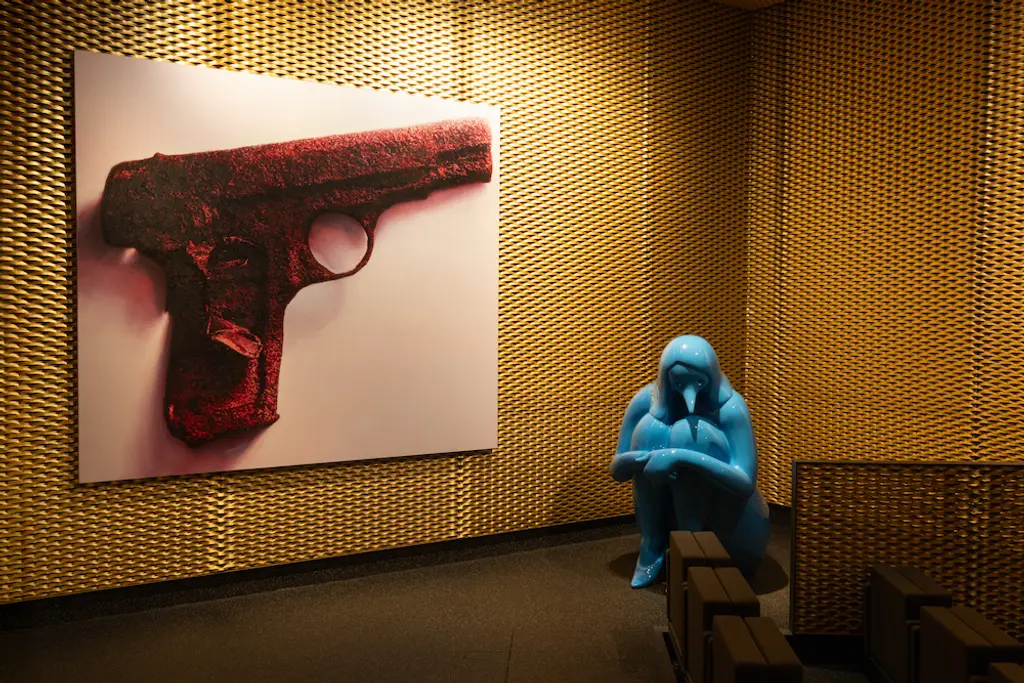
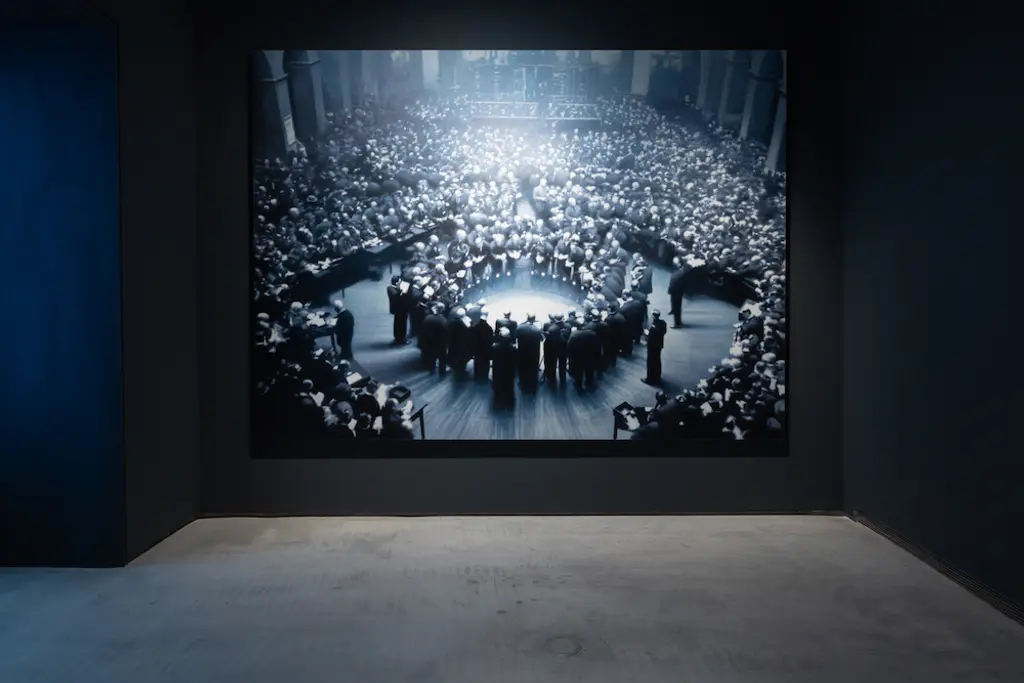
The curatorial framework intensifies this reading. By placing Helnwein in dialogue with artists such as Ai Weiwei and Keiichi Tanaami, the exhibition constructs a network of correspondences that extends beyond individual authorship. The presence of multiple media, from sculpture to AI-generated film, destabilizes any medium-specific reading. Instead, the exhibition proposes a shared visual condition in which different practices converge around questions of power, memory, and the politics of representation. This dialogical structure is not merely additive, it produces friction. The works do not resolve into a coherent narrative but remain in a state of productive dissonance. Raymond Pettibon introduces a graphic immediacy that borders on the caustic, while El Roto sharpens the critical dimension through his economy of line and text. These interventions prevent Helnwein’s work from being absorbed into a singular interpretive frame. Instead, they expose its limits and extend its implications.
Central to the exhibition is the figure of the child, a motif that recurs throughout Helnwein’s oeuvre. Yet this is not childhood as origin or as a site of lost innocence. It appears as a contested territory. The children depicted are neither subjects nor symbols. They are thresholds. Their presence marks the point at which the violence of social and ideological structures becomes visible. The refusal of sentimentality is crucial here. Any attempt to aestheticize or redeem these figures would neutralize the critical force of the work.
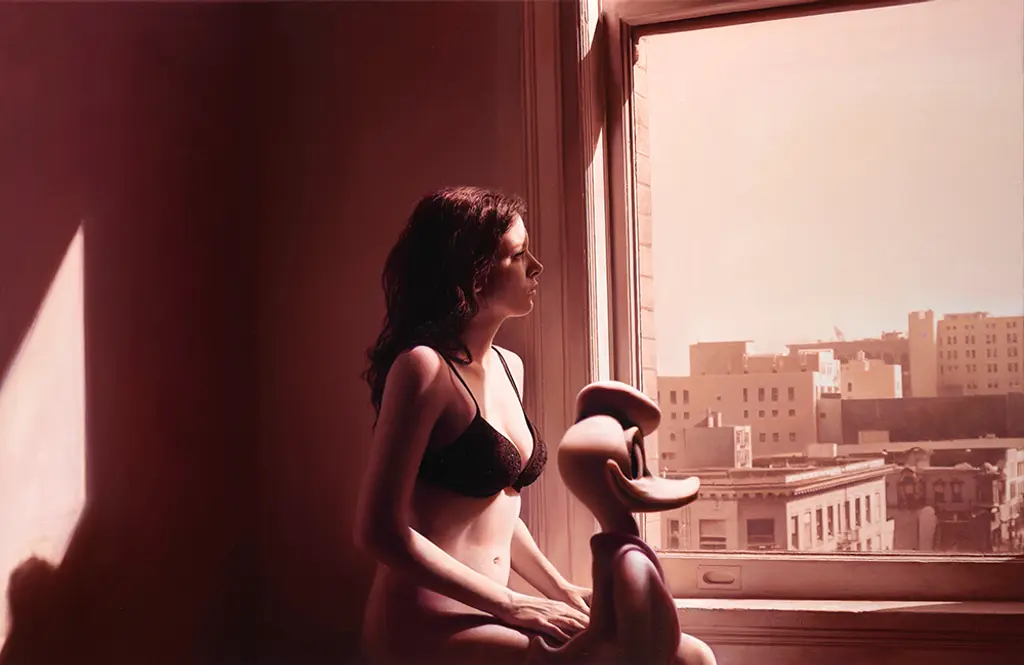
This insistence on childhood as a site of rupture resonates with a broader critique of modernity’s narratives of progress, The child, often mobilized as a figure of futurity, is here returned to the present as a victim of inherited systems. Helnwein’s images suggest that the violence of history is not overcome but reproduced, inscribed within bodies and images alike.
The reference to Goya deepens this temporal complexity, the dialogue with the Disasters of War is not a matter of citation but of method. Both artists operate through a strategy of exposure, revealing violence as an intrinsic component of human organization rather than as an aberration. Yet where Goya’s etchings retain a documentary impulse, Helnwein’s work reflects a mediated world in which images circulate independently of their referents. The result is a shift from witnessing to complicity and the viewer is no longer positioned outside the scene but implicated within the systems that produce it.
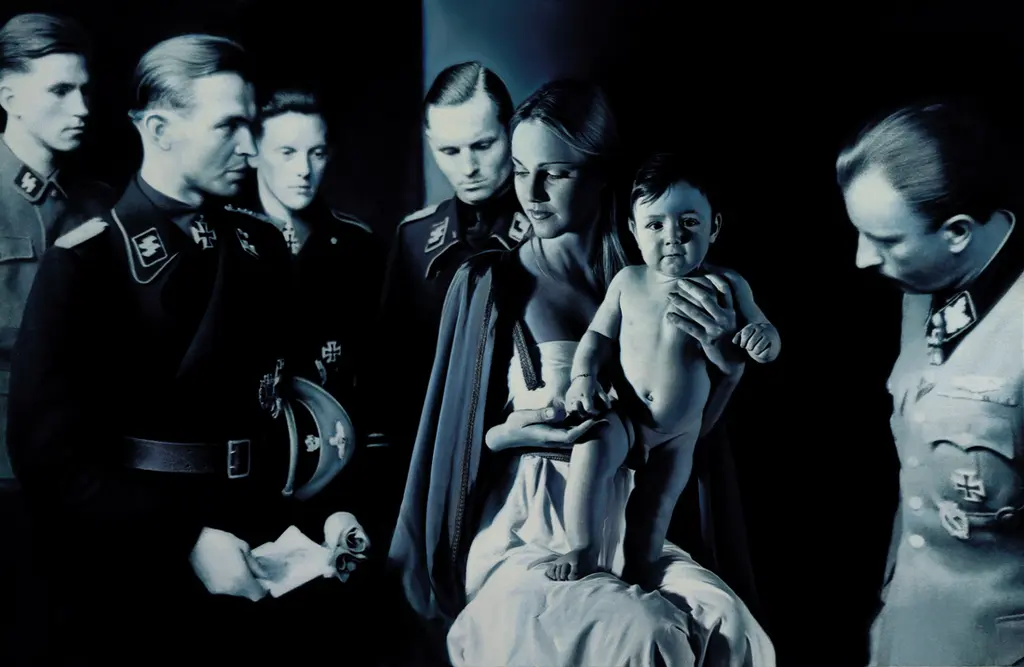
The architectural context reinforces this condition, the space designed by Juan Herreros resists the neutrality of the white cube, replacing it with a labyrinthine structure that mirrors the conceptual framework of the exhibition. Movement becomes disorientation, the absence of a fixed path undermines the possibility of a linear reading, forcing the viewer into a mode of navigation that is both physical and cognitive.
This spatial strategy aligns with the exhibition’s broader refusal of resolution. There is no privileged vantage point, no final synthesis, instead, the viewer encounters a series of images that demand engagement without offering closure. This demand is not purely aesthetic, t is ethical and to look at these works is to confront the limits of one’s own perceptual and interpretive frameworks. A critical position emerges from this encounter, one that resists both moralizing and detachment. The exhibition does not dictate a response, yet it constructs conditions under which indifference becomes untenable. The images insist on their own necessity while simultaneously undermining the possibility of fully assimilating them into discourse.
In this sense, Helnwein: mundos invertidos can be understood as an inquiry into the status of the image in a world saturated by visual stimuli. It asks whether it is still possible for images to retain a critical function, or whether they have become entirely subsumed within the circuits of consumption. Helnwein’s answer is neither affirmative nor pessimistic. Instead, it operates through tension, the image remains a site of struggle, capable of both revealing and concealing, of resisting and reinforcing the structures it inhabits. What lingers after the exhibition is not a set of conclusions but a disturbance. The inverted world it proposes is not confined to the gallery. It extends outward, implicating the viewer in a continuum of images that shape perception and memory. Within this continuum, the distinction between reality and representation becomes increasingly unstable.
The exhibition thus performs a double movement, it exposes the violence embedded within images while simultaneously demonstrating the impossibility of escaping them. To engage with Helnwein’s work is to confront this paradox directly. The act of seeing becomes inseparable from the structures it seeks to understand, and the image, far from offering clarity, becomes the very site of uncertainty.