10/15/2013
Albertina Museum
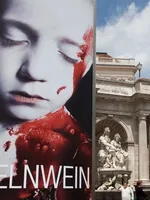
250 000 Visitors Saw the Helnwein-Retrospective at the Albertina Museum
The Reviews
The Helnwein retrospective was the most successful exhibition of a living artist in the history of the Albertina.
12/28/2012
Forbes
The True Impact of Violence On Childhood? Why Every American Ought To See The Paintings Of Gottfried Helnwein.
Jonathon Keats
Two days after the Sandy Hook school massacre, a survival gear company called Black Dragon Tactical composed a new slogan to promote sales of armored backpack inserts. “Arm the teachers,” the company declared on Facebook. “In the meantime, bulletproof the kids.”...
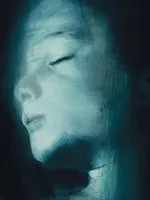
The question may be political, but the keenest response is to be found in a museum in Mexico City, the Museo Nacional de San Carlos, at a retrospective of paintings and photographs by the Austrian-American artist Gottfried Helnwein. Helnwein’s extraordinary work depicts the fragile innocence of children. Devoid of grown-up sentimentalism, his images can be overwhelming, especially those that show how that innocence falters in an adult world.
12/26/2004
San Francisco Chronicle
CRITICS CHOICES 2004 - Helnwein
Steven Winn
Chosen as the most important show of a contemporary artist in 2004.
TOP 10
The Gottfried Helnwein exhibition "The Child" at the Palace of the Legion of Honor (San Francisco Fine Arts Museums, July) was chosen as the most important show of a contemporary artist in 2004.
"In the first of two shows (the other at the Modernism Gallery in November), Helnwein's large format, photo-realist images of children of various demeanors boldly probed the subconscious. Innocence, sexuality, victimization and haunting self-possession surge and flicker in Helnwein's unnerving work."
04/05/2026
XIBT Art Magazine
The Inverted Image: Helnwein and the Ethics of Seeing
Alice Zucca
At SOLO Independencia, in Madrid
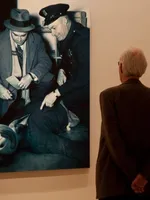
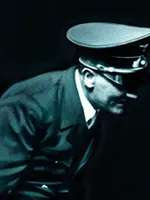
At SOLO Independencia, in Madrid, Helnwein: mundos invertidos unfolds less as an exhibition than as a conceptual disturbance. The first major retrospective in Spain of Gottfried Helnwein resists the stabilizing logic typically associated with retrospection. Rather than organizing a career into legible phases, it constructs a fractured visual field in which time, memory, and representation are held in a state of permanent tension.
12/01/2004
Palace of the Legion of Honor
'The Child' Exhibition - 130,000 VISITORS- The reviews
Summary of reviews and texts
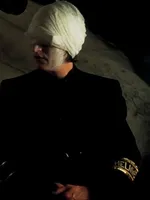
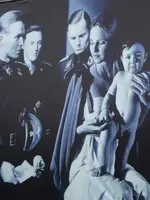
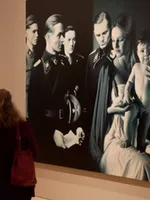
Adults bring a trunkful of contradictory cultural baggage to any representations of children. That's what makes the work of Helnwein so powerful. In his show, "The Child," at the Legion of Honor (of the San Francisco Fine Arts Museums), deformed infants and bandaged children stir feelings of pity, defiance and uneasiness about exploitation. There's an ambiguously disturbing painting of a girl aiming a gun into an open refrigerator and another of a bare-breasted mother and child surrounded by Aryan soldiers.
But the most haunting images may be the ones of children who seem strangely oblivious to the adult gaze. Some of Helnwein's children peer right past the onlooker. Others sleep, dreaming of anything but us behind their silky eyelids. And some, like the enormous, half- shadowed "Head of a Child" at the Legion, see straight through us with cloudless, infinite blue eyes.
Steven Winn, San Francisco Chronicle, 17. November 2004
09/14/2008
The Sunday Times
Bloodied but Unbowed
Gerry McCarthy
Fury greeted Gottfried Helnwein's Waterford Installation, but his art deals in public trauma, says Gerry McCarthy
Again and again, he has painted children in brutal, violent settings. He has used Christian iconography to depict Nazi officers, and juxtaposed rampaging soldiers with Images of childhood innocence. Visceral reactions come with the territory: one Installation in Cologne was physically attacked by neo Nazis. And yet, he says, he does not set out to shock. "Shock is a useless effect," he says. "Somebody in shock is completely useless. I want to make somebody think."
Instead, Helnwein's work speaks of a deep psychological need for meaning, even as it takes the form of violence and confrontation. Such an approach is rooted in the uneasy silences of growing up in post-war Austria and the shattered illusions of his early adult life, yet is still infused with an uneasy idealism.
His art has brought him material rewards. Over the past 30 years, he has become an art superstar. His paintings and photographs command large prices. As he talks in his Co Tipperary castle, garbed in black clothes and dark glasses, Helnwein has the air of a veteran rock star and the lifestyle to match it.
03/01/2005
ARTnews
REVIEW: Gottfried Helnwein, San Francisco
Kenneth Baker
A highly satisfying survey of his work at the Legion of Honor museum titled "The Child" was dominated by images of children, as was a current exhibition of his more recent work at Modernism.
01/01/1983
Bijutsu Techo, Japan
Gottfried Helnwein
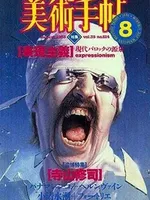
cover-story
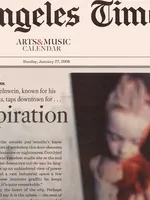
05/30/2008
Los Angeles Times
Gottfried Helnwein - Dark Inspiration
Lynell George
The artist, who has taken on war crimes, Catholicism and the Holocaust in his works, is inspired by the city.
Some might think that Los Angeles - its unrelenting sun, its one-step-away-from-reality perch -- is an incongruous place for someone like Helnwein. What he creates, regardless the medium - watercolor, oil, photography, performance art, sculpture - is a thorny psychological excursion into our sublimated self, our obscured corners and dark humors. His explorations into war crimes, Catholicism, disfigurement and the Holocaust are both unflinching and surgical. His work is in museum collections around the world, including those of LACMA and the Smithsonian, and critics have labeled it grotesque, fearless, disturbing and "veer[ing] dangerously close to offensive." People are surprised, he says, when they discern that he doesn't "seem insane."
12/02/2014
The New York Times
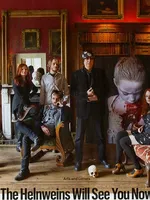
The Helnweins Will See You Now.
By Nicholas Haramis
They’re creepy and they’re kooky, mysterious and spooky. They’re altogether ooky. Meet the The Real-Life Addams Family
February rains flooded the gravel road to Gurteen Castle, a 40-room fortress built in 1866 for Pope Pius IX’s chamberlain. Throughout the Republic of Ireland, stories about power outages dominated the evening news, but the Austrian artist Gottfried Helnwein and his wife, Renate, their four children and three of their grandchildren were oblivious to the storm. In the castle’s dining room, under the flickering glow of candlelight, they were singing along to a spirited rendition of “Nell Flaherty’s Drake,” a bouncy 19th-century Irish folk song that had them merrily rhyming “astray” and “gray.”
10/26/2023
France 24
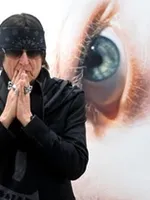
'No limit' to hell people can inflict on children, says artist Helnwein
Vienna (AFP) – Art is "probably the only help one has to cope" in a world being traumatised by the wars in Gaza and Ukraine, one of Austria's most famous artists told AFP.
04/10/2006
New Statesman, UK
Nazi dreaming
Julia Pascal
"Face it" Helnwein exhibition at Lentos Museum of Modern Art Linz
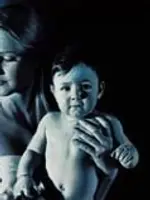
Gottfried Helnwein's latest exhibition, "Face It", is the artist's first show in his native Austria since 1985. A retrospective of 40 works from the 1970s to the present, it is more shocking than the Royal Academy's infamous "Sensation" of 1997. Helnwein aims to disturb not with, say, an elephant-dung Madonna, as Chris Ofili did then, but with a far more controversial Virgin.
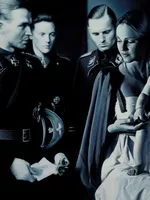
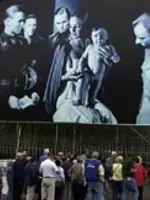
Of all his paintings, the most disturbing is Epiphany (1996), for which he dips into our collective memory of Christianity's most famous birth. This Austrian Catholic Nativity scene has no magi bearing gifts. Madonna and child are encircled by five respectful Waffen SS officers palpably in awe of the idealised, kitsch-blonde Virgin. The Christ toddler, who stands on Mary's lap, stares defiantly out of the canvas. Helnwein's baby Jesus is Adolf Hitler.
11/01/2000
Artweek
'The Darker Side of Playland: Childhood Imagery from the Logan Collection' at SFMOMA
Alicia Miller
Reviews
In 'The Darker Side of Playland', the endearing cuteness of beloved toys and cartoon characters turns menacing and monstrous. Much of the work has the quality of childhood nightmares. In those dreams, long before any adult understanding of the specific pains and evils that live holds, the familiar and comforting objects and images of a child's world are rent with something untoward. For children, not understanding what really to be afraid of, these dreams portend some pain and disturbance lurking into the landscape.
Perhaps nothing in the exhibition exemplifies this better than Gottfried Helnwein's 'Mickey'. His portrait of Disney's favotite mouse occupies an entire wall of the gallery; rendered from an oblique angle, his jaunty, ingenuous visage looks somehow sneaky and suspicious. His broad smile, encasing a row of gleaming teeth, seems more a snarl or leer. This is Mickey as Mr. Hyde, his hidden other self now disturbingly revealed.
Helnwein's Mickey is painted in shades of gray, as if pictured on an old black-and-white TV set. We are meant to be transported to the flickering edges of our own childhood memories in a time imaginably more blameless, crime-less and guiltless.
But Mickey's terrifying demeanor hints of things to come.
01/24/2017
Los Angeles Review of Books
Confronting the Intolerable
Brad Evans interviews Gottfried Helnwein
Throughout the entire history, the only forces capable of resisting tyranny and suppression are artists, thinkers, and writers. These are the makers of what we call culture, which means the combination of aesthetics and spirituality. Dictators know that, they have a very good sense for the only serious threat to their power: free creation and free communication. On this planet, creating means to stand up, to rebel, to resist, it means striking back.
01/03/2021
The Free Lunch Commission
Conformity is no Place for me
The Entropy Memo
Any belief system will pre-condition you to see only things that you are supposed to see, but it will make you blind to anything you are not allowed to perceive, even if it happens right in front of you.
Through various education systems in all history, people have been convinced to abandon their own values and dreams and have been programmed to think and behave in certain ways. So people have developed a good workable system of selective perception.
But there are always those that can’t be broken and properly programmed: artists, writers and thinkers.
Nothing scares authoritarian regimes more than art and free creation. Why would Hitler burn mountains of books and paintings and ban all arts? Why would Stalin—the master over life and death of almost 300 million people, a man who commanded the biggest army and secret service that ever existed—be afraid of a poem by Anna Akhmatova? Why would Mao be so obsessed with destroying China’s entire cultural heritage? Why would FBI director J. Edgar Hoover, while denying the existence of organised crime in the US, put so much effort into harassing and spying on every artist from Hemingway, Elvis, Thomas Mann to John Lennon?
The last thing any human society wants are free beings. Don’t wait for somebody to grant you freedom, it will never happen; if you want freedom, you have to seize it. Creating art is one way of doing it, and for me it’s the most effective way.
On this planet, creating means to stand up, to rebel, to resist. It means striking back.
11/17/2004
San Francisco Chronicle
Childhood isn't what it used to be. In the arts, it's dark and complex.
Steven Winn
Chronicle Arts and Culture Critic
Gottfried Helnwein's work is on display at the Legion of Honor and at Modernism Inc.
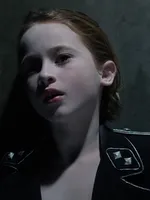
Her lips are parted and colored a luscious deep red. The pancake makeup on her face gives off a marble-white glow. A jacket, adorned with braided gold epaulets at the shoulders, yawns open, exposing a wide expanse of skin down her chest. She appears to be about 8 years old.
There was a time, not so long ago, when the subject of Gottfried Helnwein's new, large-format digital prints at San Francisco's Modernism Gallery might have alarmed or even scandalized a viewer. Not anymore -- or at least not so reflexively...
Adults bring a trunkful of contradictory cultural baggage to any representations of children. That's what makes the work of Helnwein so powerful. In his show, "The Child," at the Legion of Honor, deformed infants and bandaged children stir feelings of pity, defiance and uneasiness about exploitation. There's an ambiguously disturbing painting of a girl aiming a gun into an open refrigerator and another of a bare-breasted mother and child surrounded by Aryan soldiers.
But the most haunting images, here and across town at Modernism, may be the ones of children who seem strangely oblivious to the adult gaze. Some of Helnwein's children peer right past the onlooker. Others sleep, dreaming of anything but us behind their silky eyelids. And some, like the enormous, half- shadowed "Head of a Child" at the Legion, see straight through us with cloudless, infinite blue eyes.
05/16/2000
The Guardian
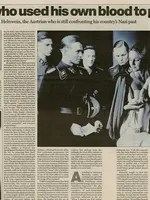
GOTTFRIED HELNWEIN, THE MAN WHO USED HIS OWN BLOOD TO PAINT HITLER
Kate Connolly
Kate Connolly meets Gottfried Helnwein, the Austrian who is still confronting his country's Nazi past.
It could have been worse. At least he doesn't look like his self-portraits, in which bandages swathe his head, bent forks pull his mouth into a mocking smile and blood drenches his torso. Helnwein, 52, is a master of the scandalous and the art of shocking. The artist Robert Crumb once said of him: "Helnwein is a very fine artist and one sick motherfucker." "You can get things moving in a very subtle way, you can get even the strong and powerful to slide and totter - anything, actually, if you know the weak points and tap at them ever so gently by aesthetic means."
02/16/2000
The Irish Times
THE BLOODSTAINED FÜHRER
Mic Moroney
The controversial work of Austrian artist Gottfried Helnwein, now resident in Ireland, explores the lingering Austrian loyalty to Nazism. He speaks to Mic Moroney.
One piece of public art he did in 1988 - funded fully by himself, after he failed to raise sponsorship - commemorated the 50th anniversary of Kristallnacht. "Again, what amazed me was that nobody talked about it - and yet that was when the horror really started."
"I wanted to do it in front of the Dome in Cologne, but the City prevented it. But there was this little strip of land which belonged to the railways, and a guy who worked there said, 'go ahead'. I didn't want to use these historic photographs which are used too often - those mountains of corpses mean nothing anymore - so I used four metre high children's faces. I photographed children from the area, foreign children, German children, Jews, anything." Mounted in a long billboard line, after the huge word "Selection", the children's faces were powdered in a deathly, bruised way, many with their eyes closed. That may sound subtle, but in the context of muted German Holocaust memorials, it was like a slap in the face. Despite CCTV video-cameras, someone painstakingly sliced the throats of every single child-portrait.
08/05/2001
The Sunday Times
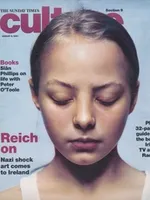
SHOCK ART
Medb Ruane
Ireland
The disturbing Work of Helnwein comes to Ireland Helnwein is a headline artist who works in tight sound bites on a very large scale. The works brand themselves with proof of his technical know-how in various media and are endorsed by the coolest celebrities of his generation. So much for the cover-story, so what lies within? Headlines lure you into stories that make you want to cry, smile or help to change the world. But when they stop at your own skin, you can get a sinking feeling, a sense of the bigness and badness outside and the impossibility of change.
10/02/2014
CNN
Astonishing photo-realistic portraits
Ones to Watch
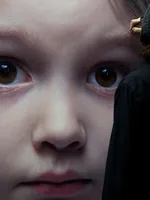
The images you are about to see may shock or confound you. Gottfried Helnwein frequently depicts children in his gigantic, mesmerizing portraits, along with "low culture" icons including Donald Duck, with the loss of childhood innocence as a reoccurring theme.
06/21/2024
Art&Antiques
Gottfried Helnwein
Hynek Látal
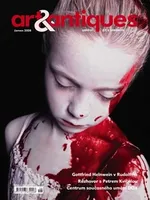
Helnwein in the Rudolfinum Gallery The exhibition entitled “Angels Sleeping” introduces works by the Austrian artist, Gottfried Helnwein, whose oeuvre has become a phenomenon of hyperrealist painting. His canvases, executed in the manner of photographic preciseness, draw from pop-culture as well as history, and the artist’s great subject is the position of a child in an extreme situation. The exhibition is divided to five sections which present the main subjects of Helnwein’s work, at the same time laying emphasis on his paintings from the most recent years. The first section displays portraits of the artist’s bandaged face; the second section contains references to the Nazi past of Austria, while the central subject of the third and fourth sections is child. The last section presents photographs inspired by pop-culture. The group of exhibited works was loaned from the property of the artist as well as from many public and private collections from Europe and the United States.
07/07/2013
ARTFORUM
Gottfried Helnwein at the Albertina
Andrea Gyorody
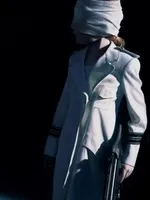
In the artist’s most recent monumentally scaled paintings, the little girl persists, though she has morphed into a variety of cartoonish, disturbing archetypes— an anime character, a gun-toting outlaw—that appear alongside other portraits: a sinister-looking Mickey Mouse or Donald Duck, for example. The all-too-frequent stories in the US media of accidental child deaths from gunshots give the exhibition’s final works, despite their apparent surrealism, an unnerving resonance.
07/01/2021
Hot Press
Gottfried Helnwein: “The Roman Catholic Church is the most powerful propaganda machine in history.”
Stuart Clark
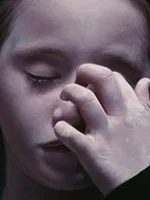
Whether hanging with the Stones, zooming in on Warhol or making sure Dietrich wasn’t completely alone, Gottfried Helnwein has always ended up making great art. Stuart Clark tracks him down to his Waterford castle where Nazi Germany, Israel, Lou Reed, Marilyn Mansion, cancel culture, Donald Duck and Elvis are also up for discussion.
08/06/2016
EX-POSURE
Gottfried Helnwein, Interview
Eleni Zymaraki Tzortzi
ΕΠΙΛΕΓΜΕΝΗ ΚΑΤΗΓΟΡΙΑ
The only things our children need from us are: freedom and respect.
Everything else they bring with them: spontaneity, creativity, intuition, imagination and vision.
Children still have a connection to the magic of their own spiritual world, that grown-ups have lost long ago. We should not disturb our children in their dreams and poison their minds with imbecile television, genetically modified junk food, drugs, psychologists, corrupt politics, internet- violence, pornography and oppressive schools.
Maybe we should just leave them alone and let them make their own decisions because they are anyway closer to the truth then we are. I think we can learn more from children, than they can learn from us.
I agree with Captain Beafheart who said: ‘I needed to purge myself of all the attention my parents had given me - I wasn't neglected enough as a child. ‘
10/16/2012
Esquire
Interview with Gottfried Helnwein
Sandra Cerisola
English Version
GH: People are constantly bombarded with millions of images of the daily horror from around the world, through mass media, television, internet, which makes us feel helpless, because it tells us there is nothing we can do about it.
Art is the exact opposite; with art you can approach any subject, no matter how horrible, because aesthetics can transcend and transform any uglyness, into something beautiful, it can elevate, inspire and might be able to open doors to understanding. My images always dealt with what's happening around me, I wasn’t making things up.
From early childhood on when I looked at people around me I perceived them as suffering in some way, without being conscious about it. I thought that most people seemed to be somewhat damaged , and that’s what I started to show in my paintings.
08/09/2004
San Francisco Chronicle
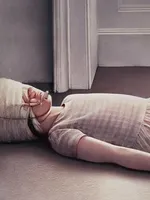
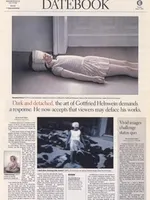
Dark and detached, the art of Gottfried Helnwein demands a response.
Kenneth Baker
Chronicle Art Critic
The Child: Works by Gottfried Helnwein at San Francisco Fine Arts museums, Palace of the Legion of Honor.
Helnwein's preoccupation with the dark side of modern history, including its abuse of images, has never left him. He did a whole series of paintings (the Legion show includes a couple) so dark as to appear imageless. But he intended them not as mirrors of dark times but as counterthrusts to the aggressive reach of so much contemporary culture.
Despite the grotesquerie it contains, the Legion show also has elements of pathos.
Helnwein nodded yes when asked whether he has made a theme of innocence. "It's a dangerous word, it's so abused and misused, but yes that's probably the basic essence of what I'm interested in."
"As soon as somebody's grown up they have so many issues," he said. "When you look at a person -- what social level, what country they're from, what fashion they affect -- all this stuff comes in, but I'm interested in the stage of a human being where it's not so important whether it's a male or female, before we can tell any social background or anything, it's just ... abstract, almost."
...Probably few visitors will appreciate the detachment in Helnwein's work. They will more likely respond to his concern with the power of images. We willingly subject ourselves to their power every day without really understanding it. If nothing else, his pictures, no matter how confrontational, stand still and permit us, even defy us, to understand how they work upon us.
02/14/2006
VOGUE
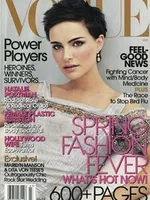
The Bride wore Purple
Hamish Bowles
Rock-Star Wedding at Helnwein's Irish Castle
The nuptials of schock rocker Marilyn Manson and burlesque queen Dita Von Teese were never going to be conventional, but as Hamish Bowles discovered as he tracked the celebrations from Los Angeles to Tipperary, they were also filled with high drama and high style.
... The following afternoon our cars are trundling through the darkening landscape to Helnwein's baronial castle, a forbidding Hammer House of Horror edifice complete with turrets, crenellations, and a lone bagpiper.
06/04/2006
Lentos Museum of Modern Art, Linz
FACE IT - The Exhibition Reviews
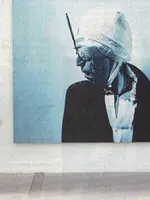
Face it - Works by Gottfried Helnwein
Konsequent und virtuos. Technische Meisterschaft und auch die Konsequenz einer packenden sozialkritischen Thematik offenbaren sich in dieser Ausstellung: Gewalt, Schmerz, Verletzung werden dargestellt. Den Körper ebenso wie die Psyche betreffend. Helnwein dokumentiert hier in Linz einen künstlerischen Reifegrad, der eine weitere Steigerung kaum vorstellbar macht. Seine Eingriffe sind von einer schmerzhaften Unmittelbarkeit, deren emotionale Energie weit über die großen Bildformate hinaus den Raum und sein Publikum ergreift. (Irene Judmayer - Oberösterreichische Nachrichten)
08/09/2004
San Francisco Chronicle
Dark and Detached, the Art of Gottfried Helnwein demands a response
Kennethy Baker
Chronicle Art Critic
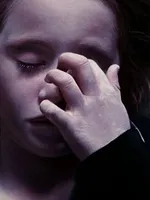
09/02/2010
New York Times
Problem Child
Mark Rozzo
Opening Sept. 16 at New York’s Friedman Benda gallery, ‘‘Gottfried Helnwein: I Was a Child’’
... his startling body of work: macabre paintings with photographic resonance played out on a grand scale and often in public settings. Throughout his career, Helnwein has glided easily between watercolor, oil and installation work, but his big subject has always been childhood, and not the happy sort. With titles like ‘‘The Murmur of the Innocents’’ and ‘‘God of Sub-Humans,’’ these works — executed with obsessive, old-master-worthy technique — can be as bludgeoning as, say, a Rammstein riff, but you can’t take your eyes off them.
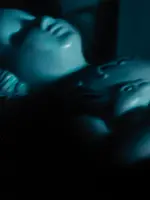
08/01/2008
Galerie Rudolfinum, Prague
Angels Sleeping - The exhibition Reviews
Summary of reviews and texts
Galerie Rudolfinum in Prague - Helnwein's images of pain and innocence won't let history sleep.
An alternative title to “Angels Sleeping” for this exhibition could be “All Hail to the Wounded Child,” as many of the works center on irreparably wounded children (both externally and internally) as the innocent victims of war. The children in Helnwien’s works may also represent the lost or destroyed child in all of us, not only as victims of war, but as victims of modern society, with all its mindless violence and perverse attraction to aggressive mobs and disturbances. If there were a soundtrack to this exhibition, it would be a long, endless scream.
Tony Ozuna, The Prague Post, 02. July 2008
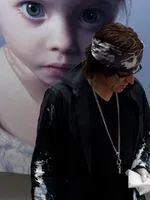
04/08/2015
Irish Arts Review
Apocalypse Now
Mic Moroney
Gottfried Helnwein's Imagery is confrontational but this provocation is ultimately designed to jolt us from complacency...
Essentially a hyperrealist artist of quite extraordinary facility, Gottfried Helnwein's huge Photorealist canvases are awash with references to religious Renaissance paintings, the dark allure of Nazi imagery and his background in the ruins of post war Vienna. His strategy is often of deliberate shock and provocation, from his earliest extreme watercolors of doll-like, wounded children with their hare-lips and facial disfigurements, which prompted cartoonist Robert Crumb to call him "a very fine artist and one sick mother---er."
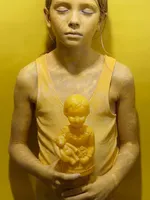
01/01/2016
Harper's Bazaar Art, China
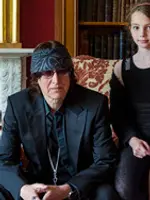
5 - The circle of life
06/04/2016
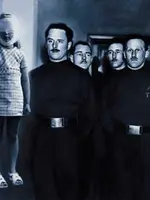
The Irish Times
Fantasy and Reality in one Place
Gemma Tipton
Gottfried Helnwein's life and art is a hybrid of trad and neo-Gothic with a touch of Hollywood. His Tipperary castle provides the perfect Gallery
10/01/2004
Artweek
Gottfried Helnwein at the Legion of Honor
Colin Berry
Helnwein is the next generation’s final ally, a skilled provocateur forcing us to confront the legacy we have bequeathed upon our children. Helnwein is our chronicler, our conscience, the antidote to our failing memories. He refuses to let us forget…
Gottfried Helnwein’s first one-man exhibition at a major American museum is long overdue. 35 years in the making, “The Child” is a collection of more than fifty drawings, watercolors, photographs, and paintings (several monumental in size). It’s also a show that shocks, and among the crowds thronging to see it, some patrons will be put off: the day I attended, a few seemed downright uncomfortable, if not hostile, toward the work. This is fine. Art should shock, and provoke, and make us feel queasy sometimes.
“The Child” achieves all three, but also startles us with aching beauty, bedazzles us with painterly skill, and injects a necessary perspective into the culture’s collective conscience.
08/01/2001
The Irish Times
CUTTING EDGE
Aiden Dunne
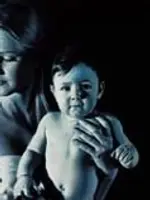
While it is a painting, Epiphany is typical in its almost interchangeable use of photography and painting: both played their part in the achievement of the eventual, quasi-photographic image. He is a fine photographer, and his photographic portraits of Kilkenny children (enlarged to an enormous scale) form one strand of his festival exhibitions. The careful adaptation of existing imagery is another trait, and his references extend back through fine art history as well as history itself...
05/31/2005
Los Angeles Times
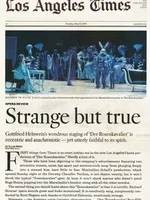
Strange but true
Mark Swed
Gottfried Helnwein's wondrous staging of "Der Rosenkavalier" is eccentric and anachronistic — yet utterly faithful to its spirit.
The thing you should know about this "Rosenkavalier" is that it is terrific. Richard Strauss' opera sounds great and looks sensational. It is excellently sung, sumptuously conducted by Kent Nagano and, thanks to Gottfried Helnwein, wondrously strange.
Helnwein — the Austrian artist (painter, photographer, performance artist, filmmaker) who has a studio in downtown L.A. — is known for everything from Marilyn Manson videos to Holocaust installations. He is responsible for the sets, costumes and that ad (which, by the way, looks like an image from a recent staging of a Schumann oratorio that Helnwein designed in Düsseldorf).
Helnwein's vision of "Rosenkavalier" is monochromatic and a riot of color. It is oddly traditional yet seriously odd. It is updated but couldn't be more 18th century. And none of those opposites contradicts.
09/09/2008
Irish Examiner
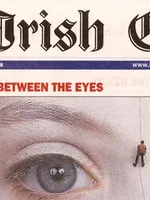
Between the Eyes
Conor Kane
Coverstory
Graphic art installation divides city opinion
LARGE-scale art installations dotted around Waterford’s city centre depicting war images are causing controversy because of their graphic content.
The exhibition, The Last Child, by Austrian-born and Waterford-based artist Gottfried Helnwein, is part of the Waterford Fringe Festival and includes a variety of work placed at strategic locations in the city, such as the Quays, the Clock Tower, City Hall and John Roberts Square. Among the material featured in the images are depictions of children with guns and a child lying down, covered with blood, as well as various shots of children with their eyes closed, as if dead.
08/15/2004
The Times
GOTTFRIED HELNWEIN - A LONG WAY TO TIPPERARY
Cristin Leach
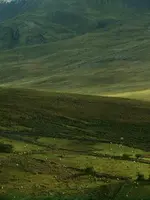
Irish and other Landscapes - Gottfried Helnwein at the Crawford Municipial Art Gallery in Cork
...these photo-paintings appear even more real than a photograph: they are hyper-real, super-saturated depictions of the world that surrounds us, as we would like to see it. Helnwein’s landscapes offer us the world as we see it in our mind’s eye, our memories.
What is certain is that with these works Helnwein has raised the bar for artists to come with art that is groundbreaking in terms of scale, skill and vision. Painted mountains, fields and sky can never be the same again. ...
06/18/2005
Los Angeles Times
Gottfried Helnwein arouses creative tumult.
Scott Timberg
Times Staff Writer
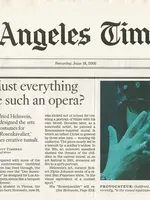
Must everything be such an opera?
"For me, art is a way to fight back against everything I've experienced: I wanted to respond, but I didn't know how to articulate it. But I could paint it. That medium opened all doors. Certain images can reach so deeply into people's souls.
"And I feel also like a witness to my times - that's my duty, my responsibility." One role of art, he believes, is to "force people to look at things they would rather not look at," an impulse he sees in Goya and Shakespeare.
04/12/1989
ZeitMagazin
Memories of Duckburg
Gottfried Helnwein
At nights my room was plunged into a deep, red light - my toys, the furniture, my bed, my hands - everything had the same color and seemed to be made of the same soft material. As though the natural laws were suddenly suspended, all matter seemed to glow from the inside out. The explanation for this red magic was the large illuminated star of the Red Army on the roof of the factory across the street, which poured it’s fire nightly into my room.
03/13/2020
New York Times
A Big Idea and a Big Donor Bring a New Art Museum to Austria
Kimberly Bradley
The Albertina Modern, a satellite of the venerable Vienna institution, aims to highlight overlooked Austrian artists in a newly restored historic building.
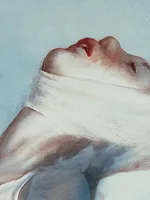
Some art alludes to the darker sides of Austrian history, including Gottfried Helnwein’s photorealistic images of wounded or poisoned children.
“These artists have something in common: They all turned against the ideals of the Third Reich,” said Mr. Schröder.
“I’m doing a kind of exorcism,” he added. “Exactly here, where ‘degenerate art’ was shown, I’m showing artists who after 1945 declared war on the degeneracy of war.”
02/06/2011
The Sacramento Bee
Gottfried Helnwein's disturbing images on display at the Crocker
Victoria Dalkey
Art Correspondent
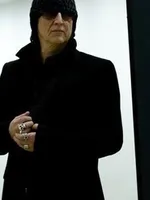
Gottfried Helnwein looks more like a rock star than an internationally acclaimed artist. Dressed all in black, with a bandanna around his head and dark glasses hiding his eyes, he resembles, in a superficial way, Bono. Like Bono, he is concerned about the most troubling issues of our times: violence, inhumanity and oppression.
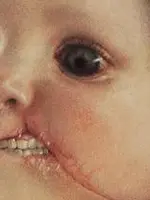
There is a cinematic quality to all of Helnwein's works, which seem to be projected on a wide screen. These "stilled cinematic moments," as Crocker curator Diana Daniels calls them, are powerfully affecting. "He deals with difficult subjects in a way that isn't propagandistic," Daniels said. "It's an open-ended way of dealing with historic subjects that are in danger of slipping away from us." Many of the images are very disturbing, and the museum has issued a warning that some images may be challenging for sensitive or younger viewers. But the show is a powerful one, posing questions we all need to contemplate.
06/01/2000
Dazed and Confused
Gottfried...
Mark Sanders
Helnwein, the controversial Austrian artist whose works is currently on show at the Robert Sandelson gallery in London, has always been a difficult personality to pin down.
He chose to exhibit all three "Epiphany" paintings alongside a series of photographs of 19th century stillborn foetuses in an exhibition entitled "Apokalypse". Hung together in a Dominican church in Weinstadt in Austria, the final effect was one of haunting beauty, each child framed magnificently within the high vaulted ceiling of the church. The juxtaposition of these serene yet poignant images of "beings that never were" placed next to paintings that recalled the ideological terrors of the past, created a synthesis of values as politically dynamic as they were aesthetically entrancing. Yet throughout his career as an artist Helnwein has never ceased to use his work as a way to question his immediate surroundings.
05/27/2005
Seattle Gay News
THE L WORD - L for Love, - that is Los Angeles Opera's Der Rosenkavalier
Maggie Bloodstone
Gottfried Helnwein's set for Der Rosenkavalier at Los Angeles Opera
The creator of the alluring image is artist Gottfried Helnwein, who transfers the power and pull of his photographic work (check out www.helnwein.com to get a taste of some of the heaviest, most uncompromising visuals you will see in several lifetimes) to the sets and costumes of Der Rosenkavalier.
Helnwein's poster concept cuts through the traditional coyness and goes straight for the nugget of truth that no doubt had Lesbian and Gay audiences nudging and winking for the past century. With the bold-but-tender image of two gently bussing females, Helnwein gives the casual observer "something to think about." Oh, yes!
02/10/2009
transform!
Capitalism's Secular Crisis and the European Social Model
Walter Baier
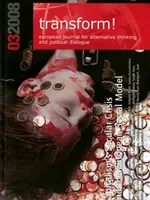
The Austro-Irish artist Gottfried Helnwein is responsible for the artworks in this issue. With his hyper-realistic pictures, whose most common subjects are pain, injury and violence, Helnwein (born in 1948) is certainly one of the best-known and at the same time most controversial of German-speaking artists.
01/30/2010
Toronto Star
Helnwein's realization takes the breath away
William Littler
Music Columnist
Brave Israeli opera radiates despair
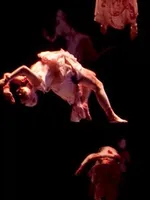
Helnwein's realization of the final scene takes the breath away: a view of dozens of bloodied children's bodies, some of them hanging, some of them turning over and over in mid-air, as a vocal ensemble sings their words while kneeling on stage.
This vision connects eerily with an exhibition in the Tel Aviv Performing Arts Centre plaza, adapted from one the Austrian Artist mounted in Cologne in 1988, marking the 50th anniversary of the Nazis' anti-Jewish Kristallnacht. It shows two rows of innocent, haunted-looking child's faces, one row with eyes open; the other with eyes closed, lined up as if in a concentration camp (Selektion is the exhibit's title).
01/01/2011
whitewall
Gottfried Helnwein
Amani Olu
Photographs by Rafael Y. Herman
INTERVIEW
We met with Helnwein a day after his solo exhibition opened at Friedman Benda in New York. The minute he sat down and started talking, it was as if we were catching up with an old friend. He held nothing back. We discussed our respective childhood experiences, Austrian guilt, isolation, his practice, the importance of art, and what it's like to live in a castle. Helnwein is a real person.
04/16/2009
AssociatedNews.US
MICHAL SZYKSZNIAN SPEAKS WITH GOTTFRIED HELNWEIN, Part II
Michal Szyksznian
"My first performance was with six-year-old Sandra, who was considered a problem child by her parents. I think her mother had a hard time coping with Sandra’s wicked sense of humor. One time, as protest for being locked in her room, she cut up all her mother’s clothes into tiny little pieces, arranged them in a neat pile in the middle of the floor and called her mum with the innocent voice of an angel. Another time she set fire to her parent’s apartment. She was one tough and mean little lady, but I liked her instantly. She had the pride of a Latino street gang leader. When she looked at you, her piercing little eyes had a very clear message: “Don’t mess with me!”

07/01/2014
56th Southern California Journalism Award for Interview "Gottfried Helnwein: The Homecoming of a Revolutionary Artist"
Interview by Barbara Gasser for 'Wiener" Magazine
Category International Journalism: Personality Profile
08/03/1981
The Washington Post
Conundrums
Jo-Ann Lewis
Baumgartner Galleries is introducing the work of Gottfried Helnwein, a young Viennese artist who shares what seems to be an Austrian obsession with highly detailed realism - with a surrealistic edge. Trained at the Austrian Academy, and now in the process of moving to New York, Helnwein makes figurative drawings and watercolors that are occasionally gruesome, sometimes haunting and always ambiguous. Spatial and narrative ambiguity are, in fact, the central expressive devices in Helnwein's art.
07/02/2008
The Prague Post
Screaming Meemies
Tony Ozuna
Galerie Rudolfinum in Prague - Helnwein's images of pain and innocence won't let history sleep
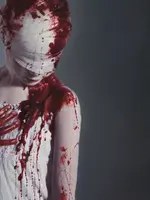
An alternative title to “Angels Sleeping” for this exhibition could be “All Hail to the Wounded Child,” as many of the works center on irreparably wounded children (both externally and internally) as the innocent victims of war. The children in Helnwien’s works may also represent the lost or destroyed child in all of us, not only as victims of war, but as victims of modern society, with all its mindless violence and perverse attraction to aggressive mobs and disturbances.
If there were a soundtrack to this exhibition, it would be a long, endless scream.
08/07/2001
The Irish Times
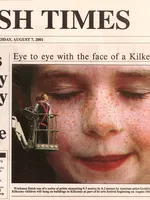
EYE TO EYE WITH THE FACE OF A KILKENNY CHILD
Workmen finish one of a series of prints measuring 9.3 metres by 6.2 metres by Austrian artist Gottfried Helnwein.The prints of Kilkenny children will hang on buildings in Kilkenny as parts of its arts festival beginning on August 10th.
12/01/2008
TRUCE Magazine
MEET GOTTFRIED HELNWEIN
Stefan Jermann
Stefan Jermann talks with Gottfried Helnwein
It’s a foggy, cloud-streaked afternoon in Waterford County, Ireland. I’m meeting a man who has spent a large part of his life on this island that is famously steeped in tradition. He’s called this place home for some while. Ireland has a long history of treating its artists, literary figures and musicians well.
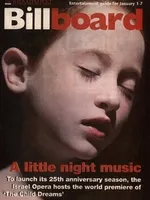
01/07/2010
Billboard
The Child Dreams
Maxim Reider
Coverstory
The world through a child's eyes
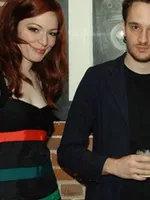
10/16/2011
Los Angeles Times
The Helnwein siblings' artful life in L.A.
Jessica Gelt
Literature, art and classical music are just part of Mercedes and Ali Helnwein's DNA.
The Helnweins are cutting a wide swath through Los Angele's various scenes - the kind of creative energy that seems to come naturally.
As children of the Austrian-Irish artist Gottfried Helnwein, siblings Mercedes and Ali experienced an unconventional and charmed upbringing. They lived in castles in Germany and Ireland, attended a private arts school in England and accompanied their father on trips to America, where they sold their drawings to hotel guests to buy stuffed animals at the gift shop.
These days, Mercedes, 31, and Ali, 29, are drawing on that background in their own artistic endeavors: Mercedes as a novelist and visual artist and Ali as a composer and musician, with an emphasis on classical music. They bring a fresh, somewhat ironic playfulness to their chosen mediums that has attracted a raucous group of young fans not typically associated with traditional galleries or classical music concerts. In this way, they stand at a colorful intersection of L.A.'s literary, pop culture, visual art and music scene. And they are rarely at rest, working on several projects at once and often collaborating with each other on videos or performances.
09/06/2003
Yaso magazine, Japan
My art is not an answer - it is a question.
Yuichi Konno
Editor in chief
“Children and lunatics cut the gordian knot which the poet spends his life patiently trying to untie.” Jean Cocteau
Helnwein:
"I think art always reflects the society and the time the artist lives in; it always tells you something about the condition of the culture.
This is the age of materialism and profit, accompanied by its favorite all-eating pet – the entertainment industry. Therefore in order not to sink into oblivion, in a desperate struggle to be heard and seen, many artists and curators try to compete with this multi-media-entertainment-Godzilla, trying to be just as loud and cheap and stupid. That’s why 70% to 80% of all the contemporary art in our museums is crap.
It’s true though that each time has its own aesthetic values and if you want to reach the people of today you have to develop an artistic language that they can understand. And that’s what I try to do – my audience is the great love-affair of my life. I am obsessed with my public, and all I want to do with my art is touch them and move them and to hold them tight – and sometimes I want to kick their ass. That is all I care about.
But I also listen to them and take them and their responses serious, because they and other artists are the only ones that ever taught me anything."
08/10/2004
sf-station
GOTTFRIED HELNWEIN'S THE CHILD - INNOCENCE LOST
Nirmala Nataraj
Beyond his treatment of common children's motifs - dolls, toys and ambivalent nymphets- Austrian painter Gottfried Helnwein's vision is shrouded in an aura of enigmatic darkness. With his giant color portraits of stillborn babies; paintings that juxtapose Nazi-era photographs with his own images; and pictures of deformed, abjectly countenanced children swathed in bandages, Helnwein is preoccupied with the indelible suffering that mirrors the more delicate aspects of youth. His work is hauntingly gorgeous and suffused with pathos, precisely because viewers are immediately aware of the larger threat that looms within the pieces: the rupture of innocence.
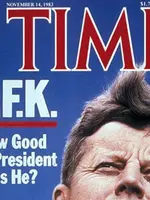
11/14/1983
Time
John F. Kennedy - Helnwein cover for Time Magazine
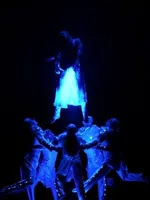
11/01/2004
Schumann Festival 2004
Press-reviews of "Paradise and the Peri", multi-media-installation by Gottfried Helnwein and Gregor Seyffert.
Tonhalle Concert Hall
Düsseldorf
BREATH TAKING STAGE VERSION AT DÜSSELDORF CONCERT HALL
Dance icon Gregor Seyffert, and Gottfried Helnwein, internationally renowned artist and stage designer, came up with a highly intelligent concept for the oratorio, which relied heavily on dance, but also comprised whatever means a modern, multimedia stage design might offer. Consequently, the audience’s eyes almost popped out of their heads. With all the media activities, one might almost forget the enchanting, beautiful music, and singing.
Storming, unceasing applause by an enthusiastic Düsseldorf audience for an evening which is unlikely to be easily forgotten. This was an example of lively music theatre, which, unchallenged, not only stole the glory of Deutsche Oper am Rhein, which presently enjoys a period of profound hibernation, but proved that Düsseldorf may well offer first class art. Why not more often?
(Peter Bilsing)
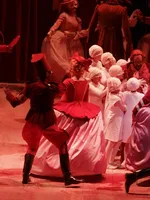
06/24/2005
The Hollywood Reporter
Helnwein - Inventiveness gone wild in an extreme realization of Richard Strauss' opera, stunningly reinvented in brilliant living color.
Madeleine Shaner
"Der Rosenkavalier" by Richard Strauss at the Los Angeles Opera
What dominates, however, in a manner I've seldom seen is Helnwein's use of color -- the monochromatic blue of Act 1 even extends to skin color. Herr von Faninal's house is bathed in a rich golden sheen, from the orange glow of Ochs' silly wig to the platinum of the lovely Sophie's almost-there dress. The final act, in a cheap restaurant, is mainly a glaring red, again from Ochs' wig to his skin and the costumes of the huge band of players. The walls of the restaurant are, incidentally, lined with Helnwein's own works, mainly huge photo-realistic portraits of contemporary women. The 200 costumes Helnwein designed for the piece deserve a whole review for themselves this is inventiveness gone wild, a genius concept, and a huge addition to the production. There might be purists in disagreement here, but this would seem to be a "Rosenkavalier" for the ages.
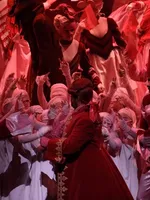
03/08/2006
Israeli Opera
..for a moment it seemed like Gottfried Helnwein’s magical set will start to sing as well.
Der Rosenkavalier - Selected Reviews
There has never been a production with such a quality around: amazing singing, brilliant direction, a shining orchestra and a magical set. The Israeli Opera is at its amazing best. Kurt Rydl only opens his mouth and he brings the house down. It is not only his great voice, it is his humor, his style, his singing. Soprano Nancy Weissbach (the Marschallin) touches heaven with her voice. It is a voice of a stylized diamond. Stephanie Houtzell has a charming stage presence with a voice that is no less beautiful than Agnes Baltsa. And a new star is born: Israeli soprano Chen Reiss (Sophie) projects a crystal clear voice. Maximilian Shell managed to puts a grain of sadness into the comic side of the opera and for a moment it seemed like Gottfried Helnwein’s magical set will start to sing as well.
11/27/2012
The Jewish Week
When Gottfried Met Hanoch
George Robinson
‘Dreaming Child’ an engaging yet frustrating look at a Holocaust-themed collaboration.
We see the painter and designer jousting with the lighting designer over what will prove to be Helnwein’s greatest coup de theater, a hypnotic final-act tableau of dozens of “dead children” suspended in black space. This time there can be little doubt that Helnwein’s judgment is correct; even on screen the effect is startling and eerily beautiful.
12/01/2012
Auxiliary Magazine
GOTTFRIED HELNWEIN
Jennifer Link
Editor in Chief
INTERVIEW
Auxiliary Magazine: Many pieces of your work are intimate glimpses to fascist figures and groups. Is this a theme you still feel is relevant?
Helnwein: Mussolini once said: "Fascism should rightly be called Corporatism, as it is the merger of corporate and government power". Well, look around - does it look like there is a growing influence of bankers and big corporations on our governments and our lives? The new Fascists will not come as grim looking brutes in daemonic black uniforms and boots, they will wear slick suits and ties, and they will be smiling.
07/23/2004
The Jewish Journal
Helnwein Epiphany.
Mitchell Waxman
Some of the most powerful images that deal with Nazism and Holocaust themes are by Anselm Kiefer and Helnwein, although, Kiefer’s work differs considerably from Helnwein’s in his concern with the effect of German aggression on the national psyche and the complexities of German cultural heritage. Kiefer is known for evocative and soulful images of barren German landscapes.
But Kiefer and Helnwein’s work are both informed by the personal experience of growing up in a post-war German speaking countries...
William Burroughs said that the American revolution begins in books and music, and political operatives implement the changes after the fact. To this maybe we can add art. And Helnwein's art might have the capacity to instigate change by piercing the veil of political correctness to recapture the primitive gesture inherent in art.
08/04/2004
The Mercury News
Innocence lost
Anita Amirrezvani
THOUGHT-PROVOKING ART BY HELNWEIN DISTURBS IN REMARKABLE SAN FRANCISCO SHOW
A new exhibit called "The Child," through Nov. 28 at the California Palace of the Legion of Honor in San Francisco, presents images of distressed, wounded or threatened children, a topic that has fascinated Helnwein for years.
Many of the children depicted in the show have deformities, bandages, scars or wounds; some appear threatened by menacing adults or by mayhem. Their suffering, indeed wrenching to witness, inevitably becomes a statement about the human condition.
A 55-year-old father of four, Helnwein sees himself as an artist with a message. "A big part of contemporary art is not connected to anything," he said. "It's important for certain artists to respond to what's going on in present time."
Curator Robert Flynn Johnson believes it is appropriate to display art with a moral message. "Museums shouldn't be like Rip Van Winkle, in a state of catatonic sleep," he says. "They should take on issues. Otherwise they will be seen just as a low-grade entertainment vehicle. We're not out to shock -- we're out to make people think."
Johnson places Helnwein in the tradition of such contemporary activist artists as filmmakers Michael Moore ("Fahrenheit 9/11") and Errol Morris ("The Fog of War"), painter Gerhard Richter and painter Sue Coe, whose "deadmeat prints" include images of animal slaughter.
Museum officials have posted notices in the museum lobby and outside the gallery to warn people that viewer discretion is advised.
Officials at the Legion hope the exhibit will reach an audience that more typically comes to blockbuster shows on classical Egypt or the Old Masters. "If I do a show like this one that upsets the docents,"Johnson says, "I know that I've got a good show."
12/20/2004
New York Magazine
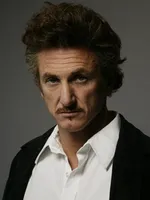
Influences: Sean Penn
Logan Hill
Do you have any art in your home?
- Gottfried Helnwein I own. I have a few pieces of his from his recent L.A. series. We ultimately ended up working together on a video project for Peter Gabriel [“The Barry Williams Show”]. Some things that are familiar lose their gravity after time. When someone like him makes the familiar so continually provocative, you can find a deepening appreciation for something.
09/02/2005
THEBOOK Los Angeles
Artist Gottfried Helnwein isn't in Kansas anymore.
Mia Taylor
Austrian born artist Gottfried Helnwein so often finds himself in the eye of the storm, it must feel like home. He is known for highly charged paintings and photographs of suffering children, Nazi themes, and then also magnificent bucolic landscapes. His fans outnumber his detractors, though, and he has won many admirers and collectors both in his adoptive home of Los Angeles, and around the world. Among them, California Governor, Arnold Schwarzenneger, actor Sean Penn, and musician Marilyn Manson, who is a frequent subject.
He identifies strongly with the oppressed, and society's most vulnerable members: children. "When I see how kids grow up , how they are neglected and mistreated , how they get polluted with drugs, junk food, insane television and bad schools, it's terrible, - and dangerous, because they are our future. Children are sacred - we need to protect, support and encourage them."
02/01/2000
TANK Magazine
Western Lands
Gottfried Helnwein
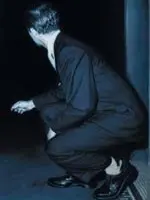
These paintings are about America, I guess from a very European point of view.
They're based on photographs, mainly newspaper photographs, of the Fifties and Sixties from archives in New York and L.A. Most people in these pictures are real people, caught in some long forgotten, petty events.
I rearranged the scenes, introduced new characters, and created new relationships and contexts. And then I painted them in black and blue.
That's how I remember America back then in the early Fifties in Vienna, where I was born. The big war had ended a few years ago, but the city still seemed undecided as to whether this was the end of the world or if life should go on.
It was a strange, sad and surreal world. The streets were empty, the houses dark - many of them in ruins from the bombings.
The few people I saw seemed ugly, clumsy, and depressed.
I never saw anybody laughing and I never heard anybody sing. It was a world without sound and colour. Everything moved in slow motion, like slime. We had no phones, no television, no cars, no music, no pictures, except the paintings of tortured people in the Roman Catholic church which made a deep impression on me, haunting me in the sleepless nights of my childhood limbo.
And then, without any warning, suddenly there was America.
When I saw the first picture of Elvis I was in a state of shock, because I couldn't believe that a human being could be so beautiful.
That was the beginning of the never-ending flood of American images that suddenly came over us and started to penetrate and transform everything.
09/24/2006
Sunday Independent
'It was intuition. I'd never been here before'
Emily Hourican
Gottfried Helnwein Exhibition in Cork
WITH his bandanna and long dark hair, wearing something that looks like a flak jacket, swarthy Gottfried Helnwein could be a guerrilla or a pirate-revolutionary.
But the rock 'n' roll lifestyle and 17th-Century castle in Co Tipperary adorned with huge canvases tell a different story. He's an artist of serious international reputation, veteran of many controversies, who counts Sean Penn, Marilyn Manson, Norman Mailer and, once, Marlene Dietrich among his friends.
02/25/2008
JOIA Magazine
GOTTFRIED HELNWEIN - INTERVIEW
Alvaro Fierro Nadales
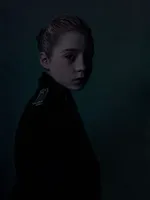
"Finally we are living now in a society that is a combination of what Huxley foresaw in his "Brave new World" and Orwell in his "1984". We are caught in a stream of constant propaganda and we are under total surveillance. This is the Age of materialism, consumerism and decadence. Our heroes are idiots like trash-princess Paris Hilton, in their sad 15 minutes of fame. Children are shooting other children in schools before they kill themselves and in other parts of the world they blow themselves up in the middle of crowds.
Doesn't that look like the end of a civilization, the second fall of Rome?"

09/10/2000
San Jose Mercury News
EXHIBIT EXPLORES THE CREEPIER SIDE OF PLAYFUL IMAGES
Jack Fischer
Helnwein's Mickey: It's hard to imagine another contemporary symbol so perfectly balanced between beloved childhood icon and its day job as a corporate logo.
HEY, there's Mickey Mouse at the San Francisco Museum of Modern Art!
Wait a minute. That's not my perky little pal from ''Steamboat Willie.'' This Mickey looks a little mean. This Mickey looks like Michael Eisner's id. Nice Mickey. Don't hurt me. Here's a dollar.
That's how it goes at ''The Darker Side of Playland: Childhood Imagery from the Logan Collection,'' perhaps the first show to suggest that there are indeed monsters under the bed, and you might as well get used to it.
SFMOMA curatorial associate Heather Whitmore Jain struck the perfect note by opening the show with Austrian painter Gottfried Helnwein's massive and menacing oil and acrylic ''Mickey.''
It's hard to imagine another contemporary symbol so perfectly balanced between beloved childhood icon and its day job as a corporate logo. Helnwein chooses an earlier Mickey, with the smaller, darker eyes and the longer, more ratlike nose to help make his point. With his pasted-on smile and forward lunge, this Mickey looks more ready to negotiate cable and Web rights than to comfort a preschooler.
12/01/2008
Waterford City
The Last Child - the Reviews
Fury greeted Gottfried Helnwein's Waterford Installation, but his art deals in public trauma, says Gerry McCarthy
Again and again, he has painted children in brutal, violent settings. He has used Christian iconography to depict Nazi officers, and juxtaposed rampaging soldiers with Images of childhood innocence. Visceral reactions come with the territory: one Installation in Cologne was physically attacked by neo Nazis. And yet, he says, he does not set out to shock. "Shock is a useless effect," he says. "Somebody in shock is completely useless. I want to make somebody think."
Instead, Helnwein's work speaks of a deep psychological need for meaning, even as it takes the form of violence and confrontation. Such an approach is rooted in the uneasy silences of growing up in post-war Austria and the shattered illusions of his early adult life, yet is still infused with an uneasy idealism.
His art has brought him material rewards. Over the past 30 years, he has become an art superstar. His paintings and photographs command large prices. As he talks in his Co Tipperary castle, garbed in black clothes and dark glasses, Helnwein has the air of a veteran rock star and the lifestyle to match it.
The Sunday Times, Gerry McCarthy
10/10/2000
canongate books
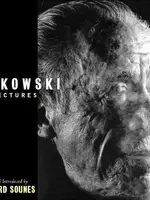
Bukowski in Pictures
Edited by Howard Sounes
Cover: Gottfried Helnwein
The Book Bukowski in Pictures is the first pictorial biography of cult writer, Charles Bukowski. The writer's extraordinary private and public life is illustrated with hundreds of photographs, most published for the first time. Extracts from Bukowski's poetry and prose are sprinkled throughout, together with drawings, cartoons, manuscripts, rare broadsides and personal letters. It features powerful new portraits of Bukowski by leading photographers such as Gottfried Helnwein and Tony Lane, former art director of Rolling Stone, as well as work by R.Crumb. All photographs have detailed captions by biographer Howard Sounes who has also written a powerful introductory text with new revelations gleaned from Bukowski's recently declassified FBI file. The end result is a fascinating life in pictures that will be essential for all Bukowski fans.
10/08/2010
The New York Observer
Nazis, Wounded Children, and Mickey Mouse: Gottfried Helnwein's Solo Show
Video
The New York Observer recently spoke with Janine Cirincione of the Friedman Benda gallery about the provocative young artist Gottfried Helnwein's first show, "I Was A Child," which runs there through Oct. 23. For a taste of his grim works, check out our video preview below.
11/22/2012
Village Voice
Gottfried Helnwein and the Dreaming Child
Jonathan Kiefer
First Run Features - Directed by Lisa Kirk Colburn
When the powers behind the 2010 Tel Aviv production of Hanoch Levin's Holocaust opera The Child Dreams sought a designer, it seemed like plain sailing to bring on the Austrian provocateur Gottfried Helnwein, distinguished alumnus of what he calls "the same academy that rejected Adolf Hitler twice—which is, of course, the biggest mistake that any university has ever made in history."
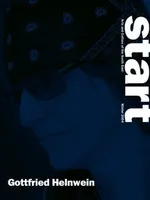
11/24/2004
Start
INTERVIEW WITH GOTTFRIED HELNWEIN
Brendan Maher
"...When I look at a work of Art I ask myself: does it challenge me, does it touch, move or inspire me? Do I learn something from it, does it startle or amaze me - do I get excited, upset?
That is the test any artwork has to pass: can it create an emotional impact on a human being even when he has no education or any information about art? I’ve always had a problem with art that you can only understand if you have a degree in art history, and I have a problem with theories in general. Most of them are bullshit anyway. Most critics and theorists have little respect for artists, and I think the importance of theory in art is totally overrated. Real art is self-evident. Real art is intense, challenging, enchanting, exciting and unsettling; it has a quality and magic that you cannot explain. Like the Blues, a poem of Rimbaud or Rembrandt's late self-portraits. Art is not logic, and if you really want to experience it, your mind and rational thinking will be of little help. Art is something spiritual that you can only experience with your senses, your heart, your soul. Think of Bob Dylan, Hendrix, Mozart, Howling Wolf, Goya, Bukowski or Robert Crumb - do you need to know the theories that some busybodies might attach to their art in order to experience it?
Marcel Duchamp said: "The work of art is always based on the two poles of the onlooker and the maker, and the spark that comes from the bipolar action gives birth to something - like electricity."
These two poles is all you need.
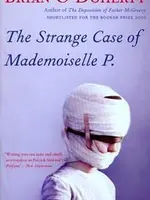
08/01/2001
arcadia
The Strange Case of Mademoiselle P.
Brian O' Doherty
06/27/2008
Provokator magazine
Expose Your Inner Guilt with Gottfried Helnwein’s Angels Sleeping
Phil Williams
Gottfried Helnwein Angels Sleeping hyper-realistic art Prague Rudolfinium Galerie.
What do Marilyn Manson, Mickey Mouse, violence against children and Nazism have in common? There may be a few ways to answer that question, but Gottfried Helnwein’s exhibition, Angels Sleeping, brings these topics together most powerfully, and might expose a few feelings of anguish you never knew you had.
If you have yet to experience the hyper-realistic paintings of Austrian artist Gottfried Helnwein, head to the Galerie Rudolfinum in Prague at once. The art on offer spans his work from the 1970s up to the present day, split into five key sections that explore his most common themes of psychological and sociological suffering, with paintings so realistic you’ll question your own eyes.

04/14/2009
AssociatedNews.US
Artist Gottfried Helnwein Finds Freedom in LA, Part I
Michal Szyksznian
HELNWEIN: "LA is a strange place. A few blocks from my studio the streets are filled with thousands of homeless people, huddling on sidewalks or staggering through the streets - and from time to time some lost soul is gesticulating franticly and shouting at invisible enemies. I live and work in the so called “artist district” in downtown Los Angeles - an innocent little island with old warehouses and brick buildings that look like leftovers from a noir movie set, inhabited by artists, photographers, musicians, skinny girls with nice tattoos, freaks and Japanese students from SCI-Arc (The Southern California Institute of Architecture) placed in the former Santa Fe Rail Road freight-depot, a concrete block one-quarter of a mile long.
The heart of the artist district is the Groundworks Cafe in a red-painted building across from the old, run-down American Hotel where Bukowski once wrote the screenplay for Barfly. The air is heavily polluted from all these diesel trucks that blow their unfiltered exhaust gases through their erected chrome-pipes into the air of downtown. When I touch my paintings my hands gets black from the layers of black dust that sets on everything."
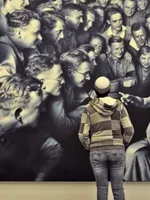
06/19/2014
berkeleyside
Richard Nagler: Here’s looking at you, looking at art
Tracey Taylor
Playful and profound exchanges between people and art
For his new collection of images, Berkeley photographer Richard Nagler spent a lot of time in museums. He also spent a lot of time waiting. Stationed in front of a work of art, he would wait for someone to come along and complete it. The serendipitous, unposed results come from both Nagler’s creative eye as well as his patience.
Looking at Art, The Art of Looking, published by Berkeley’s Heyday Press, and launching tomorrow night at Mrs Dalloway’s bookstore in Berkeley, is the culmination of all those hours spent at major art museums around the world.
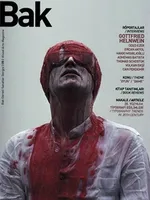
08/10/2006
Bak Magazine
Interview with Gottfried Helnwein
Ozan KARAKOC
Turkey
Helnwein: "We are living in the age where materialism has finally triumphed. The world has been purged of fairies, elves, witches, angels, enchanted castles and hidden treasures. Dreaming and fantasizing is nowadays considered a chemical imbalance in the brain of the child. For reasons of national security there are no realms of imagination anymore in which to escape - children are held in the merciless headlight of the adults level-headed, common-sense-madhouse: a world of stock-markets, war, rape, pollution, television-moronism, prozak, prison-camps, miss universe-competitions, genetic engineering, child pornography, Ronald McDonalds, Paris Hilton and torture."
12/21/2006
NY Arts Magazine
Gottfried Helnwein
Mathilde Digmann
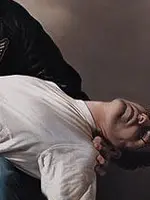
Gottfried Helnwein is an artistic icon in both Europe and America who has exhibited all over the world. His style ranges from comics to hyper-naturalism and even to installation work, but is always founded in an amazing skill and craftsmanship. The show features works of Helnwein’s dating back to the 80s and up to 1997, in a gathering of the best of Helnwein’s work from the past two decades. The most astounding work is, without a doubt, Pietà from 1997, which also introduces some of the main elements that flow through Helnwein’s work—namely the use of motives from religious art and references to major works of art history.
08/19/2007
Louisville Courier-Journal
'Body' exhibit contemplates human pain
Diane Heilenman
Art
Exhibition at the Cressman Center Gallery - University of Louisville
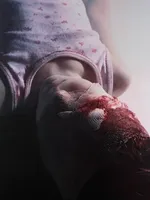
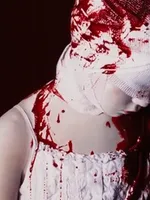
But what does the hyper-realism of Austrian-born, Irish-based artist Gottfried Helnwein say to us and about us in the context of "Body Anxious"? His work is what puts this show on the map of bodily pain and anxiety. He has painted a hyper-realistic, oversized portrait of a little girl in a pink-and-white undershirt, her head and eyes swathed in gauze so recently wrapped that it glistens with blood. It is from Helnwein's "Los Caprichos" series, named after the famous Goya series. Art historians say Goya's "Caprichos" mark the beginning of the modern world of art because they were the first to look at, rather than avoid or symbolize, pain, fantasy, cruelty, disloyalty and any other number of grievous human traits.
04/23/2010
Dread Central
After Years of Anticipation - Manson's Phantasmagoria: The Visions of Lewis Carroll Teaser Trailer
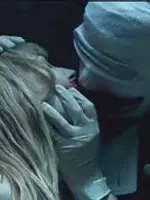
The figure in the medical mask is artist Gottfried Helnwein
Originally conceived in 2004 with pre-production throughout 2005 via The Wild Bunch (UK) and with an initial budget of $5-7 million, 'Phantasmagoria' was due to begin filming in 2006. Lily Cole, inspiration of Tim Burton's recent 'Alice in Wonderland', was originally cast as Manson's Alice for 'Phantasmagoria'. This teaser also features real-life twin sisters engaging in questionable acts and burlesque superstar Dita Von Teese. The figure in the medical mask is artist Gottfried Helnwein, and the bird-face masked character and white-gloved Lewis Carroll impresario [are both] Marilyn Manson.
10/10/2012
Chilango Magazine
Interview with Gottfried Helnwein
English Version
My work process is based on passion, intuition and curiosity. I don't have a specific plan or method. I just keep moving forward, and each work is a new attempt to get closer to my basic vision, knowing that I will never fully reach it.
05/31/2005
The New York Times
A 'Rosenkavalier' Without Ham and Schmaltz?
Anthony Tommasini
the high-concept and boldly stylized sets and costumes by the designer and visual artist Gottfried Helnwein will provoke the strongest reactions.
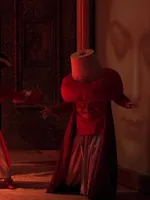
- The Los Angeles Opera's much-anticipated new production of Strauss's "Rosenkavalier" opened on Sunday night at the Dorothy Chandler Pavilion, and you can bet that the high-concept and boldly stylized sets and costumes by the designer and visual artist Gottfried Helnwein are going to provoke the strongest reactions.
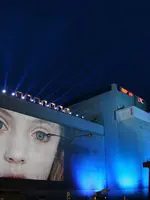
Restraint was not a hallmark of the outlandishly captivating production. In a detailed program note, Helnwein writes that the era of Maria Theresa was a time when everything was theater, at least for the upper class, and that over-the-top fashion styles often included masks and white-face. His designs combine spartan sets with wildly extravagant costumes ranging in style from the surreal to the ridiculous. Act I is bathed in shades of blue. In their stiffly modern blue suits and blue-faced makeup, the Marschallin's notaries look like the members of Blue Man Group. In Act II, the mansion of Herr von Faninal, a wealthy commoner with aristocratic pretensions, glows with garish golden yellows. Faninal's servants could be creatures from "The Cabinet of Dr. Caligari," no doubt an intentional evocation: the production begins with projected scenes from Robert Wiene's 1926 silent film adaptation of "Der Rosenkavalier," and Wiene also directed "Caligari."
In any event, the cast seemed empowered by the production.
07/26/2009
Wiener Zeitung
"Save the World Awards” on 24 July in Zwentendorf, Austria
Thomas Hochwarter
Jermaine Jackson at Austrian gala. Former "Jackson 5” star will accept award on behalf of Michael Jackson.
Earlier this week, it emerged that controversial Austrian artist Gottfried Helnwein will unveil a tribute to Michael Jackson at the event. The artist, photographer and installation and performance artist, who was a friend of the singer, will reportedly show larger than life portraits of children and paintings of Jackson himself. Helnwein collaborated with Jackson several times and the singer used a Helnwein painting of wounded children for the booklet for his 1995 album Save "HIStory”. The Vienna-born artist has in the past caused controversy and public outrage with his work, much of which focuses on children and the Holocaust.
08/04/2004
Oakland Post
Legion's 'The Child' - for Adults Only
Janos Gereben
An artist with conscience, a fearless man with a penchant for profoundly bizarre and complex, meaningful images, Gottfried Helnwein is making a grand re-entry to San Francisco. His work was exhibited here four years ago when his freaky mixed-media portrait of Mickey Mouse - "Mouse I" - was part of the SF Museum of Modern Art's "The Darker Side of Playland - Childhood Imagery."
The paintings are extraordinary, grotesque, powerful, "difficult" and challenging, according to Parker and the curator of the Legion exhibit, Robert Flynn Johnson.
They are all that, and more. A simple description of the works, without context, would only indicate a freak show: a photo-like painting of Hitler with two very Aryan-looking children, an actual bar of soap encased under them; a group of uniformed Nazis gazing adoringly on a contemporary Mother and Child (Helnwein explaining that the people in the photograph that was the basis for the painting were actually surrounding Hitler); images of normal children mixed with misshapen, ill, tortured youngsters. "Why would people cause so much pain to others?" Helnwein asks, and he shows the pain, unflinchingly, but not to titillate the demented or to horrify the ignorant.
"The Child" - located in a part of the Legion next to a permanent exhibit of Renaissance Mother and Child images by Pontormo, Tintoretto, Raphael, and others - has far more to offer than politics, morality, controversy and horror. Although there is no doubt that primarily Helnwein is "the artist as provocateur," he is also an artist in the sense of creating unique and lasting images.
04/04/1997
MTV Interview with David Bowie, Marilyn Manson and Floria Sigismondi
Floria Sigismondi Discusses Her Dark Aesthetic
Kurt Loder
MTV: Sigismondi and Bowie both acknowledge lifting the imagery in his "Dead Man Walking" video from the work of the English painter Francis Bacon.
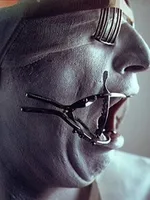
The look of Floria's most noted video to date, though, [QuickTime,1 MB] "Beautiful People," although it owes a debt to Austrian painter Gottfried Helnwein, was pretty much the inspiration of the artist, Marilyn Manson.
KURT:
The new wave of rock-video grotesquerie isn't new at all, actually, the Austrian painter Gottfried Helnwein, whose self-portrait adorned the cover of an album by the German band Scorpions some years back, was doing images of medical horror twenty years ago,
and no one in rock has gone as far down the road to happy depravity as photographer Joel Peter Witkin, whose deeply disturbing work, which you might best seek out on your own is much admired by Nine Inch Nails leader Trent Reznor, no slouch at images of icky sickness himself.
08/10/2006
Dansk Magazine
Gottfried Helnwein
Interview
If you are an artist and you have had the bad luck to be born into this world - what you first realize when you open your eyes is the horrifying signature looks of mediocrity.
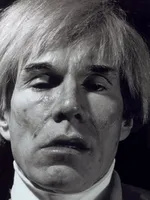
Andy invited me to the factory in New York 1983 and after the usual compliments how he loved my work and so on, he asked me to follow him into an empty room where we sat down opposite to each other and he just froze and he didn't say anything and he didn't move. We sat in silence for some time and I didn't know what to do - at first it was strange and it felt kind of awkward, but then slowly everything started to transcend and the tension dissipated and nothing seemed important anymore. Andy looked like a wax-dummy in the posture of a pharaoh that had been dead since thousands of years - the room around us became darker and darker and the white of Andy's face and hair got a glow so intense that it started to burn my eyes. I realized that we were floating now somewhere in outer space and nothing mattered anymore and I raised my Nikon and shot.
01/26/2010
NTDTV - New Tang Dynasty Television
Holocaust Children Remembered in Israel Dramatic Arts
Famous Austrian designer and artist Gottfried Helnwein designed the set and costumes for “The Child Dreams” Opera. He also presents his work outside the opera. Helnwein says his work and the playwright’s have a strong internal connection.
Gottfried Helnwein: “In my work, the center of everything was always the child, the child versus the world of death, the world of corruption, the world of greed and destruction, and the child standing for innocence, purity, and I think that's a spirit of the play.”
03/11/2011
SquareCylinder
Gottfried Helnwein at the Crocker Art Museum
David M. Roth
To those who maintain that art has become toothless for not asking the big questions, Helnwein stands out for having credibly staked out the moral high ground.
08/20/2001
The Irish Times
This year's Kilkenny Arts Festival helped take challenging work out of the gallery and onto the streets.
Aiden Dunne
Helnwein is famously confrontational, and his bold conflations of Nazi and Christian iconography, in Epiphany and other prominently displayed pictures, predictably generated some friction. Yet, in a way, one shouldn't rush to condemn condemnations of, or expressions or resignation about, Helnwein's work, no matter how superficial or uninformed they turn out to be. Because, let's face it, a large part of its effectiveness had to do with its calculated, barbed ambiguity.
The point of the images is that they put it up to you as a viewer. Given that, one potential line of criticism is that they are designed solely to be provocative, like Marcus Harvey's portrait of Myra Hindley. But the abiding strength of Helnwein's work is that provocation is a means rather than an end; it is - however uncomfortable - morally grounded, if not necessarily in a way that will please all observers...
His beautiful photographs of Kilkenny children are, collectively, a recognisable derivative of his work Selection, which implicitly placed the viewer in the position of someone marking children for extermination. Strong stuff.
If that seems irrelevant in an Irish context, one could always point to Northern Ireland and to the scandals that have shaken the complacent authority of church and state in recent years.
What is more innocent, more open, more charming than the face of a child? Except that we are more than ever uncomfortably aware that the act of looking is not at all innocent, and Helnwein's children, with their closed, downcast eyes, decline to meet our collective gaze. Why? Perhaps because they insist on remaining within the orbits of their imaginations.
There is also, however, a slight unease arising from the uniformity of the images and the awareness that the subjects are being directed. Helnwein has a knack for throwing responsibility for what we are looking at back onto us, the viewers.
03/01/2008
Artweek
Gottfried Helnwein
Debra Koppman
"I Walk Alone", Gottfried Helnwein, one man show at Natalie and James Thompson Art Gallery, San Jose State University
Gottfried Helnwein’s exhibition I Walk Alone is pretty unnerving, and that is his point. Large-scale photo-realistic paintings confront the viewer like a series of film stills forming a bizarre and disturbing sequence of nightmares. Using digital photography and computer-generated images combined with classical painting techniques, many of the images are only black and white, while others use one additional color, such as red, to dramatic and horrifying effect.
The images might be seen as bits of individual stories, or pieced together in a variety of frightful ways, or seen as a generalized narrative of brutality and terror, in which innocence is perhaps relative. We are all implicated in Helnwein’s unfolding dramas.
09/20/2018
Kashmir Images
Shock Art
Basharat Bashir
In 1996 Gottfried Helnwein painted the Adoration of the Magi with Adolf Hitler as Baby Jesus, which was displayed at the State Russian Museum St. Petersburg, the Legion of Honor, Fine Arts Museums of San Francisco, Denver Art Museum,Museum Ludwig and others.
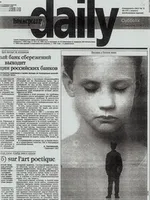
06/12/1997
Kommersant Daily
Exhibition in the State Russian Museum, St Petersburg
Frontpage
Gottfried Helnwein- Retrospective in the State Russian Museum, St Petersburg
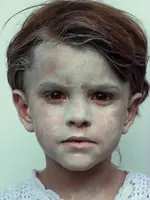
01/20/2003
The Sydney Morning Herald
Holocaust, through a child's eyes
Harriet Cunningham
A dark new stage production mixes images of innocence and brutality
The child stares out from the publicity photos, skin white with dust and eyes expressionless. In a society fluent in the language of news media it's almost impossible not to interpret the blank face of Gottfried Helnwein's photo Child1:
it becomes a symbol of lost innocence and silent accusation.
The show this image promotes, Close Your Little Eyes, is a music theatre-installation devised by composer and director Max Lyandvert. Taking as its starting point a lullaby from the Vilnius Ghetto, it juxtaposes visual and sound images with music scored for 16-voice children's choir, string quartet and soprano soloist.
01/19/2003
Hotdog
The Genius of Helnwein
Interview by Tristan Burke
Hutdog talks to Gottfried Helnwein;the artist behind the greatest poster never sold.
The Rules of Attraction promotional campaign skirted with controversy on more than one occasion, but there's a story that remains largely untold.
Helnwein:
Two images I could not forget - the rape scene and the suicide of that girl in the bath tub - very startling and so different than anything you have ever seen about these subjects on film.
There was a strange and sad beauty in the tardy, dreamlike movements of this girl with the expressionless face, slashing her wrists and slowly turning the water red. Theresa's acting, camera and music in that instant were one of the magic moments in cinema-history.
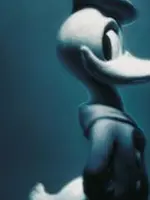
01/31/2003
Pittsburgh Tribune Review
Artists explore the development of the cartoon character and its impact on society
Kurt Shaw
Tribune-Review art critic
Purnell Center for the Arts, Carnegie Mellon University - Comic Release: Negotiating Identity for a New Generation
Although cartoons and caricatures have played an important role in Western culture since the Middle Ages, the development of the comic strip and comic books are a unique American phenomenon and has contributed significantly to American visual culture.
...Gottfried Helnwein's "American Prayer," which is a large hyper-realistic painting of a boy kneeling in bedtime prayer to a large and looming Donald Duck.
About Helnwein's piece: Clark says, "In many ways, this is the signature piece for this whole show, because it shows how cartoon imagery has entered our culture, our world, our daily life."