09/12/2020
SKIRA
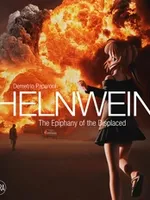
Helnwein - The Epiphany of the Displaced
edited by Demetrio Paparoni
The new Monograph - Preface by Sean Penn
The most complete monograph realized about the Austrian painter, photographer, filmmaker, performer and set designer, born in Vienna in 1948. The works of Helnwein show the bare truth where society instead hides and removes. What emerges by leafing through the pages of this monograph is the obsession that accompanies the artistic career of this notable Austrian artist, marked by the wish to breakdown the rhetoric of war, the constructions of self-absolution, the mystifications of religious institutions in whose pitfalls men periodically fall as if they had not committed the same mistake over and over again.
01/01/1992
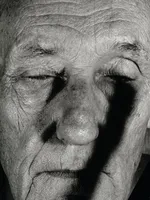
William S. Burroughs
Helnwein' s work
It is the function of the artist to evoke the experience of surprised recognition:
to show the viewer what he knows but does not know that he knows.
Helnwein is a master of surprised recognition.
12/26/2004
San Francisco Chronicle
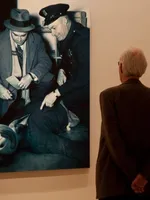
CRITICS CHOICES 2004 - Helnwein
Steven Winn
Chosen as the most important show of a contemporary artist in 2004.
TOP 10
The Gottfried Helnwein exhibition "The Child" at the Palace of the Legion of Honor (San Francisco Fine Arts Museums, July) was chosen as the most important show of a contemporary artist in 2004.
"In the first of two shows (the other at the Modernism Gallery in November), Helnwein's large format, photo-realist images of children of various demeanors boldly probed the subconscious. Innocence, sexuality, victimization and haunting self-possession surge and flicker in Helnwein's unnerving work."
12/02/2016
Thames & Hudson
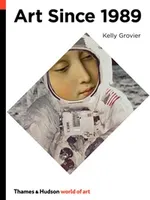
Art since 1989
Kelly Grovier
The work of over 200 key artists, Art Since 1989
Fascinated by the unlikely merging of the holy and the horrifying is Irish-Austrian artist Gottfried Helnwein, whose series of hyperrealist paintings Epiphany I (Adoration of the Magi), Epiphany II (Adoration of the Shepherds), Epiphany III ( Presentation at the Temple), undertaken between 1996 and 1998, collapsed conventional choreography associated with the Christian narratives in traditional old master paintings with the historical set design of German Nazism. Epiphany I uncomfortably restages the unmistakable postures of Medieval and Renaissance depictions of the Madonna and Child in the anachronistic context of late 1930s or early 1940s Germany.
09/12/2020
Sean Penn
Gottfried Helnwein
Well, the world is a haunted house, and Helnwein at times is our tour guide through it.
I think in anything that is really relevant and emotional art, there is some kind of a mirror that people experience. I don't think that you can recognize a feeling from something that you look at unless it's part of yourself, and so when someone is willing to take on the sadness, the irony, the ugliness and the beauty in the kind of way that Gottfried Helnwein does.
07/05/2015
Klaus Albrecht Schröder
Die Theatralik des Einspruchs
Direktor der Albertina, Wien
Gottfried Helnweins Kunst ist zutiefst in der Gegenwart verankert. Seine Malerei hat unsere Zeit zum Gegenstand: die Nachtseiten unserer Zeit, Gewalt, Grausamkeit, Krieg, Unterdrückung.
Helnweins eigene Aktionen „Hallo Dulder“ und „Allzeit bereit“ aus den mittleren 1970er-Jahren sind wahrscheinlich die letzten Abkömmlinge von dem, was man als „das Österreichische“ in Helnweins Kunst bezeichnen könnte. Danach ist Helnwein eher ein deutscher Maler, dessen Bilder man neben Gerhard Richters gebrochenem Fotorealismus sehen möchte, um ihren internationalen Stellenwert angemessen zu bestimmen...
Die gesamte Kunst Helnweins ist eine Auseinandersetzung mit der Wirklichkeit: aus dem Geist des Einspruchs. Das definiert ihre Schärfe. Das macht ihre Bedeutung und Größe aus.
03/01/2005
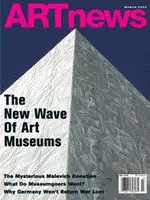
ARTnews
REVIEW: Gottfried Helnwein, San Francisco
Kenneth Baker
A highly satisfying survey of his work at the Legion of Honor museum titled "The Child" was dominated by images of children, as was a current exhibition of his more recent work at Modernism.
06/03/1988
Edition Braus
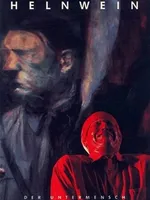
Der Untermensch
Peter Gorsen
Self-portraits from 1970 - 1987
Einzelausstellung, Musée d’Art Moderne, Strasbourg
texts by Peter Gorsen and Heiner Müller.
08/15/2004
Robert Flynn Johnson
The Child - Works by Gottfried Helnwein
Fine Arts Museums of San Francisco
..A clarity of vision in his subject matter was emerging in Helnwein's art that was to stay consistent throughout his career. His subject matter is the human condition. The metaphor for his art, although it included self-portraits, is dominated by the image of the child, but not the carefree innocent child of popular imagination. Helnwein instead created the profoundly disturbing yet compellingly provocative image of the wounded child. The child scarred physically and the child scarred emotionally from within.
05/01/2013
Albertina Museum Vienna
Looking Inside: A Conversation with Gottfried Helnwein
Howard N. Fox
On the Occasion of the Retrospective of Gottfried Helnwein at the Albertina Museum, May 25, 2013
GH: Vienna, the city I was born into right after the Second World War was a dreary place. The long shadows of the Third Reich were still cast over the city and the smell of death was in the air. I remember the empty streets, ruins of bombed houses, rust, rubble, no colors, no sound. There was a sense of despair. All the grown-ups I saw seemed silent, dark and broken. I never saw anybody laugh, I never heard anybody sing. It was a world that stood still, as if undecided yet if life should go on. What I didn't know then, was that my parents’ generation had recently lost two World Wars in a row and just completed the biggest genocide in history. The only art that I saw in my early childhood were 19th century paintings of tortured, blood-soaked martyrs and saints on the wall of cold churches were I spent a good time of my childhood. Until one day some PR-officers of the occupying American forces, God bless their hearts, thought it a good idea to bring some American culture, say Walt Disney's comic books, to us Nazi-kids in Germany and Austria to re-educate us. Especially the Donald Duck stories by the ingenious Disney artist Carl Barks hit us children like a comet and turned our world upside down. It was a culture shock. For me it was also an epiphany, a religious experience. Opening my first comic book was like leaving my parents’ yesterday-realm of death and darkness and stepping into a bright and infinite future. For the first time I experienced color and speed and the power of fantasy and imagination.
01/01/1997
Klaus Honnef
The Subversive Power of Art
The State Russian Museum, St. Petersburg
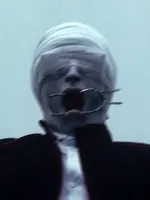
Helnwein - A Concept Artist before the Turn of the Millennium. Is it sheer coincidence that Gottfried Helnwein, the Austrian artist, created a portrait of both the German and the American? Coincidence, that he captured Warhol as a disturbing spectre on photograph, but painted Beuys? And that he then photographed the painted portrait of Beuys in the hands of Arno Breker, Adolf Hitler's favourite sculptor? There are weighty reasons for considering Helnwein the legitimate heir to Beuys and Warhol.
06/01/1988
Peter Gorsen
THE DIVIDED SELF
"Der Untermensch"
Edition Braus, Heidelberg
Gottfried Helnwein in his self-portraits
Je est un autre, RIMBAUD.
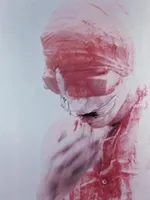
Helnwein compared the "quietly theatrical" ecstatic attitude of his self-portrait with the heroic pose of the figure of the suffering figure of Sebastian and generalizes both to the stigma of the artist in the 20th century, making him a kind of saviour figure. In addition, its poetic title sets the viewer onto the right track. The visual montage of the modern artist as Man of Sorrows with Friedrich's landscape painting projects the dashed hopes of the romantic rebellion into the present, to the protest thinking of modernity, which has become introverted and masochistic, and its crossing of aesthetic boundaries. Is romanticism making a comeback? No; actually, it had never left modernity. But its rebellion is confining and introverting itself in the "body metaphysics" of contemporary artists to its own flesh and blood.
08/10/2000
Los Angeles County Museum of Art
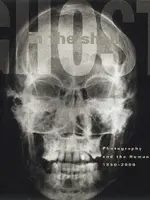
Ghost in the Shell
Robert A. Sobieszek
Curator of Photography, Los Angeles County Museum of Art
Photography and the Human Soul, 1850-2000
Historian Peter Selz has compared Gottfried Helnwein's tortured, screaming, and bandaged self-portraits to Messerschmidt's sculptural self-portraits, but the artist has said, " The reason why I took up the subject of self-portraits and why I have put myself on stage was to function as a kind of representative for the suffering, abused and oppressed human being. I needed a living body to demonstrate and exemplify the effect of violence inflicted upon a defenseless victim. There is nothing autobiographical or therapeutical about it, and I don’t think it says anything about me personally.
11/17/2004
San Francisco Chronicle
Childhood isn't what it used to be. In the arts, it's dark and complex.
Steven Winn
Chronicle Arts and Culture Critic
Gottfried Helnwein's work is on display at the Legion of Honor and at Modernism Inc.
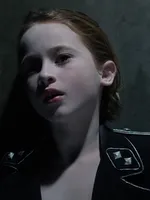
Her lips are parted and colored a luscious deep red. The pancake makeup on her face gives off a marble-white glow. A jacket, adorned with braided gold epaulets at the shoulders, yawns open, exposing a wide expanse of skin down her chest. She appears to be about 8 years old.
There was a time, not so long ago, when the subject of Gottfried Helnwein's new, large-format digital prints at San Francisco's Modernism Gallery might have alarmed or even scandalized a viewer. Not anymore -- or at least not so reflexively...
Adults bring a trunkful of contradictory cultural baggage to any representations of children. That's what makes the work of Helnwein so powerful. In his show, "The Child," at the Legion of Honor, deformed infants and bandaged children stir feelings of pity, defiance and uneasiness about exploitation. There's an ambiguously disturbing painting of a girl aiming a gun into an open refrigerator and another of a bare-breasted mother and child surrounded by Aryan soldiers.
But the most haunting images, here and across town at Modernism, may be the ones of children who seem strangely oblivious to the adult gaze. Some of Helnwein's children peer right past the onlooker. Others sleep, dreaming of anything but us behind their silky eyelids. And some, like the enormous, half- shadowed "Head of a Child" at the Legion, see straight through us with cloudless, infinite blue eyes.
08/14/2004
Fine Arts Museums of San Francisco
Gottfried Helnwein: The Child
Harry S.Parker III
Director of Museums
Fine Arts Museums of San Francisco
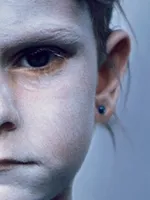
For Helnwein, the child is the symbol of innocence, but also of innocence betrayed. In today’s world, the malevolent forces of war, poverty, and sexual exploitation and the numbing, predatory influence of modern media assault the virtue of children. Robert Flynn Johnson, the curator in charge of the Achenbach Foundation for Graphic Arts, has assembled a thought-provoking selection of Helnwein’s works and provided an insightful essay on his art in this exhibition catalogue.
Helnwein’s work concerning the child includes paintings, drawings, and photographs, and it ranges from subtle inscrutability to scenes of stark brutality.
Of course, brutal scenes—witness The Massacre of the Innocents—have been important and regularly visited motifs in the history of art. What makes Helnwein’s art significant is its ability to make us reflect emotionally and intellectually on the very expressive subjects he chooses. Many people feel that museums should be a refuge in which to experience quiet beauty divorced from the coarseness of the world. This notion sells short the purposes of art, the function of museums, and the intellectual curiosity of the public.
The Child: Works by Gottfried Helnwein will inspire and enlighten many; it is also sure to upset some. It is not only the right but the responsibility of the museum to present art that deals with important and sometimes controversial topics in our society.
11/09/2003
Museum of Tolerance, Simon Wiesenthal Center, Los Angeles
THE ART OF HUMANITY
Jonathon Keats
GOTTFRIED HELNWEIN
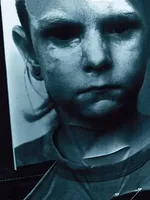
In fact, his work is insistently open-ended. Like Goya's Disasters of War, his art queries time and again, "How can this have happened?" Sometimes viewers reply, assaulting pictures of innocent children, worshipping those of a murderous dictator. Yet such reactions can only bring us to inquire again, louder and with greater urgency, "How can this have happened?" At last we recognize that Helnwein asks questions not in order to solicit answers - hate has no reason - but rather in order that we might begin to pose our own.
11/01/1996
Museum of Fine Art, Otaru, Japan
Helnwein
one-man show
catalogue
text by Chikako Imai
text by Evgenija Nicolaevna Petrova
Chief Curator, State Russian Museum St Petersburg
Alexander Borovsky, Curator for Modern and Contemporary Art,State Russian Museum, St Petersburg
Günter Zehnder,Chief Curator, Rheinisches Landesmuseum, Bonn
text by Andreas Mäckler.
01/01/2010
University of California Press
Objects as History in Twentieth-Century German Art: Beckmann to Beuys
Peter Chametzky
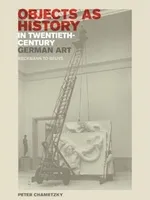
Two years after Beuy's death the Viennese artist Gottfried Helnwein created a striking and odd image bringing Breker and Beuys together. Helnwein posed the eighty-eight-year old Breker unconfortably holding Helnwein's portrait of Beuys in front of his chest. The older man with furrowed brow directs the glossy, skeletal image of Beuys-like an icon painting-away from his own gaze and toward that of the viewer.
01/01/1997
Alexander Borovsky
The Helnwein Passion
Helnwein Monograph
The State Russian Museum, St. Petersburg
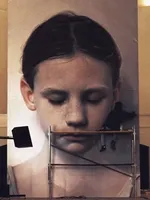
I'll never forget the sensation I had at the unveiling of Gottfried Helnwein's "Kindskopf" in the Russian Museum. And not just because this enormous canvas (six metres in height, four in breadth), well-known from reproductions, seemed to operate in a whole new way in the real, quasi-monumental space of the museum's "Concrete Hall", originally intended for the demonstration of gigantic sculptural compositions. I realised that I was looking at the inner content of this innovative picture from a whole new point of view.
12/01/1987
Roland Recht
The Self-Portraits of Gottfried Helnwein: A WORLD OF HORROR IN PICTURES
Musée d’Art Moderne, Strasbourg
France
Helnwein, Der Untermensch
From this it may be seen that the Viennese Helnwein is part of a tradition going back to the 18th century, to which Messerschmidt's grimacing sculptures are to belong, on which one of Freud's pupils wrote a long treatise. One sees, too, the common ground of these works with those of Arnulf Rainer or Nitsch, two other Viennese, who display their own bodies in the frame of reference of injury, pain, and death. And one sees how this fascination with body language goes back to the expressive gesture in the work of Egon Schiele.
11/02/2005
McGill-Queen's University Press
Gottfried Helnwein’s American Prayer
Petra Halkes
A Fable in Pixels and Paint
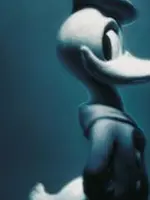
Ever since I clicked on it, Gottfried Helnwein’s "American Prayer" (2000) has taken up residency in my mind.
I began to discover a semiotic richness in this painting worthy of what W.J.T. Mitchell has called a "metapicture" - a "picture that [is] used to show what a picture is". Mitchell situates the concept of metapicture in "'iconology', the study of the general field of images and their relation to discourse," thereby cutting across Greenbergian self-reflexivity into an expanded context that includes popular culture as well as contemporary art. In this wider cultural field, a metapicture does more than reflect on the nature of the picture itself and calls into question "the self-understanding of the observer". I will argue that "American Prayer" derives its theoretical relevance partly from its concealed hybridity, from the interplay between technological media and painting. In this work, the substitution of one medium by another reinforces the meaning that can be created from the iconographic substitution of the child by Pinocchio, and the replacement of the deity by Donald. In the end, Donald’s sideways glance at us indicates that this picture is really about us, the observers; it questions our own place in a cultural web of illusionism spun from the abiding human desire to overcome death.
11/01/2005
McGill-Queen's University Press
Gottfried Helnwein's American Prayer, part 2
Petra Halkes
A Fable in Pixels and Paint
10/15/2006
Denver Art Museum
Gottfried Helnwein, Epiphany (Adoration of the Magi), 1996
Gwen F. Chanzit
Curator and professor, Art and Art History, University of Denver
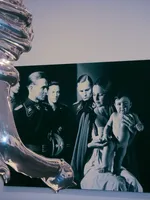
Gottfried Helnwein's Epiphany (Adoration of the Magi) is a strange takeoff on a traditional New Testament theme in art. The work depicts a Madonnalike mother displaying her baby to attentive Nazi officers, Painted in hyperrealist grisaille with chiaroscuro effects, the work resembles an old documentary photograph made huge. The eerie, sinister overtones are unmistakable. Who is this mother? What do these officers want with her and her child? What kind of official paper might the officer on the left hold in his hand and what might be its result? Helnwein, characteristically, presents us with an ambiguous, haunting image and leaves us to wonder about its meaning. Helnwein's background perhaps helps explain why his often difficult subjects have been interpreted in various, often contradictory, ways by opposing sides of the political debate about World War II. With its huge size, hyperrealist style, and disturbing content, this unsettling work bestows a psychological anxiety accompanied by a strong magnetic pull. Confronting it, we tend to stare-entranced by both its beauty and its seductive, malevolent overtones.
01/01/1997
Peter Selz
Helnwein: The Artist as Provocateur
Helnwein Monograph
The State Russian Museum, St. Petersburg
Much like Joseph Beuys, who opened new, unexpected, and far-reaching spheres for art, Gottfried Helnwein has made works that extend beyond the art scene into the social and political realm. Like his predecessor, he has moved beyond the realm of pure aesthetics, engaging his art into the everyday world. Furthermore his principal interest is not to express personal feelings and emotions, but to make statements that go beyond the individual. He wants to see his work not trapped on the walls of museums and galleries, but revealed in the public domain. He expects his work to intervene in the social sphere and to have a direct impact on the life of his time.
01/01/1998
Evgenija Petrova
THE LUDWIG MUSEUM IN THE RUSSIAN MUSEUM
The State Russian Museum St. Petersburg
Palace Edition
The Ludwig Donation
"Child's Head", 1991, Oil and acrylic on canvas, 650x403.5
Pg. 278
The early stages of this monumental head can be seen in Helnwein's widely varied portrayals from the seventies of suffering children, but above all in the Cologne installation of anonymous children's portraits "9th November Night" from 1988.
The human face, in particular the child's face, is of great fascination for Helnwein and consequently accounts for one of his central pictorial subjects. The monumental face of a little girl which is introduced here is, as it were, representative of all children. In our adult society oriented towards profit and success, children can almost be described as a fringe group, their interests indeed being observed in a comparatively modest fashion. Against this background, this monumentalizing of the face in connection with the hyperrealistic style of painting is to be understood as an oppressive irritation of our customary experience of perception.
Originally the child's head was shown in a Minorite church in Krems, Stein; in fact it was placed at the focal point of a huge early Gothic room which lent the picture a positively sacral tone.
01/01/1991
Peter Zawrel
"KINDSKOPF", Helnwein's plea for a different childhood
Exhibition catalogue
Museum of Lower Austria
The auratic face of a child, six metres high, four metres wide, hanging in the triumphal arch of a medieval church, surrounded by dozens of canvases in the standard size of 200 by 140 cm that are mounted on the church's pillars and walls show heads and fantasy creatures which only on closer inspection may be easily recognized as children's drawings - once more Helnwein upsets traditional structures of perception in a number of ways, including the expectations that visitors have of a Helnwein exhibition. This is signalled already by the title "KINDSKOPF", which in addition to being a reference to the theme depicted (the head of a child) refers to the ironically serious self-representation of the artist (in German "Kindskopf" is a somewhat condescending colloquialism for an adult acting in childish ways), similar to Helnwein's earlier catalogue title "Subhuman" ("Untermensch") of 1988.
10/01/2004
Artweek
Gottfried Helnwein at the Legion of Honor
Colin Berry
Helnwein is the next generation’s final ally, a skilled provocateur forcing us to confront the legacy we have bequeathed upon our children. Helnwein is our chronicler, our conscience, the antidote to our failing memories. He refuses to let us forget…
Gottfried Helnwein’s first one-man exhibition at a major American museum is long overdue. 35 years in the making, “The Child” is a collection of more than fifty drawings, watercolors, photographs, and paintings (several monumental in size). It’s also a show that shocks, and among the crowds thronging to see it, some patrons will be put off: the day I attended, a few seemed downright uncomfortable, if not hostile, toward the work. This is fine. Art should shock, and provoke, and make us feel queasy sometimes.
“The Child” achieves all three, but also startles us with aching beauty, bedazzles us with painterly skill, and injects a necessary perspective into the culture’s collective conscience.
05/31/2005
Los Angeles Times
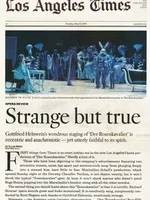
Strange but true
Mark Swed
Gottfried Helnwein's wondrous staging of "Der Rosenkavalier" is eccentric and anachronistic — yet utterly faithful to its spirit.
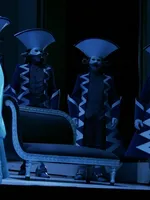
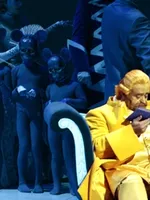
The thing you should know about this "Rosenkavalier" is that it is terrific. Richard Strauss' opera sounds great and looks sensational. It is excellently sung, sumptuously conducted by Kent Nagano and, thanks to Gottfried Helnwein, wondrously strange.
Helnwein — the Austrian artist (painter, photographer, performance artist, filmmaker) who has a studio in downtown L.A. — is known for everything from Marilyn Manson videos to Holocaust installations. He is responsible for the sets, costumes and that ad (which, by the way, looks like an image from a recent staging of a Schumann oratorio that Helnwein designed in Düsseldorf).
Helnwein's vision of "Rosenkavalier" is monochromatic and a riot of color. It is oddly traditional yet seriously odd. It is updated but couldn't be more 18th century. And none of those opposites contradicts.
04/12/1989
ZeitMagazin
Memories of Duckburg
Gottfried Helnwein
At nights my room was plunged into a deep, red light - my toys, the furniture, my bed, my hands - everything had the same color and seemed to be made of the same soft material. As though the natural laws were suddenly suspended, all matter seemed to glow from the inside out. The explanation for this red magic was the large illuminated star of the Red Army on the roof of the factory across the street, which poured it’s fire nightly into my room.
11/09/1988
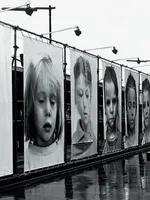
GOTTFRIED HELNWEIN, Ninth November Night, Catalogue
NINTH NOVEMBER NIGHT
Reinhold Mißelbeck
Curator for Photography and new media, Museum Ludwig cologne
It was to our good fortune that Gottfried Helnwein also strove to break away from the museum and gallery sector in order to communicate with a larger public. This appeared on a grand scale on the site between the cathedral and Museum Ludwig, and at a time of "photokina", with its hundreds of thousands of visitors. The 100 metre picture wall did not fail to hit its mark: it induced bewilderment as well as aggressiveness. After a few days numerous pictures had been slashed, one even stolen. Gottfried Helnwein saw the exhibition as a process which would continue and be reflected in later presentations. The pictures were not renewed, but patched up, so that this reminder of the persecution of Jewish people would bear the traces of a lack of insight and understanding in the present day.
11/09/1988
Charles-Henri Favrod
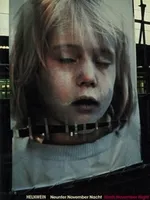
REICHSKRISTALLNACHT - Night and Fog
"Ninth November Night" Catalogue
"In the struggle against the Jew, I defend the acts of God!" Those were Hitler's words in Mein Kampf.
I admire the work of Gottfried Helnwein a great deal. This photographic testimony encourages reflection and provokes the examination of conscience, which is necessary for every one of us where racism is concerned. The laceration of the portraits is proof of the fact that we cannot be indifferent to the warning of the "final solution".
I consider myself lucky to be able to exhibit this gallery of memories in its present form in Lausanne.
01/01/1992
Edition Stemmle
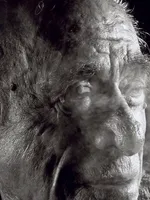
HELNWEIN - FACES
Reinhold Mißelbeck
Curator for photography and new media, Museum Ludwig, Cologne
Looking at Gottfried Helnwein' portraits, we once again experience the shock of the new, of an unprecedented view of the person opposite. I have observed many people confronted with these portraits for the first time and again and again they would show surprise, intensity of experience and fascination. Helnwein's portraits can be seen as counterpoles to the technically sophisticated smoothnes of the portraits of Robert Mapplethorpe.
12/02/1991
Museum Ludwig Köln
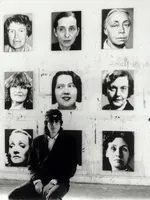
48 Portraits
Helnweins Antwort auf Gerhard Richters Werkgruppe "48 Portraits"
Gerhard Richter schuf in den Jahren 1971/72 in fotorealistischer Manier eine Serie von 48 Porträtbildern von Männern, die die Moderne beeinflussten. Zwanzig Jahre nach der Entstehung von Richters Werkgruppe antwortete der österreichische Maler Gottfried Helnwein 1991/92 mit einem Zyklus von 48 Porträtbildern weiblicher Persönlichkeiten. Als Gegenpol zum kühlen Grau der Serie Richters bediente Helnwein sich warmer Rottöne. 1994 erwarben die Sammler Peter und Irene Ludwig die Werkgruppe, die seitdem Teil der Sammlung des Museum Ludwig ist.
01/11/2016
symploke, Volumne 23, Numbers 1-2, 2015
Intolerable Violence
Brad Evans, Henry A. Giroux
Posthumanisms
Gottfried Helnwein is one of the most important artists alive today. As
Kenneth Baker has noted, the artist’s works not only “mirrors of dark times but counterthrusts to the aggressive reach of so much contemporary culture” (Baker, n.d.). The artist himself is fully aware of the political function of art and its importance in the age of the spectacle.
08/10/2004
sf-station
GOTTFRIED HELNWEIN'S THE CHILD - INNOCENCE LOST
Nirmala Nataraj
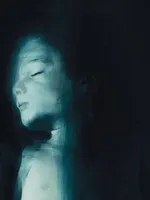
Beyond his treatment of common children's motifs - dolls, toys and ambivalent nymphets- Austrian painter Gottfried Helnwein's vision is shrouded in an aura of enigmatic darkness. With his giant color portraits of stillborn babies; paintings that juxtapose Nazi-era photographs with his own images; and pictures of deformed, abjectly countenanced children swathed in bandages, Helnwein is preoccupied with the indelible suffering that mirrors the more delicate aspects of youth. His work is hauntingly gorgeous and suffused with pathos, precisely because viewers are immediately aware of the larger threat that looms within the pieces: the rupture of innocence.
01/13/2005
Victoria H. Myhren Gallery
IN LIMBO
Gwen F. Chanzit
An exhibition of works from the Denver Art Museum’s fractional and promised gift of contemporary art from the collection of Vicki and Kent Logan.
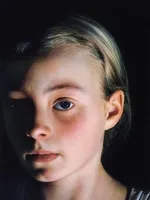
Helnwein’s subject matter involves the complexities of the human condition. His disturbing yet provocative images of physically and emotionally wounded children have been seen as metaphors for larger global issues. He portrays the innocence of adolescence against the backdrop of shameful historical events like the Holocaust to highlight the fragility of humanity in an unstable world. Like Wong from Asia and Sherman from the United States, Helnwein offers up dramatic scenarios featuring youthful protagonists that beg a viewer to complete the equation.
The child’s face – painted in a realistic style yet eerily unreal – may allude to the uncertain (in limbo-like) quality of Helnwein’s own childhood. Helnwein is among a network of contemporary artists expressing visions that embrace and also transcend cultural nomenclature.
07/01/2004
The Crawford Municipal Art Gallery
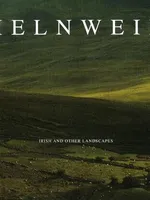
Helnwein, Irish and other Landscapes
Peter Murray
Chief Curator
One man show, 01. July 2004 - 01. August 2004
"Helnwein's meticulous Irish landscapes, which are the cornerstone of this Crawford show, are unashamedly aesthetic: gorgeous confections of pure, delicious spectacle. The typically epic but not inhuman scale imitates the subject matter. The tonal realism will make people go "Wow, are they paintings?" - thanks to the photorealist finish which seems free of the foibles of the human hand. Helnwein works with very small brushes - highlighting and subtly magnifying here, muting colours or creating shadows there; pushing some paintings towards momentary sleights of impressionism; and others towards seamless, burnished hyperreality. The bird's eye view suggests a kind of superhuman vision which can simultaneously take in the entire view with breath-taking clarity, like some bionic eagle."
Mic Moroney, from the essay "Out of the Apocalypse into the Sublime - bursting into Irish Landscape: Citizen Helnwein"
11/01/2004
Schumann Festival 2004
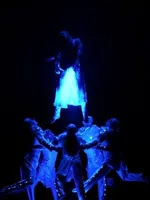
Press-reviews of "Paradise and the Peri", multi-media-installation by Gottfried Helnwein and Gregor Seyffert.
Tonhalle Concert Hall
Düsseldorf
BREATH TAKING STAGE VERSION AT DÜSSELDORF CONCERT HALL
Dance icon Gregor Seyffert, and Gottfried Helnwein, internationally renowned artist and stage designer, came up with a highly intelligent concept for the oratorio, which relied heavily on dance, but also comprised whatever means a modern, multimedia stage design might offer. Consequently, the audience’s eyes almost popped out of their heads. With all the media activities, one might almost forget the enchanting, beautiful music, and singing.
Storming, unceasing applause by an enthusiastic Düsseldorf audience for an evening which is unlikely to be easily forgotten. This was an example of lively music theatre, which, unchallenged, not only stole the glory of Deutsche Oper am Rhein, which presently enjoys a period of profound hibernation, but proved that Düsseldorf may well offer first class art. Why not more often?
(Peter Bilsing)
01/01/1993
Akademie Verlag, Berlin
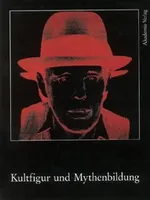
Kultfigur und Mythenbildung
Michael Groblewski and Oskar Bötschmann
Das Bild vom Künstler und sein Werk in der zeitgenössischen Kunst
Anders als Courbet in seinem Atelier ist Beuys in seiner Werkstatt allein.
Kunst und Leben sind in seiner Figur tatsächlich eins geworden, und zwar auf eine stille, aber um so eindringlichere Art.
Ist es da verwunderlich, dass Arno Breker in einer photographischen Arbeit von Gottfried Helnwein Hammer und Meißel aus der Hand gelegt hat und uns resigniert das Bild von Joseph Beuys als unerreichbares Modell vorhält?
( Abb. 20 )

01/01/2002
Cambridge University Press
Shakespeare Survey - Shakespeare and Politics
edited by Stanley Wells
Jonathan Bate, Michael Dobson, Inga-Stina Ewbank, R A Foakes, Andrew Gurr, John Jowett, A D Nuttall, Lena Cowen Orlin, Margreta De Grazia, Terence Hawkes
Volume 44
Shakespeare Survey is a yearbook of Shakespeare studies and production. Since 1948 Survey has published the best international scholarship in English and many of its essays have become classics of Shakespeare criticism.
02/01/2000
TANK Magazine
Western Lands
Gottfried Helnwein
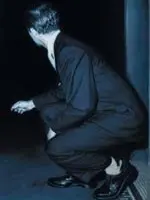
These paintings are about America, I guess from a very European point of view.
They're based on photographs, mainly newspaper photographs, of the Fifties and Sixties from archives in New York and L.A. Most people in these pictures are real people, caught in some long forgotten, petty events.
I rearranged the scenes, introduced new characters, and created new relationships and contexts. And then I painted them in black and blue.
That's how I remember America back then in the early Fifties in Vienna, where I was born. The big war had ended a few years ago, but the city still seemed undecided as to whether this was the end of the world or if life should go on.
It was a strange, sad and surreal world. The streets were empty, the houses dark - many of them in ruins from the bombings.
The few people I saw seemed ugly, clumsy, and depressed.
I never saw anybody laughing and I never heard anybody sing. It was a world without sound and colour. Everything moved in slow motion, like slime. We had no phones, no television, no cars, no music, no pictures, except the paintings of tortured people in the Roman Catholic church which made a deep impression on me, haunting me in the sleepless nights of my childhood limbo.
And then, without any warning, suddenly there was America.
When I saw the first picture of Elvis I was in a state of shock, because I couldn't believe that a human being could be so beautiful.
That was the beginning of the never-ending flood of American images that suddenly came over us and started to penetrate and transform everything.

05/01/2009
University of Minnesota
Gottfried Helnwein
UThink blogs
mors0120
ARTS 1001 Spring 2009: Margaret's Group
Both Helnwein and Jeff Koons work in a wide variety of media—frequently on a large scale—and incorporate elements of pop culture and sexuality. But whereas Koons rejects hidden meaning and embraces the superficial “kitsch” element, Helnwein reappropriates these symbols as a means of enhancing his message. Symbols of innocence take on a decidedly sinister air—in Helnwein’s “Los Caprichos” painting installation, a maniacally grinning plastic Mickey Mouse looms over a series of canvases depicting maimed and vulnerable children. Yet Helnwein’s work comes across as more a statement about general victimization of the young and loss of innocence rather than purely a jab at pop culture. Both Koons and Helnwein have produced multiple self-portraits, but they are also drastically different in tone. Koons’ self-portraits glorify the artist in an excessively heroic manner that verges on the ironic, flawlessly groomed and surrounded by attractive women and/or the trappings of success. Helnwein’s self-portraits, on the other hand, depict the artist as a bandaged, disfigured, sub-human figure, often splattered with pigment and displaying all manner of expressions of pain and worry. Both artists indulge in a certain narcissism, but the effect is utterly different. This contrast highlights the basic difference between the two artists: Koons is content to revel in the decadent and superficial, while Helnwein is obsessed with physical and psychological anxieties.
10/10/2000
canongate books
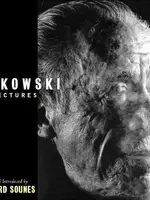
Bukowski in Pictures
Edited by Howard Sounes
Cover: Gottfried Helnwein
The Book Bukowski in Pictures is the first pictorial biography of cult writer, Charles Bukowski. The writer's extraordinary private and public life is illustrated with hundreds of photographs, most published for the first time. Extracts from Bukowski's poetry and prose are sprinkled throughout, together with drawings, cartoons, manuscripts, rare broadsides and personal letters. It features powerful new portraits of Bukowski by leading photographers such as Gottfried Helnwein and Tony Lane, former art director of Rolling Stone, as well as work by R.Crumb. All photographs have detailed captions by biographer Howard Sounes who has also written a powerful introductory text with new revelations gleaned from Bukowski's recently declassified FBI file. The end result is a fascinating life in pictures that will be essential for all Bukowski fans.
05/01/2008
University of East Anglia, Norvich, UK
GOTTFRIED HELNWEIN, MEMORIALISING THE HOLOCAUST
Katy O'Donoghue
Gottfried Helnwein has been described as an artist that has committed himself to reminding the world of the Holocaust. Children are a recurring theme in his work; the strong/weak hierarchy makes them a ready metaphor for the victims of evil. Stripped one by one of their privileges, rights, sustenance, and finally their bodily integrity, the Nazi’s victims were subjected to what Christopher Bollas has called ‘a radical and catastrophic infantilization.’ I first became aware of Helnwein’s work in 2001 when he exhibited at the Kilkenny Arts Festival in Ireland. Large scale portraits of local children and photographs of his paintings conflating Nazi and religious imagery were hung on buildings around the city. I was particularly interested in the intense debate that arose around the installation of the pictures. City Council members objected to the hanging of work on City Hall, the public sent letters of complaint to local newspapers and called in to the local radio station in protest. During the exhibition two of the works were vandalised. Helnwein has maintained that it is important to see a reaction to his work. In February I travelled to Bonn, Germany and met with Helnwein to discuss how, through placing his work in the public realm, he attempts to keep Holocaust memory alive by instigating a dialogue. His subject matter is the repression of the greatest trauma of our century - National Socialism, people’s complicity in it, and its consequences.
10/10/2000
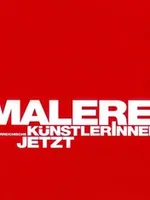
Albertina, Wien
Malerei - österreichische KünstlerInnen jetzt
Ingried Brugger, Angela Stief
painting - Austrian artists now
exhibition-catalogue
Albertina, Wien - 10. 10. 2000 - 18. 10. 2000
Galerie Suppan, Wien - 23.10. - 25.11. 2000
08/01/2001
The Kilkenny Arts Festival 2001
Gottfried Helnwein
Claire O'Donoghue
Curator
The Kilkenny Arts Festival 2001
Exhibition - catalogue
One man show, Butler House, Kilkenny
Installation in the Kilkenny city center
Introduction by Claire O'Donoghue
Essay by Mic Moroney
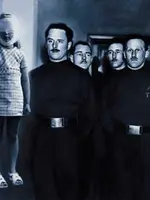
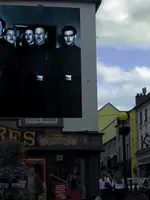
Ninety children from around the city and country were photographed by the artist here in the High Street and nine are displayed in central locations around the city, dramatically enlarged up to 9 metres high. This ongoing project, begun here, will continue in other cities and towns in Ireland as the artist intends to expand the work to include one thousand Irish children. These beautiful,confident and happy children from Kilkenny contrast starkly with some of his more disturbing imagery. The juxtaposition of historical photographs of the Nazi regime with religious imagery of the Madonna and Child in the "Epiphany" series can make uneasy viewing not only in Germany and Austria but also here in Kilkenny.
Amongst a number of possible readings of these works is the uncomfortable relationship between the church and oppression in its various forms. However, as the artist Nolde said, "harmless pictures seldom mean anything". Nolde was banned from painting by the Nazi regime.
09/15/2020
Bloomsbury Academic
On Critical Pedagogy
Henry A. Giroux, Brad Evans
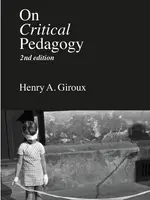
The cover for Giroux’s 2nd edition features another of the brilliant artworks by the Viennese artist Gottfried Helnwein (Aktion Sorgenkind). Featuring a blinded child on a rundown street, her hands are tied by a ribbon that reach beyond the page. This image is perfect for a text that spans nearly half a century of critical effort. This unseeing child is the counterpoint to the blinded Oedipus who also shaped by the rubble of his times, knew his fate and had it mapped out in advance. The ambiguity to the image is striking. Should we look upon it from the Western gaze, invariably we would scan from left to right, hence witnessing the child present yet puppeteered by a force that is invisible and beyond the pale.
01/01/2008
Rudolfinum Gallery, Prague
ANGELS SLEEPING
Petr Nedoma
Gottfried Helnwein - one man show
Let us take one of Helnwein's key images, "Epiphany 1 (Adoration of the Magi)", 1996 (mixed media on canvas, 210 x 333 cm). The figures of the officers in Nazi uniforms observing their leader are genuinely taken from an old photograph. Adolf Hitler is replaced by a seated figure of a young, distinctly Aryan blonde woman in a white dress, holding up with both hands upon her knee a standing, naked, strangely dark haired male infant, who in his face bears certain similarities to his predecessor in the original photograph. The figure of the Madonna, displaying her son to be honoured by the kneeling shepherds, is almost a literal paraphrasing of the painting entitled La Madonna del Rosario, finished by Michelangelo Merisi da Caravaggio in 1607.
01/01/1995
Prestel, Munich - New York
It's only Rock and Roll
David s. Ruben
Curator of 20th Century Art, Phoenix Art Museum
Rock and Roll Currents in Contemporary Art.
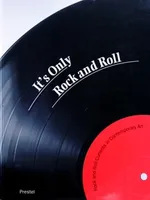
The portraits of Hendrix, Joplin, and Lennon are particulary stirring because their ghostlike treatment translates as a poetic and humble tribute to major creative forces whose lives were tragically cut short. As exemplified by the paintings of Helnwein, the purpose of a contemporary rock and roll portrait may extend well beyond biographical signification to stimulating reflection upon larger issues of social or political consequence.
01/01/1997
Museum of Modern Art, Otaru, Japan
THE METAPHORICAL PRINCIPLE OF GOTTFRIED HELNWEIN
Evgenija Nicolaevna Petrova
Chief Curator of the State Russian Museum, St. Petersburg
The works of Gottfried Helnwein are technically classified as hyper-realism (surpassing super-realism) and at first glance are practically indistinguishable from photographs. Though realistic in terms of technique, most of Helnwein's works are characterized by metaphorical implications.
Among his works, for example, is a painting of a man blindfolded with a bandage around his head. Featured in magazines and newspapers worldwide, looking at this painting may have caused people to feel its unheard cry.
Throughout most of Helnwein's work is the basic principle of realism laced with metaphor. Viewed in this light, this basic principle can be considered, in a sense, metaphorical under the guise of realism. On the contrary, photographs by Helnwein look like paintings with implications. Included in all of Gottfried Helnwein's work, this basic principle demonstrates a reflection of the aesthetics of popular culture and irony, and represent Helnwein's major outlook on the world.
Gottfried Helnwein is endowed with perfect pitch and distinguished sense of contemporary issues. As a painter whose art deals with issues confronting human society, Helnwein creates a new standard of measuring modernism.
04/04/1997
MTV Interview with David Bowie, Marilyn Manson and Floria Sigismondi
Floria Sigismondi Discusses Her Dark Aesthetic
Kurt Loder
MTV: Sigismondi and Bowie both acknowledge lifting the imagery in his "Dead Man Walking" video from the work of the English painter Francis Bacon.
The look of Floria's most noted video to date, though, [QuickTime,1 MB] "Beautiful People," although it owes a debt to Austrian painter Gottfried Helnwein, was pretty much the inspiration of the artist, Marilyn Manson.
KURT:
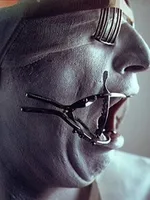
The new wave of rock-video grotesquerie isn't new at all, actually, the Austrian painter Gottfried Helnwein, whose self-portrait adorned the cover of an album by the German band Scorpions some years back, was doing images of medical horror twenty years ago,
and no one in rock has gone as far down the road to happy depravity as photographer Joel Peter Witkin, whose deeply disturbing work, which you might best seek out on your own is much admired by Nine Inch Nails leader Trent Reznor, no slouch at images of icky sickness himself.
02/02/1985
Editorial: Bayreuth, Verlag Bear Press
Vathek. Eine orientalische Erzählung
Beckford, William; Helnwein, Gottfried
eine orientalische Erzählung mit 11 Radierungen von Gottfried Helnwein
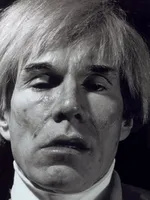
01/01/1992
Helnwein - Faces, Edition Stemmle
HELNWEIN
Reinhold Misselbeck
Curator for photography and new media, Museum Ludwig, Cologne
"I do not refer to the choice of objects, although I mean those too; above all, I refer to that expression of uniqueness, of the special quality of time that pictures can be given by artists who know what a record is. But that requires an interest in the things themselves and it is not enough to be interested in the lighting."
Bertold Brecht
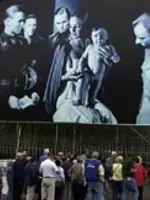
08/20/2001
The Irish Times
This year's Kilkenny Arts Festival helped take challenging work out of the gallery and onto the streets.
Aiden Dunne
Helnwein is famously confrontational, and his bold conflations of Nazi and Christian iconography, in Epiphany and other prominently displayed pictures, predictably generated some friction. Yet, in a way, one shouldn't rush to condemn condemnations of, or expressions or resignation about, Helnwein's work, no matter how superficial or uninformed they turn out to be. Because, let's face it, a large part of its effectiveness had to do with its calculated, barbed ambiguity.
The point of the images is that they put it up to you as a viewer. Given that, one potential line of criticism is that they are designed solely to be provocative, like Marcus Harvey's portrait of Myra Hindley. But the abiding strength of Helnwein's work is that provocation is a means rather than an end; it is - however uncomfortable - morally grounded, if not necessarily in a way that will please all observers...
His beautiful photographs of Kilkenny children are, collectively, a recognisable derivative of his work Selection, which implicitly placed the viewer in the position of someone marking children for extermination. Strong stuff.
If that seems irrelevant in an Irish context, one could always point to Northern Ireland and to the scandals that have shaken the complacent authority of church and state in recent years.
What is more innocent, more open, more charming than the face of a child? Except that we are more than ever uncomfortably aware that the act of looking is not at all innocent, and Helnwein's children, with their closed, downcast eyes, decline to meet our collective gaze. Why? Perhaps because they insist on remaining within the orbits of their imaginations.
There is also, however, a slight unease arising from the uniformity of the images and the awareness that the subjects are being directed. Helnwein has a knack for throwing responsibility for what we are looking at back onto us, the viewers.
01/01/1996
Günter Zehnder
MADONNA
Gottfried Helnwein's artistic and intellectual approach is to aim quite subtly at producing a crucial feeling of insecurity and a concomitant change of consciousness in the viewer, by using seemingly familiar or usual images that have a certain amount of tradition and an apparently well known composition.
01/01/2008
Fenton Gallery, Cork
Gottfried Helnwein
Medb Ruane
Gottfried Helnwein's classic yet unnerving images transform sentimental representations of childhood into portraits of individual subjects frozen at the moment of suffering. His photo-paintings pirouette on the fine line between chocolate box pictures/excessive sentimentality and the cost to children of being treated as commodities, of suffering emotional or physical pain at a grown-up's hands.
High pictorial and technical values create compositions that recall contemporary cinema and seventeenth-century painting, expanding the treatment of time into epic. This apparent grandiosity plays against the immediacy of each suffering subject, underlining the different experience of time in childhood. Small hurts can devastate when you're a child. Big hurts stay with you for years, as survivors of Hitler's Anschluss testify.
Now, in the age of virtual use and abuse of children, Helnwein's insistence on valuing the humanity and charm of the littlest, the least powerful, offers a counterpoint to claims that suffering counts most when you're grown-up. It opens his practice into a series of pictorial mise-en-scènes, as did Rembrandt's tableaux in The Blinding of Samson (1636) or The Night Watch (1642).
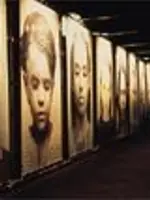
11/09/1988
Simon Wiesenthal
THOUGHTS
Gottfried Helnwein, Ninth November Night, Catalogue
Museum Ludwig Cologne
Not even the children were spared; they, too, fell victim to the destruction.
It was Gottfried Helnwein's most convincing idea to present the consequences to this "period without mercy" in such an unconventional manner. He made no use of photos of heaped corpses; children's portraits force the observer to stop and consider this idea. The fury with which the neo-nazis reacted to these portraits is understandable inasmuch as it is the very same fury with which they have for years been fighting against The Diary of Anne Frank; the murder of children rouses abhorrence and conflict in every human, whether they are motivated by ideology or insanity. The urge to destroy has survived; the portraits bear witness to its rage - an attempt was made to cut them to shreds. "People, please, stop,... look at these children's faces, multiply their number by a few hundred thousand. Only then will you realise or gain an inkling of the extent of this holocaust, of the greatest tragedy in human history!"
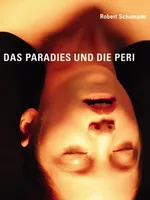
01/01/2004
8. Schumann-Festival 2004
Das Paradies und die Peri
Robert Schumann
Ein Inszeniertes Oratorium
Inszenierung, Choreografie: Gregor Seyffert
Bühne, Video, Licht, Kostüme und Maske: und Gottfried Helnwein
Dichtung aus "Lalla Rookh" von Thomas Moore
für Solostimmen, Chor und Orchester
01/01/1994
Meisterwerke der Kunst, Isis Verlag AG, Schweiz
ZEITGENÖSSISCHE MALEREI
Helnwein, Gottfried, österr. Maler, Grafiker, *1948 in Wien.
Helnwein gehört mittlerweile zu den international populärsten Malern der Gegenwart. Seine künstlerischen Ursprünge liegen allerdings in seiner österreichischen Heimat: Mit dem Magischen Realismus Hausners verbindet ihn die ins Surreale gehende Überzeichnung des Bildgegenstandes, mit Hermann Nitsch und dem Wiener Aktionismus der Hang zur Inszenierung von Blut, Gewalt und Perversion.
11/01/2002
University Press of Missisippi
Helnwein-Interview in new book about Carl Barks
Donald Ault
Editor
Carl Barks - Conversations
Disney artist Carl Barks (1901-2000) created one of Walt Disney's most famous characters, Scrooge McDuck. Barks also produced more than 500 comic book stories. His work is ranked among the most widely circulated, best-loved, and most influential of all comic book art.
Although the images he created are known virtually everywhere, Barks was an isolated storyteller, living in the desert of California and preferring to labor without public fanfare during most of his career.
The influence of Barks's work on such filmmakers as George Lucas and Steven Spielberg and on such artists as Gottfried Helnwein has extended Barks's significance far beyond the boundaries of comics.
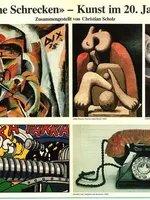
05/09/1992
Basler Magazin
Der schöne Schrecken
Christian Scholz
Kunst im 20. Jahrhundert
Nach 1945 trumpft die Kunst umfänglich erst wieder mit der 68er Bewegung schockierend auf. Etwa in der Pop-Art. Etwa mit den Bildtafeln eines Roy Lichtensteins. Seine Arbeiten, wie auch die anderer Pop-Artisten, tendieren indes zu einer Ästhetisierung des Schreckens. Zitatförmig nimmt Lichtenstein etwa Comic-Motive vom Krieg auf. Doch die Darstellung oszilliert zwischen Wohlgefallen an der Szenerie und Kritik an der Szenerie. Ähnlich ambivalent erscheinen die zahlreichen Drucke von Andy Warhol zum Thema "Kennedy-Mord".
Der wirkliche Schrei, Signum einer Vorkriegsepoche, taucht nicht mehr auf. Ausnahme von der Regel sind die Werke von Gottfried Helnwein. Sie zielen nochmals auf die Scham- und Peinlichkeitsschwelle. Oder sie machen aus dem täglichen Schrecken im Fernsehen ein formatfüllendes Standbild, ("Das Wunder I", 1980, "Das Lied I", 1981).
02/01/2003
Art in America
Gottfried Helnwein at Modernism
Peter Selz
Gottfried Helnwein's extensive 1997 retrospective at the State Russian Museum in St. Petersburg gave visitors an overview of his work going back to his street actions in Vienna in the 1970s, his grimacing iconic self-portraits that suggest self-mutilation, and on to his menacing canvases depicting the evils of the Third Reich.
He has worked as a painter. draftsman, photographer, muralist, sculptor and performance artist. His work is consistently concerned with psychological anxiety.
In his new series of paintings, done in somber monochrome blues, he continues to work with singulae sense of suspense and mystery.
01/01/1992
Benedikt Taschen Verlag
Gottfried Helnwein - Horror and the Transcendent
Andreas Mäckler
"Rock music, films and comic strips are the art of the 20th century: basic artforms that make a powerful impact, with elemental potency and intensity. These are the very qualities I have tended to miss in most approved works of high art. In comparison, the latter are generally bloodless and boring, and have little connection with real life and people." When Gottfried Helnwein made this assessment of contemporary art in 1990, he had long since shown in his own art that he was way ahead of his times. Yet again.
11/05/2003
Wikipedia
Famous Austrians
the online encyclopedia
wikipedia.org
* Gottfried Helnwein, artist, born in Vienna, 1948
* Theodor Herzl "founder" of Israel, lived most of his life in Austria
* Adolf Hitler, dictator of Germany from 1933-1945, born on April 20, 1889 in Braunau am Inn

09/01/2000
San Francisco Museum of Modern Art
The Darker Side of Playland, CHILDHOOD IMAGERY FROM THE LOGAN COLLECTION
Heather Whitmore Jain
Curatorial Associate, San Francisco Museum of Modern Art
Helnwein's "Mickey I" at the SFMOMA
(excerpt) Other works in the exhibition present the dark side of cartoon characters. The prevailing narrative structure of many cartoons is a cycle of one's character's unrelenting attacks on another. Yet the violence of these scenarios is subverted and humor achieved by the lack of any permanent injury to the victim and the gleeful nonchalance of the adversary even during the most aggressive assault. Static representations of wounded or menacing cartoon characters can expose the violence and eliminate the humorous punch line. In Gottfried Helnwein's painting Mickey (plate 24), Mickey Mouse's physical features, which usually contribute to his appeal become a thin veneer of looming attack. Blown up to a monster scale and rendered in an austere gray palette, Mickey's smile is deceptive.
01/01/1999
project @ the mint
Electroshock
Ireland
A Theatre of Cruelty Season
Project Arts Centre
01/01/1997
Luke & A Gallery of Russian Modern Art
Children, who have been a popular subject during the 20th century - from Chagall to Helnwein...
L. Nevolainen
art critic
View from a Sand Pit. About Alexander Bazarin
The works themselves are taken from the artists mind in meditative states. All of them are unearthly while also absolutely everyday. Children, who have been a popular subject during the 20th century - from Chagall to Helnwein - were discredited in Russian art because of sociality and surplus sentimentality.
04/01/2003
CyberZone
L'infanzia a pezzi - Shattered childhood, Gottfried Helnwein
Massimiliano Geraci
Italy
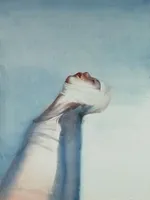
The Austrian artist Gottfried Helnwein is well aware of the discomfort the public feels when confronted with images of children not represented as innocents but to whom a powerful sexual identity (and an awareness) is designated. In his work, and especially his paper drawings, he has created some of the most powerful and disturbing representations of abused childhood in history of art. We are not talking about the form of abuse commonly described in the penal code. By altering or removing the inbred pulsation that spurs us to stubbornly refuse or deny what we do not recognise, the manipulations and interferences (The Intrusion) adults perform on the social body of childhood are denounced.
01/01/2001
project
death in the image world
Rick Poynor
Programme of research
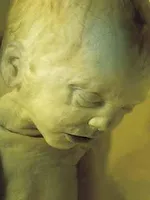
In art we can experience Holocaust at the Imperial War museum, Apocalypse in RCA, and we can just view Euguene Smith's photographs and Helnwein's amazing art within stupefaction, or we can even find ourselves attached with Tarantino's 'ironic, affectless and funny' violent images...
On one hand, the perception and cognition of reality within these images of death, dying and suffering are bound to change one's attitude, ethical and moral views, and opinions in a way where the familiarity to death is dissipated and has become submissive. It has become easier to face the idea of death. So one might argue the fact that desensitized impression is actually sensitizing. On the other hand, the artist, who chooses to exhibit and present the political and provocative images of pain as a means of catharsis in order to heal, might be bringing a new way of dealing with the issues of death, suffering and dying (as in Helnwein's case).
So the project aims to scrutinize the fine line between these two views while investigating the contemporary images of death within a sociological, philosophical and historical approach.
11/09/1988
Catalogue "Ninth of November Night"
SELECTION
With the Installation "Ninth of November Night" Gottfried Helnwein wanted to remind us of the "Reichskristallnacht", November 9th to 10th, 1938. He has consciously foregone using documentary archive material. He is chiefly interested in the attitude behind the catastrophe, the roots of the holocaust - the delusion that one is able to measure the worthiness or unworthiness of humans by the form of the nose and ears, by the hair and colour of the eyes.

07/01/2003
www.eclectica.org
Carl Barks: Conversations
Kevin McGowin
review
Helnwein talks with Carl Barks
For me, the real highpoint of Conversations is the 1992 interview with Gottfried Helnwein, the Austrian-born creative genius whom Donald Ault has justly called "One of the greatest conceptual artists of the past hundred years."
His interview engages Barks in a spirit of imagination and play, and Barks responds to it: What if there were a real Duckworld? What would its layout be?
If anyone can take this idea into the 21st century in current available media, it's Helnwein, whose surreal Duck portraits reveal a dark undercurrent probably always present to one degree or other in Barks's own work—Helnwein's ducks are surreal, haunting, yet strangely funny at the same time. A parody of the dark side of the comic, the work reminds one of Chris von Allsburg, WeeGee, Jim Jarmusch, David Lynch, others. And this is just where the influence is most obvious, in paintings of Donald Duck.
08/01/2003
omega19x.tripod.com
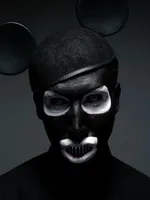
Manson's collaboration with world renown artist Gottfried Helnwein can be viewed in the same way: a combination of low art (rock music) with high art (painting)
Disney and Dada
Blending Art and Music:
With the The Golden Age of Grotesque, Manson has attempted something not seen since Disney's unusual masterwork, Fantasia. Fantasia, the collaboration between Walt Disney and Leopold Stokowski, was Disney's first attempt to combine low art (his animation) with high art (classical music).
Manson's collaboration with world renown artist Gottfried Helnwein can be viewed in the same way: a combination of low art (rock music) with high art (painting). Manson was well aware of this, as he mentioned to NY Rock, "We grew up with the idea that entertainment is some lesser form of art, less valuable, less sincere, less worthy of our attention. I don't agree with it at all."
07/01/2003
www.pileup.com
Gottfried Helnwein, Children
Trevor Brown, Gottfried Helnwein
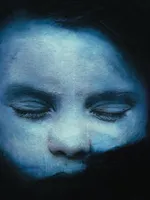
While Brown shares many interests with the surrealist Hans Bellmer (dolls, lolitas and bondage), the only other analogies within the world of contemporary art can be found in the early watercolours portraying bandaged children by Austrian artist Gottfried Helnwein and in the freak children sculptures by the Chapman brothers, besides the few artists (including Damien Hirst and Mark Ryden) that Brown declared to esteem.
(excerpt)
12/01/2003
Harper’s Magazine, New York NY
ALL THE NECESSARY TOOLS
www.harpers.org
Jeff Wall, Gottfried Helnwein, Simon Norfolk.
The following suicide notes were left by Japanese schoolchildren, aged ten to fifteen, who killed themselves within the last several years. Some of them met in suicide chat rooms, which are becoming increasingly popular in Japan.
translated from the Japanese by Patrick Luhan.
01/01/2001
www.retortmag.com
Incorporeal Part II: Fervent Machines
by Robert Lort
"There can be no art without pain, there can be no pain without art".
- Alexandro Jodorowsky
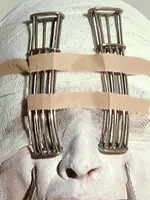
Austrian born artist Gottfried Helnwein's work is also of exemplary value, beginning with bandage action events (documented by the artist appearing in cafe's and lying in the street with his "wounded" head and face bandaged). His work depicts physical injuries which are metaphors for far deeper existential, psychological and human tragedies. Medical injuries, facial deformities and abused children proliferate throughout his work evoking primary internal anxieties. The inhumane acts of violence (child abuse, war atrocities, state oppression) and frightening images of familial estrangement that are presented in his work, constitute events which are preferred forgotten, like the nazi era, or preferred left unspoken such as familial traumas like child abuse. Helnwein also conducts a probing analysis of the individual and the self through an abundance of self portraits, each obscured by hideous facial bandages, his facial muscles, lips and eyes are stretched apart, torturingly, by varied medical instruments, now made famous by the Rammstein covers. All his images in some way evoke associations with mutilation, anguish or internal alienation. The works (frequently paintings appearing remarkably like photographs), boldly put forward social unacceptabilities never before portrayed so lucidly and so confrontingly. The many intensities produced in the work are profoundly disturbing, the impressions - uncomfortably eerie, electrocuting the eyes with a rush of haunting spatiality.
01/17/2004
tastes like chicken
Interview with Helnwein
wayne chinsang
wayne chinsang talkes with Gottfried Helnwein
"The world doesn't like people that are different than the average. Rulers throughout history have always hated those people that stick out of the masses, - the geniuses, the poets, monsters, artists, witches and saints; and usually they burned them or put them in dungeons, concentration-camps or mental institutions, thinking of what a nice and peaceful slave-camp this planet could be without them.
But for some miraculous reason this desert-town here seems to be different than the rest of the world, because here they don't mind these monsters, they actually seem to like them.
L.A. is the sanctuary for people with weird visions and impossible dreams. Maybe it's the last place on earth where dreams are still legal."
01/01/1998
Helnwein Books online
01/01/2003
Marilyn Manson
Doppelherz, video with Marilyn Manson
Gottfried Helnwein
Art Direction: Gottfried Helnwein
Editing and primary director of photography:
Benjamin at the Barbarian Group
Second camera: Charles Koutris
Location: studio Helnwein, Los Angeles
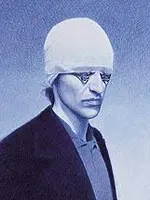
03/01/2001
The AMICO Library
Gottfried Helnwein
Self-Portrait, 1993
View Full Catalog Record Below
This image is one of over 118,000 from The Art Museum Image Consortium Library (The AMICO Library™), a growing online collection of high-quality, digital art images from 39 museums around the world.
Creator Name: Gottfried Helnwein
Creator Nationality: European; Central European; Austrian
Title: Self-Portrait
Creation Date: 1993
Object Type: Drawings and Watercolors
Materials and Techniques: Colored pencil
Contributor: Fine Arts Museums of San Francisco
Owner Location: San Francisco, California, USA
Credit Line: Museum Purchase, Achenbach Foundation for Graphic Arts Endowment Fund
01/01/2004
The Art of Destruction: The Films of the Vienna Action Group
Odell & LeBlanc
Shock theatrics on film - wallow in the degrading art of the Vienna Action Group.
The films themselves range from documents of performances to highly structured experimental films. The Art of Destruction concerns the main protagonists of the movement and their own particular brands of performance/art/terrorism as well as a discussion of the major films and their influences. Each member is given space for biography (and there are some bizarre backgrounds to be sure) and key performances, all amply illustrated in disturbing black and white. Rather than just a catalogue of broken taboos the VAG are seen as natural extensions of both Dadaism and the "Happening" scene of the '50s, but one distinctly Austrian in the way that it rebelled against a harshly censorious government whom the performers saw as intrinsically unrepentant of its recent fascist past. This adds greater weight to the performances than perhaps the later New York transgressive movement, and their influence can be seen in everything from Helnwein paintings to mainstream Marilyn Manson videos.
06/19/2004
California State University, Dominguez Hills
Shared Reading: Gottfried Helnwein
Jeanne Curran and Susan R. Takata
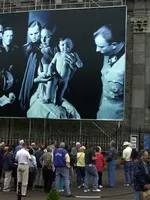
Gottfried Helnwein's Epiphany I
* Helnwein's Epiphany I has been up on our site for years now. For a while I used it as wallpaper on my desktop. Perhaps that explains how the first hypertext poem came to be one about the Virgin. But as I struggled with updating the site, I checked all my old resources and came across materials that explain Helnwein's commitments and meanings far better than I could alone.
12/06/2000
ART newsroom.com
Helnwein
Joanna Hayman-Bolt
Any artist who sites Donald Duck and Jesus Christ as the most important influences in their art must be worth taking a look at.
In the row of pristine gallery fronts in London's Cork street, you cannot miss Gottfried Helnwein's show; it's the one with the gigantic Mickey Mouse staring out at you.
The Robert Sandelson Gallery has given us a stunning show of the infamous, Austrian born artist's recent work. Helnwein is on a mission to find the answers to questions that no-one in Austria would give him; such as why the post-war republic portrayed itself as a victim rather than as one of the first main perpetrators of Nazism.
12/01/2003
Trinity University, San Antonio, Texas
Nazism: The Black Collar Song:
www.resnet.trinity.edu
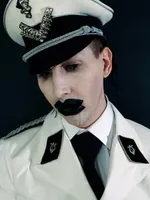
Manson's record company deemed the photographs too risque to be used for the cover in which Manson collaborated with Gottfried Helnwein.
Contrary to what his critics may believe, Manson in no way supports Hitler or Nazism. Not only is it "impossible to be fascist when you're into fashion," but the very nature of Hitler's rise to power sounded a death knell to the very art movements that Manson was inspired by. The final track on The Golden Age of Grotesque, Obsequey (the Death of Art) and the painting by the same name, demonstrates how fervidly anti-Hitler Manson really is. The painting shows the dome of Berlin burning, a direct result of Hitler becoming chancellor. According to Manson in an interview with NY Rock, "Hitler tried to define art and outlawed some of it by calling it degenerated and decadent. Hitler imposed his will and banned art he considered immoral. I'm not sure if the people who adopt those phrases and try to ban my art are aware of the implications they carry."
Interestingly enough, when the same outfit was used in the mOBSCENE video, the insignia was missing. Of course, the time period for that song was exclusively Weimar Berlin, before the Nazi takeover. The outfit was also similar to that worn by Marlene Dietrich in the film Seven Sinners
Helnwein's 'Album Covers that Never Were'
... Some of Manson's other wardrobe is reminiscent of Nazi dress as well. In the series, Album Covers that Never Were, (Manson's record company deemed the photographs too risque to be used for the cover) in which Manson collaborated with Gottfried Helnwein, he wore a typical Nazi officer's cap. The same outfit was used when Manson posed for the cover of Metal Hammer. He dressed in Nazi regalia, clutching a gun as a young girl looked on. His expression, however, again shows exactly how he feels about the Nazi movement.
01/01/2004
realitystudio.org
Sites with Burroughs Texts
William S. Burroughs
William S. Burroughs — News, Texts, Links, Community
Burroughs on photographer Gottfried Helnwein
"How can a self-portrait depict statuesque calm in the face of the horrors that surround us all?"
01/01/2003
British Association for Paediatric Otorhinolaryngology (BAPO)
Otorhinolaryngological aspects of handicapped children in visual arts
Wolfgang Pirsig
Ulm University Hospital
Keywords: Art, History, Medicine, Painting, Sculpture.
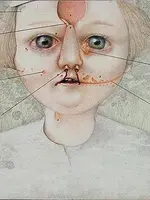
...To this day, there is still controversy over when to operate on these fixed nasal deformities acquired during midfacial growth. The painting by Helnwein, entitled "Mean Child", depicts a terrified child who has just undergone a reconstructive operation to form a new nose from a frontal flap (Fig. 46). Blood drips from the tubes projecting from the reconstructed nose. A purulent scrap of granulation is seen in the left medial canthus, while a fresh scar from which the sutures have just been removed stretches from the angle of the mouth to the left ear. The flowered wallpaper in the background contains these words: disobedience allowed, taking pleasure in punishments, unchaste things, and other words which are connected with lines to the pathological alterations in the face. Do these harken back to the mediaeval belief that sickness is a punishment for greater or lesser human failings?
Artists:
George Grosz, Gottfried Helnwein, Albrecht Dürer, Rembrandt, Peter Paul Rubens, William Hogarth, Otto Dix, Velásques, Hans Holbein the Younger, Bernard van Orley, Vrubel, Jacob Jordaens, Juan Carreno de Miranda, George Catlin, Jan Provoost, Honoré Daumier , Heinrich Zille, Wilhelm Busch, , Gaetano Guilio Zumbo, Manfred Deix, Simone Martini, Cornelis Cornelisz van Haarlem, Marc Chagall, Chicotot, Laurence Sterne, Utamaro, Ferdinand Bol, Master of the Wenemaer Triptych, Liberale da Verona, Jules Lenepveu, Alexandrowitsch Wssjewoloshskij, and Ancient Egypt-, Phoenician-, Roman-, Greek- and Mayan -artists.
01/01/2004
Picasso Seizes Donald Duck
Holly Crawford
The Mouse: Debut, Copyright and Referenced
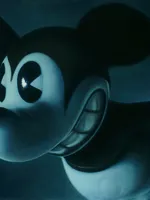
Those who have used the same or multiple forms of the image many times over many years include Lichtenstein, Helnwein, Oldenburg, Pensato, Ospina, and Chagoya. Some have used the image more persistently than others have.
Most of the images are straightforward, but some are not. For example, Christian Boltanski installed photographs of children, who were members (fans) of the 1955 French Mickey Mouse Club (ills. 9.1, 9.2 and 9.3). Rhonda Zwillinger (ill. 76.1) incorporated the castle at Disneyland into one of her paintings. Burt Payne 3 and Steve Hillenburg (ill. 32.1) used the image of Walt Disney himself in a small plastic sculpture: Walt Disney with mouse ears encased in clear plastic—the frozen Walt doll.[10] Some of these artists have produced a significant body of work based on the Mouse.
02/13/2005
xforums.net
GOTTFRIED HELNWEIN
oblivion
> ART, de gustibus et coloribus nil disputandum
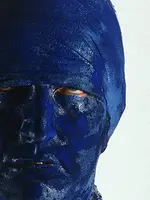
In fact Gottfried Helnwein made his name by spectacular performances, among them are self mutilations or simulacra of violence inflicted on himself. The violence is often concentrated on the eyes. The artist takes to bandaging the head which deprives the individual of all visual relations with the outside world. An obvious paradox on the part of an artist's whole life and work is closely linked with sight, to apply himself to representing, in various forms, impediments and problems of sight. Undoubtedly the scope of his projects is not limited to the sole artistic domain. His art also takes on an obvious historic dimension. Like a good number of artists of his generation, those born after the war, be they writers, painters, film makers or photographers, Gottfried Helnwein feels intense guilt at belonging to a part of Europe with such an unbearable past.
03/01/2004
PHOTOGRAPHIC RESOURCE CENTER
Innovation/ Imagination: 50 Years of Polaroid Photography
The Polaroid Collection
Checklist
THE POLAROID COLLECTION
01/01/2004
Arkansas Arts Center's collection database.
Gottfried Helnwein
Helnwein ...was born in war-torn Vienna in 1948 and received a classical education under Rudolf Hausner at Vienna’s academy. But in the late 1960’s, he and fellow art students rebelled, staging Aktions or happenings within the Vienna Academy and out in the streets. In one, Helnwein stood quietly for hours with an enormous three-foot papier mache sculpture of a hornet clinging to his back.
In 1971 he began the first of a series of troubling pictures showing children grotesquely disfigured with surgical scars.
05/01/2005
Los Angeles Opera
Note from Der Rosenkavalier Production Designer Gottfried Helnwein
Gottfried Helnwein
Marie Antoinette, for example, was obsessed with the idea of pretending to be a simple innocent peasant girl. Her husband built her an entire life-sized fantasy farmhouse and mill with sheep, shepherds and all - and an idealistic landscape shaped around it. Dressed in theatrical shepherdess attire, she could now play "innocent country folk" with her girlfriends.
05/29/2005
Los Angeles Opera
Der Rosenkavalier - reviews, reactions
A visual triumph
Gottfried Helnwein arouses creative tumult. - Los Angeles Times
09/01/2004
AC (ArtCircles)
The Child: Works by Gottfried Helnwein
Peter Frank
curated by Robert Flynn Johnson, California Palace of the Legion of Honor, Lincoln Park, July 31-Nov. 28
Austrian-born and educated and now living Los Angeles, Helnwein employs a hyperrealist manner that will remind Americans of Gerhard Richter but, if anything, works to opposite effect. Rather than re-confirm post-modernist cynicism, Helnwein rekindles post-war anguish. This selection, going back more than three decades, emphasizes his preoccupation with the image of the child, from early Nitsch- and Schwarzkogler-influenced photo-actions (with the requisite bandages) to recent large portrait-like heads and depictions of Christ-child-like babes attracting odd, menacing crowds. A perverse streak runs through the images, but it’s not pederasty: tinged with surrealism, it’s an enduring shame and anger at the Nazi past – and the artist’s suspicion that Naziism hasn’t been eradicated.
11/06/2005
California State University - University of Wisconsin
Naked Space and the Art of Engagement
Jeanne Curran
Ph.D., Esq., Professor Emeritus of Sociology, CSUDH
Look at Helnwein's painting under Visual Sociology
Help us find visual, aural, metaphors that will let others understand the importance of engagement in this process. Look at Helnwein's painting under Visual Sociology. I left it up. What was Helnwein saying? Why was he willing to offend. Why do Beau and Michael want to shake us up? How are those things related? Why did one of my students make a giant box that when opened had a lovely smiling face inside that said "F^&* the Patriot Act"?? Isn't that a lot like what Helnwein and Kiefer and Beuys were doing? Maybe saying "wake up and look at what you're doing?"
11/16/2001
Arkansas Arts Center
Magic Vision
Townsend Wolfe
exhibition catalogue
Artists in their pusuit to understand themselves and the world around them have been forced to face the pain of suffering.
Helnwein, in his important "American Madonna" (Epiphany IV) painting, depicts with provocation the conflict between men of power and the weak.
In this present day setting, the police are confronting a divine being.
09/01/2005
Emerson College
Conscious Recognition
Jenna Gonzalez
After further examining his work on my computer, I left . . . heart racing several beats faster, fingers tingling. Helnwein reminded me how to feel. It was like the first time I saw a Fellini film or slipped into Tom Ford attire. There was a sense of confidence instilled, a confidence in being human, the confidence to find power through mistake, the confidence to admit to cease yearning for perfection. Rather, redefining perfection to the state of recognizing my humanity, my possibility.
11/03/2005
The Stiletto Projects
To me Helnwein is the ultimate humanistic artist: A conceptualist embracing the image.
Alexander Natas
A virtuoso and a visionary with one eye behind the veil of the world, the other reflecting endless horror, beauty, loss, humour and melancholy - all with a steady hand. The position is supreme, the means are penetrating and the message as deep as it gets. To me the strange silent directness in Helnweins work is unrivaled, no other artist today tells the dim story of the world in a more disturbing and moving way. His work, views and perspectives are completely congruent and appeals to me in a very direct and personal way.
11/14/1998
Exit Art
THE CHOICE
Exhibition
The Choice, is an exhibition that identified unknown and emerging artists through the viewpoint of leading contemporary artists. We invited an international group of artists to engage their own curatorial ideas. In the role of curator, these artists had been asked to present the work of artists they have followed or whose work has affected them in a personal way.
Curator/Artists
Ida Applebroog: Jane Higgins, Saeri Kiritani, Lisa Petsu Lagunes
Nicole Eisenman: Alison Kelly, Maria E. Piñeres, Suzanne Wright
Robert Gober: Jonathon Hexner
Antony Gormley: Ignassi Aballi, John Patrick Clayman
Gottfried Helnwein: Iris Andraschek, Danielle Kraay
Damien Hirst: Rachel Howard
Ronald Jones: Eric Schnell
Frank Moore: Aaron Cobbett, Michael Combs
Cindy Sherman: Charles Clough, Susan Jennings, David Krueger, Gail Le Boff
Laurie Simmons: Helen Rousakis, Pedro Barbeito
Kiki Smith: Joey Kötting
Sam Taylor-Wood: Georgie Hopton
Nari Ward: Brett Cook Dizney, Chris Sollars
03/01/2006
Lentos Museum of Contemporary Art, Linz
Wounds of Memory
Nava Semel
Essay for the catalogue - Face it - The Art of Gottfried Helnwein
"She is not as old as she seems, though age, at least in her case, is an elusive notion. In fact, it is her childhood that is fixated, and not out of nostalgia. True, it would take a daring leap of imagination to connect pudgy little hands to the body as it is now, or to visualize the dimples and the baby teeth. The little-girl-who-once-was thought: Maybe I am really dead. Because only dead people get pushed so deep down".
(From: And the Rat Laughed, by Nava Semel).
Helnwein is a great believer in the ability of art to pass emotional memory on, as a reminder of the past or mainly as a warning of what the future might hold, for humanity, as far as he is concerned, has not learnt its lesson. Is there atonement in his artistic endeavors? I prefer the Jewish concept of - tikkun, purification of the soul. It has a deeper meaning than the physical healing of scars, for it elevates us to the highest sphere of the spirit. The wounded girls close their eyes, but they are not blind. Behind their closed lids their gaze is clear and penetrating.
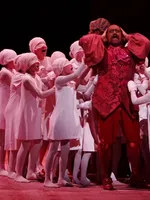
05/30/2005
Opera-L archives
Discussion of opera and related issues - DER ROSENKAVALIER -
Kirsten Lee
Sorry - thats wrong. The film shown was Robert Wiene's "Der Rosenkavalier"(1925) created in collaboration with Hugo von Hofmannsthal and Richard Strauss who wrote the musik for the film (Op. 59) The set and costumes were created by Alfred Roller who was in charge of the sets and costumes for all the Strauss opera-premières in Vienna.
The rushing troop penetrating through the stone arch are soldiers of the Marshall (- the Marshallin's husband) - But it's true that Robert Wiene also created "Das Cabinet des Dr. Caligari"(1920) for which he became famous.
(the website editor).
01/01/2005
Reprinted from Azure
Rammstein’s Rage
Claire Berlinski
For the portraits in Sehnsucht, the Austrian artist Gottfried Helnwein photographed the musicians in facial bandages, their lips and eyes stretched wide apart by hideous medical instruments. There is an echo of Trakl, again, in these “cold metal straps.” But it is unreasonable, the musicians protest, to think that images such as this might evoke obscene historical memories. “It’s just reverse discrimination because we are German,” says Lorenz. “If we were Spanish or Dutch, there would be no problem.”