07/05/2015
Klaus Albrecht Schröder
Die Theatralik des Einspruchs
Direktor der Albertina, Wien
Gottfried Helnweins Kunst ist zutiefst in der Gegenwart verankert. Seine Malerei hat unsere Zeit zum Gegenstand: die Nachtseiten unserer Zeit, Gewalt, Grausamkeit, Krieg, Unterdrückung.
Helnweins eigene Aktionen „Hallo Dulder“ und „Allzeit bereit“ aus den mittleren 1970er-Jahren sind wahrscheinlich die letzten Abkömmlinge von dem, was man als „das Österreichische“ in Helnweins Kunst bezeichnen könnte. Danach ist Helnwein eher ein deutscher Maler, dessen Bilder man neben Gerhard Richters gebrochenem Fotorealismus sehen möchte, um ihren internationalen Stellenwert angemessen zu bestimmen...
Die gesamte Kunst Helnweins ist eine Auseinandersetzung mit der Wirklichkeit: aus dem Geist des Einspruchs. Das definiert ihre Schärfe. Das macht ihre Bedeutung und Größe aus.
06/11/2021
Ludwig Museum Koblenz
Gottfried Helnwein - Meisterhafter Surfer durch die Untiefen menschlicher Abgründe
Klaus Honnef
Schlaf der Vernunft - Solo Exhibition Gottfried Helnwein
Wohl kein Künstler hat sich in den letzten drei Dekaden des 20. Jahrhunderts genauer, tiefer und eindringlicher in das weitgehend versiegelte Gefüge der natürlich-biologischen, der anthropologisch-sozialen und der kulturellen Bedingungen der menschlichen Spezies („conditio humana“) eingegraben wie Helnwein. Unermüdlich hat er die artspezifischen Merkmale im Wechselspiel zwischen Genom, Epigenom, sozialem und kulturellem gesellschaftlichem Umfeld aus den Formationen biologisch-kreatürlicher Verklammerung vorhistorischer wie historischer Zeiten abgetragen und frei gelegt. Schicht um Schicht. Er hat sie aus den Verließen der verdrängten und vergessenen menschlichen Erfahrungen ins Sichtbare gehoben. Mit ihnen traten die zahllosen psychischen und physischen Beschädigungen, die sich durch den sich anschließenden zivilisatorischen Druck und die meist schmerzhaften kulturellen Anpassungen (keineswegs alle freiwillig) einstellten, wie von allein in Erscheinung.
06/02/2006
Kunstmuseum Lentos Linz
Präsenz und Dauer: Gottfried Helnweins Bilder
Stella Rollig
„In memory of the children of Europe who have to die of cold and hunger this Xmas“, schreibt der nach London emigrierte österreichische Maler Oskar Kokoschka im Winter 1945 auf den Entwurf zu einem Plakat. Auf eigene Kosten lässt er 5000 Stück drucken und in U-Bahn-Stationen affichieren.
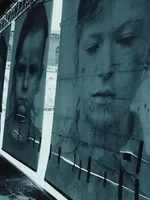
Im Spätherbst 1988 montiert der ins Rheinland emigrierte österreichische Maler Gottfried Helnwein entlang einer 100 Meter langen Wand zwischen Kölner Dom und Museum Ludwig eine Reihe von vier Meter hohen Fotodrucken mit Kindergesichtern. Er nennt die Arbeit „Selektion (Neunter November Nacht)“. Es ist ein Werk von monströser Aussage und schmerzhafter Wirkung. Sein Titel ruft den Jahrestag der sogenannten Reichskristallnacht in Erinnerung, durch ihn gibt Helnwein den Kinderporträts ihren beinahe überwältigend erschütternden Effekt.
Während wir mit Gottfried Helnwein seine Ausstellung für das Lentos Kunstmuseum vorbereiten, recherchiere ich gleichzeitig für ein anderes Projekt über Kokoschka. Die Geschichte der Londoner Plakate ist mir neu. Unbeabsichtigt und unerwartet blenden sich die beiden Künstler-Leben für einen kurzen, berührenden Moment ineinander. Mit beträchtlichem Einsatz an Gestaltungskraft, Kommunikationsfähigkeit, organisatorischer Erfahrung, Umsetzungsenergie und finanziellen Mitteln widmen sich beide Künstler aus gegebenem Anlass einem Appell: Zur Erinnerung!

10/25/2023
Abertina Museum, Wien
Ränder aus Rätselhaftem und die Macht der Vorstellungs Kraft: Gottfried Helnwein als Stilist und Erzähler
Klaus Speidel
Solo Show Gottfried Helnwein - Realität und Fiktion
10/25/2023
Albertina Museum, Wien
Von Hitler bis Micky Maus. Realität und Fiktion im Werk von Gottfried Helnwein
Elsy Lahner
Solo Show 'Fiktion und Realität', Albertina, Wien, 2023/24
01/05/2013
Albertina Museum Vienna
Gottfried Helnwein oder Die Ästhetik der Angst
Klaus Albrecht Schröder
Retrospektive 25. Mai 2013 - 13. Oktober 2013
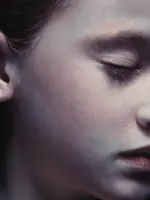
Was inspiriert Helnwein zu solchen ungeheuerlichen Albträumen? Woher bezieht er seine Einsichten in die Gemeinheit und Niedertracht menschlicher Natur? Woher rühren seine geradezu halluzinatorischen Fähigkeiten? Was hat ihn die Massaker an amerikanischen Schulen sehen lassen, noch ehe sie sich ereignet haben? Helnwein spürt den auf Gewalt und autoritärer Unterdrückung basierenden Kitt, der unsere Gesellschaft im Innersten zusammenhält: Die Ausbrüche der Gewalt überraschen ihn so wenig wie den Seismographen die Eruption eines Vulkans.
Diese Darstellungen der Schattenseiten sind umso verstörender, je schöner und ruhiger sie werden. Helnweins Bilder der letzten Jahre sind aggressiv und erhaben zugleich. Sie sind abstoßend und von einer verführerischen Schönheit. Sie feiern den Schmerz und die Wunde als Moment einer erhabenen Melancholie, sie zelebrieren das Pathos der Grausamkeit. Die Erhabenheit verdankt sich dem scharfen Wechsel zwischen den tiefen Schatten und hellen Zonen, die wie mit Scheinwerfern aus der Dunkelheit herausgeschnitten sind. Helnwein malt ruhige Zustände träumerischer Unwirklichkeit, die umso mehr beunruhigt, je weniger wir die Ursache der Gewalt und des Zwangs kennen.
10/18/2013
ART CHINA
Gottfried Helnwein 郝文 Look-Don't Listen! 不要道聽途說!
文:劉松坤 Jonathan Liu
圖:阿爾貝蒂娜博物館
展覽/ Gottfried Helnwein Retrospective 戈特弗里德·郝文回顧展 時間/ 2013年5月25日﹣10月13日
述情障礙
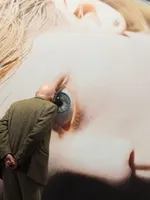
在郝文最新出版的傳記《看-不要聽! Look-Don't Listen!》中,作者史匹克(Oliver Spiecker)別開生面,用訪問的方式來導出郝文的人生經歷,讀者能直接透過郝文的說話來認識他的藝術。作者在書中第一章便為郝文“診症”,認定他患上述情障礙(Alexithymia)。據史匹克:“病患者有性格障碍,沒有能力去擁有感覺,而病人常會用痛楚來對抗它,像現今的年青人自我傷害身體(如用刀來刺痛自己)……”。作家都是妙筆生花,舞文弄墨,為了使文章增添色彩,畫蛇添足也未之有也。郝文有沒有患上述情障礙,書中再沒有提及,其實亦不重要,但這段對話中卻導出郝文的藝術的核心—痛楚。
07/02/2021
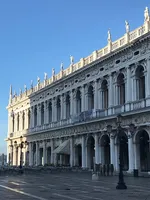
Sale Monumentali, Biblioteca Nazionale Marciana, Venice
Gottfried Helnwein - Quel silenzioso bagliore
Manfred Müller
Solo Exhibition - Catalogue
11/03/2021
Ludwig Museum, Koblenz
Vom Schlaf der Vernunft – Ein Weckruf
Beate Reifenscheid
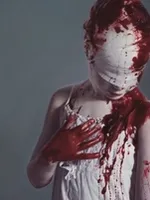
Mit seinen „Disasters of war“, die eine eigene Enzyklopädie des Grauens entfalten, die er an der vermeintlichen Unschuld der Kinder zerschellen lässt, meinen eine zutiefst glaubhafte Bezugnahme auf Goyas gleichnamiges Radierepos. Die „Desastres de la guerra“, die der spanische Künstler zwischen 1810 und 1814 schuf, umfassen 82 unterschiedliche Blätter und sind somit fast genauso umfangreich wie die Caprichos. Goya bezieht sich seinerseits auf eine Tradition von Kriegsdarstellungen, in denen unmenschlichen Handelns gebrandmarkt wird. Goyas Bezugnahme, insbesondere auf den französischen Grafiker und Radierer Jacques Callots und dessen „Les grandes misère de la guerre“ von 1632, ist unübersehbar.
Helnwein selbst hat bereits über 60 Varianten dieses Themas innerhalb seines Panoptikums von Kriegsszenerien geschaffen, wobei er nun die beiden Sujets – die unschuldigen Mädchen sowie die Historiographie der NS-Ära – zusammenführt und teils mit der Künstlichkeit der japanischen Comicsprache kombiniert. Wieder erzeugen die hyperrealistischen Darstellungen Momente des Glaubhaften und Realen, selbst dann noch, wenn sich das Hyperreale als reine Inszenierung entäußert.
11/03/2021
Ludwig Museum Koblenz
Gottfried Helnwein. Lavori su carta e altro ancora
Demetrio Paparoni
Schlaf der Vernunft - Ludwig Museum Koblenz, Solo Exhibition Gottfried Helnwein
Helnwein crede realmente che sia possibile cambiare il mondo. Nel suo lavoro la partita si gioca sullo scarto tra il significato incarnato dall’opera e l’inaccessibilità a un’azione che possa essere avvertita come risolutiva. L’arte di Helnwein ha il pessimismo degli esistenzialisti e lo Spirito dell’Utopia: tanto più dinanzi a ogni singolo lavoro saremo portati a chiederci chi è la vittima oggetto della rappresentazione tanto più prenderemo coscienza del fatto che quella vittima potrebbe essere una persona a noi vicina.
09/12/2020
SKIRA
Helnwein - The Epiphany of the Displaced
edited by Demetrio Paparoni
The new Monograph - Preface by Sean Penn
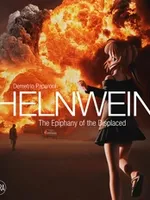
The most complete monograph realized about the Austrian painter, photographer, filmmaker, performer and set designer, born in Vienna in 1948. The works of Helnwein show the bare truth where society instead hides and removes. What emerges by leafing through the pages of this monograph is the obsession that accompanies the artistic career of this notable Austrian artist, marked by the wish to breakdown the rhetoric of war, the constructions of self-absolution, the mystifications of religious institutions in whose pitfalls men periodically fall as if they had not committed the same mistake over and over again.
12/02/2016
Thames & Hudson
Art since 1989
Kelly Grovier
The work of over 200 key artists, Art Since 1989
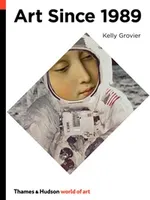
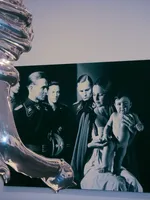
Fascinated by the unlikely merging of the holy and the horrifying is Irish-Austrian artist Gottfried Helnwein, whose series of hyperrealist paintings Epiphany I (Adoration of the Magi), Epiphany II (Adoration of the Shepherds), Epiphany III ( Presentation at the Temple), undertaken between 1996 and 1998, collapsed conventional choreography associated with the Christian narratives in traditional old master paintings with the historical set design of German Nazism. Epiphany I uncomfortably restages the unmistakable postures of Medieval and Renaissance depictions of the Madonna and Child in the anachronistic context of late 1930s or early 1940s Germany.
02/17/2006
Neue Nationalgalerie, Berlin
Melancholie - Genie und Wahnsinn in der Kunst
Moritz Wullen
Leiter des Referats für Ausstellungen der der Staatlichen Museen zu Berlin
MÉLANCOLIE, GÉNIE ET FOLIE EN OCCIDENT
Die Zurschaustellung des eigenen Körpers als Verwesungsmasse beginnt mit den Selbstporträts von George Grosz als Suizidgestalt im Kaffeehaus und reicht über die wie durch den Fleischwolf gedrehten Konterfeis eines Francis Bacon bis hin zur Leichenfledderei am eigenen Leib bei Günter Brus, Kurt Kren oder Frank Tovey, dem jüngst verstorbenen Enfant terrible der experimentellen New-Wave-Szene der 1980er Jahre. Die Befreiung des melancholischen Bewusstseins durch den Tod bietet keine philosophische Perspektive mehr. Es ist ihm ohnedies schon anheim gefallen. Stattdessen wird der Suizid in einer Performance masochistischer Selbstverstümmelung kultisch sublimiert.
In einer fotografischen Inszenierung Gottfried Helnweins erhebt sich der Künstler, fäulnisschwarz und monumental wie das Mahnmal einer letzen Einsicht: “So ist Verzweiflung, diese Krankheit im Selbst, die Krankheit zum Tode. Der verzweifelte ist todkrank. Der Tod ist nicht das letzte der Krankheit, aber der Tod ist in einem fort das Letzte. Von dieser Krankheit erlöst zu werden durch den Tod ist eine Unmöglichkeit, denn die Krankheit und deren Qual und der Tod ist gerade, nicht sterben zu können.”
So ist die Geschichte der Moderne nicht zuletzt auch eine Erfolgsgeschichte der Melancholie und des Eindringens ihres schwarzen Spuks in die letzten Paradiese des Seins- und Weltvertrauens.
01/04/2013
Albertina Museum Wien
Gottfried Helnwein – Die Sichtbarmachung des Schreckens
Elsy Lahner
Kurator
Retrospektive 25. Mai 2013 - 13. Oktober 2013
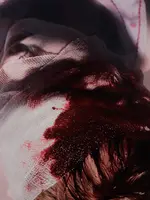
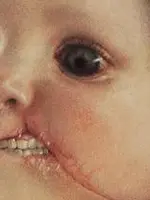
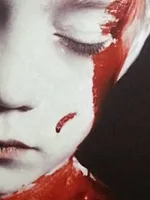
Über die Jahre hinweg blieb das Kind in Helnweins Werk ein konstantes, geradezu obsessives Thema, das er variiert und weiterentwickelt hat. Er hat es in den unterschiedlichsten Medien verarbeitet – in seinen Aktionen und deren fotografischer Dokumentation, in der späteren Farbfotografie ebenso wie in seinen Arbeiten auf Papier, in der Malerei und selbst in seinen Bühnenbildern für Theaterinszenierungen.
05/25/2013
Albertina Museum, Wien
Die Revolte der Bilder
Siegfried Mattl
Anlässlich der Retrospektive Gottfried Helnwein in der Albertina 2013
05/01/2013
Albertina Museum Vienna
Looking Inside: A Conversation with Gottfried Helnwein
Howard N. Fox
On the Occasion of the Retrospective of Gottfried Helnwein at the Albertina Museum, May 25, 2013
GH: Vienna, the city I was born into right after the Second World War was a dreary place. The long shadows of the Third Reich were still cast over the city and the smell of death was in the air. I remember the empty streets, ruins of bombed houses, rust, rubble, no colors, no sound. There was a sense of despair. All the grown-ups I saw seemed silent, dark and broken. I never saw anybody laugh, I never heard anybody sing. It was a world that stood still, as if undecided yet if life should go on. What I didn't know then, was that my parents’ generation had recently lost two World Wars in a row and just completed the biggest genocide in history. The only art that I saw in my early childhood were 19th century paintings of tortured, blood-soaked martyrs and saints on the wall of cold churches were I spent a good time of my childhood. Until one day some PR-officers of the occupying American forces, God bless their hearts, thought it a good idea to bring some American culture, say Walt Disney's comic books, to us Nazi-kids in Germany and Austria to re-educate us. Especially the Donald Duck stories by the ingenious Disney artist Carl Barks hit us children like a comet and turned our world upside down. It was a culture shock. For me it was also an epiphany, a religious experience. Opening my first comic book was like leaving my parents’ yesterday-realm of death and darkness and stepping into a bright and infinite future. For the first time I experienced color and speed and the power of fantasy and imagination.
01/01/2011
Crocker Art Museum Sacramento
An Inferno of Innocence
Curator: Diana L. Daniels
Associate Curator
Gottfried Helnwein - Inferno of the Innocents, retrospective at the Crocker Art Museum in Sacramento, January 29 - April 24, 2011
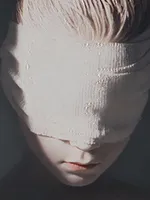
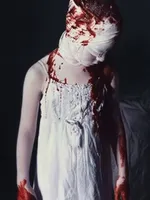
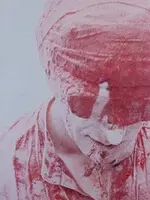
The obvious vulnerability of the subject makes this unusually unsettling imagery. That the scene is playacted is obvious. Based on a photograph staged by the artist, the subject of this watercolor and its details are theatrical inventions. The wrapping is ad hoc, the medical tubing ersatz, and the twine superfluous. Helnwein has successfully tapped into our deep aversion to damage to the flesh, made more acute by the subject’s youth. In one sense the bandaged head is an artifact of twentieth-century warfare, one that gained visual resonance through newsprint photography, which made the casualties of war graphic and real for the masses. In another sense, the bandaged, although not often bloodied invalid, is a visual trope, robbed of its graphic nature by having been reduced to a commonplace in cinema and television. What Helnwein succeeds in doing with Beautiful Victim I is to make us see afresh and react before we can safely square away the image.
10/15/2006
Denver Art Museum
Gottfried Helnwein, Epiphany (Adoration of the Magi), 1996
Gwen F. Chanzit
Curator and professor, Art and Art History, University of Denver
Gottfried Helnwein's Epiphany (Adoration of the Magi) is a strange takeoff on a traditional New Testament theme in art. The work depicts a Madonnalike mother displaying her baby to attentive Nazi officers, Painted in hyperrealist grisaille with chiaroscuro effects, the work resembles an old documentary photograph made huge. The eerie, sinister overtones are unmistakable. Who is this mother? What do these officers want with her and her child? What kind of official paper might the officer on the left hold in his hand and what might be its result? Helnwein, characteristically, presents us with an ambiguous, haunting image and leaves us to wonder about its meaning. Helnwein's background perhaps helps explain why his often difficult subjects have been interpreted in various, often contradictory, ways by opposing sides of the political debate about World War II. With its huge size, hyperrealist style, and disturbing content, this unsettling work bestows a psychological anxiety accompanied by a strong magnetic pull. Confronting it, we tend to stare-entranced by both its beauty and its seductive, malevolent overtones.
07/14/1999
Wolfgang Bauer
Inspired by Helnwein
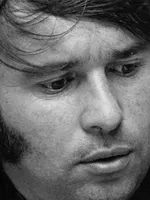
Schon 1963 malten ein Künstlerkollege und ich uns die schaurige Zukunft eines freischaffenden Künstlers aus. Es ging bei dem Gespräch weniger um die Finanzen als um die Notwendigkeit des sich bis ins Tiefste Fallenlassenmüssens. Ich kam damals auf die Idee, so etwas wie ein »Konditionstraining für Genies« zu erfinden. Rückblickend muß ich sagen, daß ich ganz wenige Künstler kenne, die dieses imaginäre Trainingsprogramm durchgehalten haben. Einer von ihnen ist Gottfried HeInwein.
11/02/2005
McGill-Queen's University Press
Gottfried Helnwein’s American Prayer
Petra Halkes
A Fable in Pixels and Paint
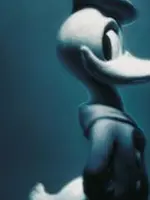
Ever since I clicked on it, Gottfried Helnwein’s "American Prayer" (2000) has taken up residency in my mind.
I began to discover a semiotic richness in this painting worthy of what W.J.T. Mitchell has called a "metapicture" - a "picture that [is] used to show what a picture is". Mitchell situates the concept of metapicture in "'iconology', the study of the general field of images and their relation to discourse," thereby cutting across Greenbergian self-reflexivity into an expanded context that includes popular culture as well as contemporary art. In this wider cultural field, a metapicture does more than reflect on the nature of the picture itself and calls into question "the self-understanding of the observer". I will argue that "American Prayer" derives its theoretical relevance partly from its concealed hybridity, from the interplay between technological media and painting. In this work, the substitution of one medium by another reinforces the meaning that can be created from the iconographic substitution of the child by Pinocchio, and the replacement of the deity by Donald. In the end, Donald’s sideways glance at us indicates that this picture is really about us, the observers; it questions our own place in a cultural web of illusionism spun from the abiding human desire to overcome death.
11/01/2005
McGill-Queen's University Press
Gottfried Helnwein's American Prayer, part 2
Petra Halkes
A Fable in Pixels and Paint
10/04/2012
Museo Nacional de San Carlos, Mexico City
Helnwein, espejo del vacío
Luis Alberto Ayala Blanco
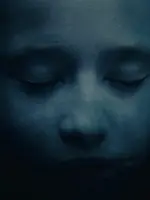
Lo que quiero insinuar es que el humor, con todo lo trágico que conlleva, es la sustancia que corre por las venas del cosmos. Dios es una caricatura de lo divino. Nosotros, como los dioses, somos personajes de un cómic que los mitos relatan desde tiempos inmemoriales. Helnwein parece mostrarnos que la imagen es anterior al hombre y a los dioses. El humor es el hálito que circunda a la creación. La risa de los dioses resuena en los oídos de los niños cuando éstos deciden emprender sus juegos. Gottfried Helnwein se limita a jugar con ellos, como un niño más.
10/02/2012
Museo Nacional de San Carlos, Mexico City
Fe, esperanza y caridad: la mirada de Helnwein en México
Susan Crowley
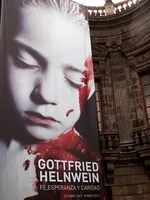
El arte es un ritual que pretende recordarnos eso que somos pero que hemos olvidado. Niños mexicanos, en toda su fragilidad y transfigurados por el proceso artístico, serán representados. La violencia existe, es algo que no puede soslayarse, cuando tratamos de negarla o le volteamos la cara para no verla, lo único que logramos es permitir que se propague como la peste. Esos niños, una vez captados por la cámara de Helnwein, quedan transformados, dejan de ser ellos mismos para devenir iconos. En cada imagen tendremos la oportunidad de detenernos para ver y así dejar de ignorar lo que es obvio y salta a la vista. Creando un equilibrio entre el vacío y la forma se muestran para mostrarnos “algo”. La representación es simulacro y en ese simulacro se puede ver más de lo que imaginamos. A nuestro paso, en los sótanos del Monumento a la Revolución y a lo largo de su explanada, iremos encontrando las imágenes de niños que en cada mirada nos dejarán intuir aquella unidad que se rompió en el origen, ilusión que debe permanecer en el mundo aunque sea como representación artística. “Los niños de México contienen en su rostro —dice Helnwein— todo el peso del tiempo…”, también contienen la historia, los mitos, todo eso que se ha callado pero que debe contarse, de nada sirve tratar de negar o dar la espalda a la belleza que estas imágenes representan, por eso miran así, porque guardan los secretos de la historia y las historias que jamás se contaron. Hoy vuelven a tomar un sitio. El sacrificio se ha realizado.
10/01/2012
Museo Nacional de San Carlos, Mexico City
Patomás en Viena
Nicolás Alvarado
No todos somos Patomás pero algunos sí. Yo −lo sé− lo soy. Y Gottfried Helnwein no sólo lo es también, sino que encarna al personaje en tanto primus inter pares (y es que su don artístico habría de salvarlo de su destino perdedor). No miente cuando afirma que su obra trata de la corrupción de la inocencia −todos esos niños mutilados son también metáfora− ni cuando afirma que su agenda es justiciera, que lo que busca es señalar las iniquidades de este mundo, poner ese dedo posmoderno que es el ojo en la llaga siempre abierta que lastra a la realidad. Pero, Patomás al fin, el vengador clama en ese mismo acto venganza para sí mismo: para ese niño que nació donde no debía, en esa Viena de El tercer hombre que es el primero y el último, eterna e inescapable. Y al intentar vengar su triste destino intenta vengar el de todos, trata y falla −pero es noble su fracaso− de redimirnos, de salvarnos, de ayudarnos a huir de nosotros mismos a través de nosotros mismos. Lástima que nadie pueda arrancarnos de este vals, Mephisto Waltz acompasado y mareador al que hemos sido condenados. Doch sind wir alle Wiener?
09/05/2003
Université Paris I. Panthéon-Sorbonne
Le nazisme dans l'oeuvre d'Anselm Kiefer et Gottfried Helnwein.
Galia Fischer
09/04/2003
Université Paris I. Panthéon-Sorbonne
a. Gottfried Helnwein –Un critique de la société: a. Les enfants.
Galia Fischer
Le nazisme dans l'oeuvre d'Anselm Kiefer et Gottfried Helnwein.
Dans mon récit, j’ai l’intention de présenter des œuvres de Gottfried Helnwein dans lesquelles il aborde le sujet du nazisme. Cependant, même si le rapport au nazisme dans l’œuvre d’Helnwein est au cœur de ma propre curiosité, il n’est pas nécessairement au centre du travail de l’artiste. D’après ma compréhension, la référence au thème du nazisme dans l’œuvre d’Helnwein fait partie d’un contexte plus vaste de sa vision du monde, que je vais présenter. Si on ignore la totalité de son œuvre et si on se concentre uniquement sur ces nombreux travaux où il parle du nazisme, on risque d’avoir une vision partielle de plusieurs niveaux d’analyse qui sont inhérents à sa pensée. Je vais traiter non seulement les sujets qu’il a choisis d’aborder, mais aussi le contexte historique de sa création qui est aussi significatif en regard de ses choix. Pour des raisons de clarté et afin de mettre en relief mon intérêt personnel pour la représentation controversée du nazisme dans l’art contemporain, je vais traiter séparément les œuvres au sujet du nazisme, sans ignorer naturellement le contexte de leur création.
09/03/2003
Université Paris I. Panthéon-Sorbonne
b. Les autoportraits.
Galia Fischer
GOTTFRIED HELNWEIN –UN CRITIQUE DE LA SOCIÉTÉ
Si on essaie de comprendre la démarche artistique et critique d’Helnwein, il est nécessaire de prendre en considération ses autoportraits. Les autoportraits sont partis intégrale de sa carrière depuis le début, et forment une clé importante pour déchiffrer de son œuvre.
“ L’artiste et son art ne font qu’un dans l’autoportrait. Ils s’expliquent, ils se répondent ”, comme l’a écrit Philippe Dagen. Si on ignore les nombreux autoportraits de Helnwein, on risque de laisser passer inaperçus les messages les plus profonds et capitaux que l’artiste transmet par son art.
09/02/2003
Université Paris I. Panthéon-Sorbonne
c. Helnwein et le nazisme
Galia Fischer
GOTTFRIED HELNWEIN –UN CRITIQUE DE LA SOCIÉTÉ
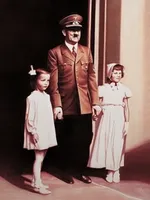
Indifférence et reniement sont les mots clés dans une république qui se présente comme la “ première victime ” du nazisme. Lors de la Seconde République autrichienne on préfère ignorer et effacer la joie et l’acceptation du fameux “ Anschluss ”, l’annexion de l’Autriche à l’Allemagne en mars 1938, quand les troupes allemandes sont entrées en Autriche sans rencontrer aucune résistance. Le fait que Hitler ait été accueilli comme un libérateur par 200,000 personnes à Vienne est un détail réprimé dans un pays qui essaye de réhabiliter son prestige, son économie et son infrastructure. L’Autriche libre, démocratique et indépendante établit vite sa stabilité politique et même sa prospérité.
Dans la Seconde République autrichienne, la liquidation du passé nazi n’est pas radicale : les anciens adhérents du parti nazi sont vite réintégrés dans la plupart des secteurs de la société.
09/01/1987
La Sorbonne, Université de Paris
Liste d’illustrations, Notes
Galia Fischer
GOTTFRIED HELNWEIN –UN CRITIQUE DE LA SOCIÉTÉ
07/31/2004
Fine Arts Museums of San Francisco
GOTFRIED HELNWEIN: THE CHILD - One man show, Fine Arts Museums of San Francisco, California Palace of the Legion of Honor
Robert Flynn Johnson
Curator in Charge, Achenbach Foundation for Graphic Arts, Fine Arts Museums of San Francisco
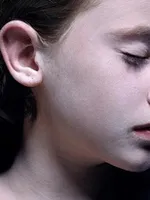
..A clarity of vision in his subject matter was emerging in Helnwein's art that was to stay consistent throughout his career. His subject matter is the human condition. The metaphor for his art, although it included self-portraits, is dominated by the image of the child, but not the carefree innocent child of popular imagination. Helnwein instead created the profoundly disturbing yet compellingly provocative image of the wounded child. The child scarred physically and the child scarred emotionally from within.
.
"Children and lunatics cut the Gordian knot, which the poet spends his life patiently trying to untie."
Jean Cocteau
07/07/2021
klaushonnef.de
Die Malerei ist tot. Es lebe die Malerei.
Klaus Honnef
Die Malerei ist tot. Es lebe die Malerei. Zu einem Triumph der Malerei gestaltete sich die brillant von Beate Reifenscheid inszenierte Ausstellung von Gottfried Helnwein im Ludwig Museum Koblenz.
06/01/2006
Lentos Museum of Modern Art Linz
Die Suche nach Sichtbarkeit - Was wollen Helnwein-Bilder?
Thomas Edlinger
Essay
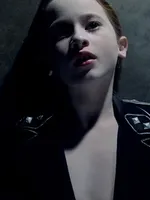
Helnwein verbirgt eine mögliche seelische Aufgewühltheit oder Traumatisierung seiner Bildmodelle, die beispielsweise durch die schwarzen, faschistoid und fetischisiert zugleich wirkenden Uniformteile nahe gelegt werden könnte, hinter dem gesetzten Ausdruck seiner Kindergesichter. Wie Laokoon schreien diese wie aus Wachs gemeisselten, "schönen“ Kinder nicht mehr. Sie ertragen etwas, das nicht benannt wird und doch sichtbar wird. Sie kommunizieren in ihrer Intimität eine unauslotbare Abgründigkeit. Die Irritation des Betrachters entsteht daraus, diesem Geheimnis nicht auf die Spur kommen zu können. Die Wunde soll wach gehalten werden, und keiner soll sie heilen dürfen.
01/11/2016
symploke, Volumne 23, Numbers 1-2, 2015
Intolerable Violence
Brad Evans, Henry A. Giroux
Posthumanisms
Gottfried Helnwein is one of the most important artists alive today. As
Kenneth Baker has noted, the artist’s works not only “mirrors of dark times but counterthrusts to the aggressive reach of so much contemporary culture” (Baker, n.d.). The artist himself is fully aware of the political function of art and its importance in the age of the spectacle.
01/01/2008
Rudolfinum Gallery, Prague
ANGELS SLEEPING
Petr Nedoma
Gottfried Helnwein - one man show
Let us take one of Helnwein's key images, "Epiphany 1 (Adoration of the Magi)", 1996 (mixed media on canvas, 210 x 333 cm). The figures of the officers in Nazi uniforms observing their leader are genuinely taken from an old photograph. Adolf Hitler is replaced by a seated figure of a young, distinctly Aryan blonde woman in a white dress, holding up with both hands upon her knee a standing, naked, strangely dark haired male infant, who in his face bears certain similarities to his predecessor in the original photograph. The figure of the Madonna, displaying her son to be honoured by the kneeling shepherds, is almost a literal paraphrasing of the painting entitled La Madonna del Rosario, finished by Michelangelo Merisi da Caravaggio in 1607.
01/01/2012
Museo Nacional de San Carlos
Museo Nacional de San Carlos, espacio abierto al diálogo
Carmen Gaitán Rojo
Directora
Unidos los esfuerzos del Consejo Nacional para la Cultura y las Artes, del Gobierno del Distrito Federal —a través de su Secretaría de Desarrollo Urbano y Vivienda—, de la Galería Hilario Galguera, del Monumento a la Revolución Mexicana, Galería Cimentación y del Instituto Nacional de Bellas Artes —por medio del Museo Nacional de San Carlos—, es que ha sido posible que hoy sea realidad la curaduría de Susan Crowley, quien logró reunir 34 piezas colosales y 14 fotografías del maestro Gottfried Helnwein. El entusiasmo y entrega de un sueño acariciado por la curadora desde 1988, cuando por primera vez se topó con los rostros gigantes de niños en Colonia, Alemania, y quiso traerlos a México, presentarlos ante la sociedad mexicana, finalmente se ha logrado tras veinticuatro años.
11/04/2021
Künstler – Kritisches Lexikon der Gegenwartskunst
Gottfried Helnwein
Manfred Möller
Kunst ist für mich eine Waffe, mit der ich zurückschlagen kann
Gottfried Helnwein zählt zu den bekanntesten, aber auch zu den umstrittensten und
bis heute häufig kontrovers diskutierten deutschsprachigen Künstlern unserer Zeit.
Seine hyperrealistischen Bilder zeigen oft unschuldige, verwundete, bandagierte
Kinder, Opfer von Gewalt und Missbrauch. Sie stehen im Zentrum seines OEuvres
und machen Helnwein, ebenso wie seine Selbstportraits, weltbekannt. Er greift
gesellschaftliche Tabuthemen auf, seine Bilder handeln von Schmerz, Verletzung
und Gewalt, auch vom Nationalsozialismus. Mit ihren inhaltlichen Gegensätzen und
ihrer Ambivalenz von Schönheit und Gewalt elektrisieren seine Bilder den Betrachter
und werden gleichsam zu eindringlichen Mahnmalen unserer Gesellschaft.
10/16/2011
http://artemexicocontemporaneo
El arte contemporaneo en México
by Ian
Arte tradicional VS arte actual, la crítica y el perro que se muerde su propia cola.
Aceptemos pues que Minera acierta al cuestionar la “nostalgia” de los jóvenes, pero no al hablar del no querer ver al “futuro” pues lo que ella llama ver al “futuro” es una opción de herramientas que el artista puede o no aceptar en la búsqueda de un arte que hable de su propia actualidad. Igual de obsoletos son cientos de performance que cuestionables los intentos hiperrealistas de llevar la técnica al extremo sin valores conceptuales, pero como se puede negar los avances de artistas que se entienden a sí mismos como integrales, usando herramientas del conceptualismo y poniéndolas al servicio de la pintura y viceversa, ahí se tiene a Bill Viola bebiendo no solo de una tradición religiosa sino de una estética pictórica, pero quién niega que Gottfried Helnwein ha alcanzado, en la pintura realista un espacio donde lo conceptual y la técnica hacen un equilibrio en obras de múltiples lecturas, que funcionan además como una crónica de nuestro tiempo. Bacon y Freud nunca fueron descalificados, prueban ambos que la búsqueda plástica no ha terminado y corresponde a la complejidad del pintor la complejidad de la obra, y a un equilibrio con su técnica la elaboración de poderosas respuestas plásticas a cuestionamientos contemporáneos. ¿Daría lo mismo que fueran una fotografía?
07/07/2024
K-Hof Kammerhof Museum Gmunden
Im Bilde der Zeit
Carl Aigner
Kein anderer österreichischer Künstler nach 1945 beschäftigt sich über Jahrzehnte derart intensiv, eindringlich und nachdrücklich mit dem Thema Kindheit, Kinder, Krieg, Gewalt und Zerstörung wie Gottfried Helnwein.
06/28/2011
Crocker Art Museum, Sacramento
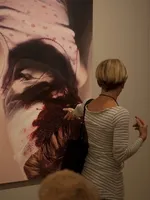
New Exhibition Surveys the Art of Gottfried Helnwein
Gottfried Helnwein: Inferno of the Innocents
On view January 29 through April 24, 2011
November 30, 2010 – Sacramento, Calif. – The Crocker Art Museum will present a survey of the work of artist Gottfried Helnwein in the new exhibition "Gottfried Helnwein: Inferno of the Innocents," on view from January 29 through April 24, 2011. Organized by the Crocker, the exhibition features 70 major paintings and photographs from throughout Helnwein's career. Highlights include his iconic portraits of performer Marilyn Manson, works from his major recurring theme, "The Child," and his most recent series, "Disasters of War." "Inferno of the Innocents" is the first museum exhibition to examine Helnwein—who has been based in Los Angeles part-time for nearly 10 years—as a California artist.
06/20/2008
EX
GOTTFRIED HELNWEIN - ANGELS SLEEPING
David Drabek
Praha
Kdybych měl jedním slovem charakterizovat práci rakouského malíře Gottfrieda Helnweina, stačila by mi na to pouhá tři písmena – ZLO. Zlo ve všech možných jeho podobách a tvarech. Zlo, které je současně odpuzující i přitažlivé, každodenní, samozřejmé, přirozené … „takzvané zlo“.
Přestože je Helnwein především malířem, lze v jeho rané tvorbě vysledovat silný vliv tzv. Vídeňského akcionismu – uměleckého hnutí, které sdružovalo performery, fotografy a filmaře a jež se ve svých projevech zabývalo hojně tématy sexu a násilí (Schwarzkogler, Nitzch, Brus, Kren). Dá se říci, že Helnwein přenesl antiumělecké brutální akcionistické propriety nazpět do sféry konzervativněji posazeného umění a také uměleckého trhu (potenciál komodifikovatelnosti olejomalby pochopitelně značně přesahuje komerční možnosti performance).
01/01/2011
Crocker Art Museum Sacramento
Facing Innocence: The Art of Gottfried Helnwein
Mark Van Proyen
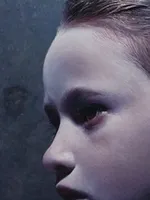
Gottfried Helnwein 'Inferno of the Innocents' - one man show
Although the majority of Gottfried Helnwein’s paintings from the past two decades take the solitary faces of young girls as their subjects, many others are groupings of multiple figures that use the conventions of Baroque and Mannerist pictorial composition to suggest or outrightly posit a dramatic confrontation between innocence and evil. Never is it made clear which will survive, and this ambiguity is exactly what makes Helnwein’s figure groupings disturbing, fascinating and compelling, simply because they give the viewer little choice but to complete the outcome of that confrontation in his or her own imagination. Moreover, they also remind the viewer that such a confrontation always exists, regardless of whatever ideological mask its participants may chose to wear. In these paintings, no state of blamelessness goes unmolested, even when the molesters claim to have nothing but the best of intentions.
12/26/2004
San Francisco Chronicle
CRITICS CHOICES 2004 - Helnwein
Steven Winn
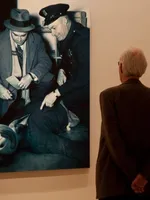
Chosen as the most important show of a contemporary artist in 2004.
TOP 10
The Gottfried Helnwein exhibition "The Child" at the Palace of the Legion of Honor (San Francisco Fine Arts Museums, July) was chosen as the most important show of a contemporary artist in 2004.
"In the first of two shows (the other at the Modernism Gallery in November), Helnwein's large format, photo-realist images of children of various demeanors boldly probed the subconscious. Innocence, sexuality, victimization and haunting self-possession surge and flicker in Helnwein's unnerving work."
11/17/2004
San Francisco Chronicle
Childhood isn't what it used to be. In the arts, it's dark and complex.
Steven Winn
Chronicle Arts and Culture Critic
Gottfried Helnwein's work is on display at the Legion of Honor and at Modernism Inc.
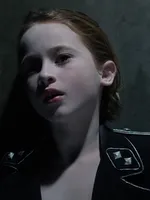
Her lips are parted and colored a luscious deep red. The pancake makeup on her face gives off a marble-white glow. A jacket, adorned with braided gold epaulets at the shoulders, yawns open, exposing a wide expanse of skin down her chest. She appears to be about 8 years old.
There was a time, not so long ago, when the subject of Gottfried Helnwein's new, large-format digital prints at San Francisco's Modernism Gallery might have alarmed or even scandalized a viewer. Not anymore -- or at least not so reflexively...
Adults bring a trunkful of contradictory cultural baggage to any representations of children. That's what makes the work of Helnwein so powerful. In his show, "The Child," at the Legion of Honor, deformed infants and bandaged children stir feelings of pity, defiance and uneasiness about exploitation. There's an ambiguously disturbing painting of a girl aiming a gun into an open refrigerator and another of a bare-breasted mother and child surrounded by Aryan soldiers.
But the most haunting images, here and across town at Modernism, may be the ones of children who seem strangely oblivious to the adult gaze. Some of Helnwein's children peer right past the onlooker. Others sleep, dreaming of anything but us behind their silky eyelids. And some, like the enormous, half- shadowed "Head of a Child" at the Legion, see straight through us with cloudless, infinite blue eyes.
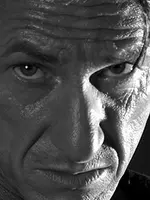
09/12/2020
Sean Penn
Gottfried Helnwein
Well, the world is a haunted house, and Helnwein at times is our tour guide through it.
I think in anything that is really relevant and emotional art, there is some kind of a mirror that people experience. I don't think that you can recognize a feeling from something that you look at unless it's part of yourself, and so when someone is willing to take on the sadness, the irony, the ugliness and the beauty in the kind of way that Gottfried Helnwein does.
03/01/2005
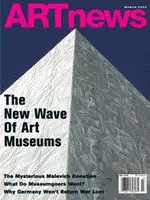
ARTnews
REVIEW: Gottfried Helnwein, San Francisco
Kenneth Baker
A highly satisfying survey of his work at the Legion of Honor museum titled "The Child" was dominated by images of children, as was a current exhibition of his more recent work at Modernism.
01/01/2010
University of California Press
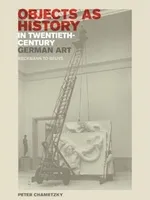
Objects as History in Twentieth-Century German Art: Beckmann to Beuys
Peter Chametzky
Two years after Beuy's death the Viennese artist Gottfried Helnwein created a striking and odd image bringing Breker and Beuys together. Helnwein posed the eighty-eight-year old Breker unconfortably holding Helnwein's portrait of Beuys in front of his chest. The older man with furrowed brow directs the glossy, skeletal image of Beuys-like an icon painting-away from his own gaze and toward that of the viewer.
09/08/2008
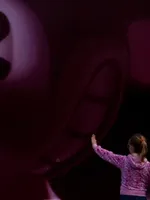
John Ennis
The Last Child
Waterford
Ireland
Installation in the City of Waterford by Gottfried Helnwein
“All a poet can do today is warn”, World War 1 soldier poet, Wilfred Owen, wrote in a draft Preface for a book of anti-war poems he would never see published. He was killed on the eve of Armistice Day 1918. World War One, The Great War, The War to End All Wars . . . within twenty summers, Europe was engulfed again in the even greater catastrophies of the fascist era. The work of Gottfried Helnwein has its genesis in these years. They obsess him as a creative artist. As a kind of guardian angel, he grapples with them on our behalf. That such a nightmare would never visit us again. Or our children. Or our children’s children. Or “. . .all those still to come”.
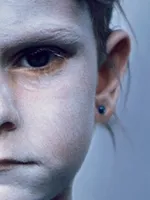
08/14/2004
Fine Arts Museums of San Francisco
Gottfried Helnwein: The Child
Harry S.Parker III
Director of Museums
Fine Arts Museums of San Francisco
For Helnwein, the child is the symbol of innocence, but also of innocence betrayed. In today’s world, the malevolent forces of war, poverty, and sexual exploitation and the numbing, predatory influence of modern media assault the virtue of children. Robert Flynn Johnson, the curator in charge of the Achenbach Foundation for Graphic Arts, has assembled a thought-provoking selection of Helnwein’s works and provided an insightful essay on his art in this exhibition catalogue.
Helnwein’s work concerning the child includes paintings, drawings, and photographs, and it ranges from subtle inscrutability to scenes of stark brutality.
Of course, brutal scenes—witness The Massacre of the Innocents—have been important and regularly visited motifs in the history of art. What makes Helnwein’s art significant is its ability to make us reflect emotionally and intellectually on the very expressive subjects he chooses. Many people feel that museums should be a refuge in which to experience quiet beauty divorced from the coarseness of the world. This notion sells short the purposes of art, the function of museums, and the intellectual curiosity of the public.
The Child: Works by Gottfried Helnwein will inspire and enlighten many; it is also sure to upset some. It is not only the right but the responsibility of the museum to present art that deals with important and sometimes controversial topics in our society.
09/15/2020
Bloomsbury Academic
On Critical Pedagogy
Henry A. Giroux, Brad Evans
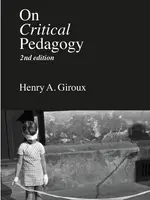
The cover for Giroux’s 2nd edition features another of the brilliant artworks by the Viennese artist Gottfried Helnwein (Aktion Sorgenkind). Featuring a blinded child on a rundown street, her hands are tied by a ribbon that reach beyond the page. This image is perfect for a text that spans nearly half a century of critical effort. This unseeing child is the counterpoint to the blinded Oedipus who also shaped by the rubble of his times, knew his fate and had it mapped out in advance. The ambiguity to the image is striking. Should we look upon it from the Western gaze, invariably we would scan from left to right, hence witnessing the child present yet puppeteered by a force that is invisible and beyond the pale.

05/01/2009
University of Minnesota
Gottfried Helnwein
UThink blogs
mors0120
ARTS 1001 Spring 2009: Margaret's Group
Both Helnwein and Jeff Koons work in a wide variety of media—frequently on a large scale—and incorporate elements of pop culture and sexuality. But whereas Koons rejects hidden meaning and embraces the superficial “kitsch” element, Helnwein reappropriates these symbols as a means of enhancing his message. Symbols of innocence take on a decidedly sinister air—in Helnwein’s “Los Caprichos” painting installation, a maniacally grinning plastic Mickey Mouse looms over a series of canvases depicting maimed and vulnerable children. Yet Helnwein’s work comes across as more a statement about general victimization of the young and loss of innocence rather than purely a jab at pop culture. Both Koons and Helnwein have produced multiple self-portraits, but they are also drastically different in tone. Koons’ self-portraits glorify the artist in an excessively heroic manner that verges on the ironic, flawlessly groomed and surrounded by attractive women and/or the trappings of success. Helnwein’s self-portraits, on the other hand, depict the artist as a bandaged, disfigured, sub-human figure, often splattered with pigment and displaying all manner of expressions of pain and worry. Both artists indulge in a certain narcissism, but the effect is utterly different. This contrast highlights the basic difference between the two artists: Koons is content to revel in the decadent and superficial, while Helnwein is obsessed with physical and psychological anxieties.
06/14/2008
www.pragueout.cz
GOTTFRIED HELNWEIN: TEMNÝ ROCKER V GALERII RUDOLFINUM
turban
V zrcadlovkách a s šátkem kolem hlavy připomíná Helnwein - výtvarník, performer a také majitel starého irského hradu, kde si celebrity podávají kliku - nějakou zazobanou rockovou star. Jeho temné a provokativní obrazy lákají média i nejširší veřejnost jako můry černé světlo za bílého dne. Výstava potrvá do konce srpna. Uvnitř ukázky.
06/13/2008
iDNES.cz
Gottfried Helnwein: malíř, který si nebere servítky
Martina Buláková
Angels Sleeping – Spící andělé – je název výstavy rakouského malíře Gottfrieda Helnweina. Od 11. června do 31. srpna ji můžete vidět v pražské Galerii Rudolfinum.
Nereflektovaná minulost, jež nepřetržitě prorůstá do současnosti a způsobuje úzkost, je Helnweinovým hlavním tématem. Expozice jeho hyperrealistické, za fotografii lehko zaměnitelné malby i fotografií pokračuje v dramaturgické psychologizující linii výstav Galerie Rudolfinum. Gottfried HelnweinHelnweinova tvorba má i silný politický přesah. Malíř se počátkem 70. let zařadil mezi vídeňské akcionisty, kteří kritizovali rakouskou kolektivní amnézii ve vztahu k fašistické minulosti země. Hnutí nezávislých politicky angažovaných umělců se snažila státní moc potlačit, revoltující akcionisty třeba na čas uvěznila či v krajním případě vyhnala do exilu. Při performancích akcionistů tenkrát třeba tekla krev a po zemi se válely vnitřnosti. Dnes je vídeňský akcionismus nejznámějším ryze rakouským avantgardním uměleckým směrem.
06/12/2008
Galerie Rudolfinum
Gottfried Helnwein: Angels Sleeping
Petr Nedoma
Kurátor výstavy
fotografie, výtvarné umění
Koncepčně formulovaná výstava malířského díla rakouského umělce Gottfrieda Helnweina (nar. 1948) s akcentováním pěti okruhů silných témat, jimiž se proslavil – portréty - tváře, násilí na dětech, nacismus, „Art in Amerika“ a metaforické portréty zpěváka Marilyna Mansona.
Výstava Angels Sleeping sleduje základní témata díla rakouského umělce Gottfrieda Helnweina (nar. 1948 ve Vídni). Autor se stal záhy pojmem v oblasti hyperrealistické malby, v zobrazení osamělého a zraňovaného člověka. Četné citáty z popkultury, fotograficky přesné detaily často monochromní, povrchově hladké, precizní malby navozují pocit podivné směsi důvěrně známého a jasně čitelného v kontrastu k tušené hrozbě, k nejasnému pocitu vyšinutí řádu, jež ohrožuje. Metafoře Helnweinova umění, i když často obsahuje rysy autoportrétu, dominuje obraz dítěte, které se obvykle nachází v mezním postavení, v krajně vypjaté situaci.
01/01/2008
Fenton Gallery, Cork
Gottfried Helnwein
Medb Ruane
Gottfried Helnwein's classic yet unnerving images transform sentimental representations of childhood into portraits of individual subjects frozen at the moment of suffering. His photo-paintings pirouette on the fine line between chocolate box pictures/excessive sentimentality and the cost to children of being treated as commodities, of suffering emotional or physical pain at a grown-up's hands.
High pictorial and technical values create compositions that recall contemporary cinema and seventeenth-century painting, expanding the treatment of time into epic. This apparent grandiosity plays against the immediacy of each suffering subject, underlining the different experience of time in childhood. Small hurts can devastate when you're a child. Big hurts stay with you for years, as survivors of Hitler's Anschluss testify.
Now, in the age of virtual use and abuse of children, Helnwein's insistence on valuing the humanity and charm of the littlest, the least powerful, offers a counterpoint to claims that suffering counts most when you're grown-up. It opens his practice into a series of pictorial mise-en-scènes, as did Rembrandt's tableaux in The Blinding of Samson (1636) or The Night Watch (1642).
11/30/2007
Textos Críticos
EL AUTORRETRATO EN FOTOGRAFIA Y SUS EXPONENTES: GOTTFRIED HELNWEIN
textoscriticos.blogspot.com
El nuevo arte del dolor, con esta pretensión provoca una serie de experiencias catárticas que permiten hacer una traducción personal de lo que quiere decir, porque a partir de esta provoca en el espectador una sensación que muchas veces es identificada por cualquier hombre que contemple sus obras.
Una simple manifestación artística que permite hacer de una sola imagen algo que sea comprendido por la mayoría. El llanto de un niño es un símbolo universal en el que su comprensión no necesita de idiomas, ni idiosincrasias, es por eso que el arte de Helnwein legitima esta experiencia, porque de entrada el centrarse en el ser humano mantiene una sola lectura; la del ser humano; cualquier dolor y sensación es conocida sin tenerla que haberla vivido. La obra de este artista mantiene siempre la intención de provocar miedos, deseos, dolor y felicidad con la intención de nunca revelar respuestas, sino que siempre formulará preguntas que hagan al ser humano detenerse y observar para entender: ¿Cómo hemos llegado a esto? ¿Por qué lo seguimos permitiendo?
04/06/2007
www.fotorama.pl
ZNANI I NIEZNANI - GOTTFRIED HELNWEIN
Nadesłał Krzysztof Karaś
Gottfried Helnwein (ur. 8 października 1948 roku w Wiedniu) - artysta pochodzenia austriacko-irlandzkiego. Uprawia kilka gałęzi sztuk, od tradycyjnego malarstwa, poprzez fotografię a po perfomance. Helnwein studiował malarstwo na Akademii Sztuk Pięknych w Wiedniu (Academy of Fine Arts Vienna; Akademie der Bildenden Künste, Wien). Skończył z wyrónieniem (the Master-class prize); otrzymał równie nagrody Kardinal-König prize oraz Theodor-Körner prize.
Jego wczesne prace to przede wszystkim hiper-realistyczne akwarele przedstawiające okaleczone dzieci; motyw ten był często wykorzystywany równie w licznych perfomances w miejscach publicznych. Helnwein jest konceptualnym artystą; koncentruje się przede wszystkim na psychologicznych i socjologicznych aspektach niepokoju i lęku wśród społeczeństwa, które te z kolei wywodzą się z historycznych wydarzeń i politycznych dyskusji. W rezultacie jego prace często są postrzegane jako prowokacyjne i kontrowersyjne.
03/29/2007
www.lerntippsammlung.de
Vergleich Cindy Sherman Untitled #96 – Gottfried Helnwein Selbstportät
Cindy Sherman - 2.Version
Cindy Sherman und Gottfried Helnwein Selbstbildnisse können zweifelsohne in die Porträtform „ästhetisches Selbstbildniss mit politischer Aussage“ kategoriert werden.
Betrachtet man ihre Werke jedoch im Vergleich, z.B. Hinsichtlich der gestalterischen Mittel oder der Art der Inszenierung, so lassen sich, neben einigen weiteren Gemeinsamkeiten, viele Unterschiede der beiden Künstler feststellen
11/30/2006
Wienbibliothek
Mit Donald Duck auf Weltreise
Stefan Winterstein
H.C. Artmann Comic-Lektüren
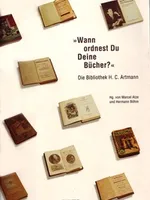
Das »dreidimensional[e] und farbig[e]«, »neue[] magische[] Universum« von Entenhausen, in das Gottfried Helnwein in seiner Kindheit aus dem nachkriegsgrauen Wien eintrat und von dem er auch seine Künstlerkollegen verlockt sieht, zeigt sich also in Jelineks Essay gerade auf eine beklemmende Eindimensionalität reduziert. Bei H. C. Artmann nun sind Disneys Protagonisten weder Götter oder Übermenschen noch kritisch analysierte eindimensionale Menschen, sondern schlicht - Menschen. Artmanns in obigem Helnwein-Interview zitierter Formulierung von Donald Duck als dem einzigen Menschen ist, wie sich zeigen wird, ein entschieden anderer Charakter eigen als Helnweins Rede vom göttlichen Donald. Sie ist im Umkreis des Dichters offenbar zur gerne reproduzierten oder auch variierten Weisheit geworden: »Der einzige mensch, der es heutzutage noch versteht, ordentlich die welt zu besehen, ist Donald Duck«, heißt es in Artmanns literarischem Tagebuch "das suchen nach dem gestrigen tag" (1964). In einem Exemplar des von Gottfried Helnwein illustrierten Edgar-AllanPoe-Bands Unheimliche Geschichten, das sich in Artmanns Bibliothek findet, liest man Helnweins Widmung (die beiden kannten einander persönlich): »Die einzigen Menschen, die uns heute noch etwas zu sagen haben, sind Donald Duck und H. C. Artmann«.
09/14/2006
University Press of America, Inc.
Attached to the Mouse - Disney and Contemporary Art
Holly Crawford
The facade of Disney and America in the guise of the Mouse is one of the things that Helnwein and others present to us. Claes Oldenburg took the facade to its literal extreme when he proposed a flat Mouse's image for a facade to Chicago's Museum of Contemporary Art, and produced a flat Mouse sculpture. Helnwein, Oldenburg and others are using the Mouse to make social and cultural comments about our society, in the broadest sense, but with humor.
05/24/2006
exibart
Gottfried Helnwein – Face it
franco veremondi
Linz, Lentos Kunstmuseum
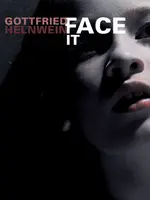
Un rientro in Austria, dopo un volontario esilio. Sembra che ad averlo trascinato da queste parti sia stata la corrente del Danubio, giacché l’approdo è avvenuto sulla riva di questo fiume. Dove spicca un museo...
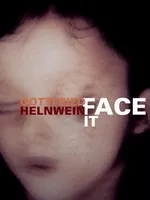
Lentos ha fatto, e fa, parlare di sé. È il nome della nuova sede del museo d’arte contemporanea di Linz, ricca e famosa città danubiana. Lentos è un grande edificio dalla forma di parallelepipedo con epidermide di vetro, che dal tramonto all’alba cambia colore in continuazione. Ha la vocazione cromatica del camaleonte, ma non per mimetizzarsi, anzi tutto il contrario. In effetti anche le mostre che propone hanno la seduzione del richiamo impetuoso e un taglio particolarmente penetrante. Come quella in corso, per esempio: sfacciata, perturbante, provocatoria fino all’insostenibilità. È tutta così l’opera di Gottfried Helnweil (Vienna, 1948): le sue armi pittoriche sono fin troppo figurative, il suo linguaggio più che realistico, le sue trame sempre inquietanti. Face It, titolo della mostra, è una retrospettiva e una mostra tematica nello stesso tempo, dove il viso umano è soggetto e leitmotiv.
03/01/2006
Lentos Museum of Contemporary Art, Linz
Wounds of Memory
Nava Semel
Essay for the catalogue - Face it - The Art of Gottfried Helnwein
"She is not as old as she seems, though age, at least in her case, is an elusive notion. In fact, it is her childhood that is fixated, and not out of nostalgia. True, it would take a daring leap of imagination to connect pudgy little hands to the body as it is now, or to visualize the dimples and the baby teeth. The little-girl-who-once-was thought: Maybe I am really dead. Because only dead people get pushed so deep down".
(From: And the Rat Laughed, by Nava Semel).
Helnwein is a great believer in the ability of art to pass emotional memory on, as a reminder of the past or mainly as a warning of what the future might hold, for humanity, as far as he is concerned, has not learnt its lesson. Is there atonement in his artistic endeavors? I prefer the Jewish concept of - tikkun, purification of the soul. It has a deeper meaning than the physical healing of scars, for it elevates us to the highest sphere of the spirit. The wounded girls close their eyes, but they are not blind. Behind their closed lids their gaze is clear and penetrating.
01/01/2006
Galeries nationales du Grand Palais, Paris
The Influence of the Disney World on Contemporary Art
Bruno Girveau
Conservateur en chef, chargé des collections, Ecole nationale supérieure des beaux-arts de Paris.
The production of the Disney studios quickly attracted artists, especially from the movie world. Eisenstein and Prokofiev, when they were working on Ivan the Terrible (1945), took an interest in the work of Disney and the conductor Léopold Stokowski on Fantasia. By the mid-sixties Disney enjoyed immense, universal popularity. Since the release of Snow White in 1937, several generations have been raised on his films and have not forgotten them. Pop Art made Mickey and Donald into icons.
As the French painter Robert Combas put it in 1977: “Mickey is no longer Walt’s property, he belongs to us all”. After drawing on Western art from all periods, Disney’s world became in its turn a source of inspiration for artists as diverse as Christian Boltanski, Gottfried Helnwein, Andy Warhol, Roy Lichtenstein, Bertrand Lavier, Peter Saul and Gary Baseman.
01/01/2006
Wienbibliothek im Rathaus / Handschriftensammlung -
Wolfgang Bauer: "Helnweins Bilder wirken!"
Wolfgang Bauer
12/22/2005
Transreal Space
Acción:
Derek Fenix
Referentes Conceptuales
Continuando la perspectiva del ritual, Günter Brus, Rudolf Schwarzkogler, Yoko Ono, Saburó Murakami, Atsuko Tanaka, Gottfried Helnwein, Ushio Shinohara, Peter Wiebel, Otto Muehl, Stelarc (en su etapa inicial de Suspension), entre otros, proponen la exposición de un hecho que sucede en tiempo real y que supera la noción de ficcionalidad o emulación.
11/25/2005
Trust
ゴットリープ・ヘルンバインGottfried Helnwein
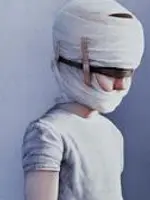
この本を読んで何年もたってから、まさにこの女の子に偶然出会ったときは、言いようのない驚きで頭の中が混乱した。『写真都市』(伊藤俊治著)という本で偶然に見つけたのだ。ゴットリープ・ヘルンバインGottfried Helnwein(1948-)というオーストリア生まれのアーティストによるBeautiful Victim II という1974年の作品。
11/06/2005
California State University - University of Wisconsin
Naked Space and the Art of Engagement
Jeanne Curran
Ph.D., Esq., Professor Emeritus of Sociology, CSUDH
Look at Helnwein's painting under Visual Sociology
Help us find visual, aural, metaphors that will let others understand the importance of engagement in this process. Look at Helnwein's painting under Visual Sociology. I left it up. What was Helnwein saying? Why was he willing to offend. Why do Beau and Michael want to shake us up? How are those things related? Why did one of my students make a giant box that when opened had a lovely smiling face inside that said "F^&* the Patriot Act"?? Isn't that a lot like what Helnwein and Kiefer and Beuys were doing? Maybe saying "wake up and look at what you're doing?"
11/03/2005
The Stiletto Projects
To me Helnwein is the ultimate humanistic artist: A conceptualist embracing the image.
Alexander Natas
A virtuoso and a visionary with one eye behind the veil of the world, the other reflecting endless horror, beauty, loss, humour and melancholy - all with a steady hand. The position is supreme, the means are penetrating and the message as deep as it gets. To me the strange silent directness in Helnweins work is unrivaled, no other artist today tells the dim story of the world in a more disturbing and moving way. His work, views and perspectives are completely congruent and appeals to me in a very direct and personal way.
10/01/2005
Art Electronics
ШОКОВАЯ ТЕРАПИЯ
Ольга Скоркина
Современное искусство прибавило к традиционным техникам новые способы эстетического самовыражения: аналоговые — кино и фотографию, электронные — цифровое фото/видео и персональный компьютер. Приятие новых творческих средств занимает все меньше времени: в случае с фотографией для этого понадобилось почти сто лет, с кино — двадцать, а с цифровой техникой — менее десяти. Ведь технологии не убивают искусство, но расширяют пределы творческой свободы.
09/01/2005
Emerson College
Conscious Recognition
Jenna Gonzalez
After further examining his work on my computer, I left . . . heart racing several beats faster, fingers tingling. Helnwein reminded me how to feel. It was like the first time I saw a Fellini film or slipped into Tom Ford attire. There was a sense of confidence instilled, a confidence in being human, the confidence to find power through mistake, the confidence to admit to cease yearning for perfection. Rather, redefining perfection to the state of recognizing my humanity, my possibility.
08/01/2005
Instituto de cultura Superior A,C. Mexico
Gottfried Helnwein - Una expresión del dolor
Michelle Dana Missrie
Mexico
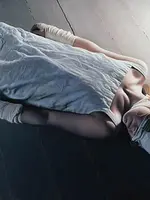
Toda la obra de Helnwein presenta originalidad. Esta es una de las características que hacen que lo podamos definir como verdadero artista; no sólo porque se ha podido apoderar de la técnica a tal punto que pareciera que le pertenece, sino porque además se ha propuesto descubrir y experimentar con distintos soportes y técnicas nuevas. En cada pieza podemos ver la reflexión que plantea sobre lo humano visto por medio del dolor y el sufrimiento; intentando hablar por medio de lo visual lo que los escritores y filósofos plantearon sobre lo utópica que es la sociedad; desmitifica los valores religiosos y cuestiona la moral.
07/26/2005
Ludwig Museum Schloss Oberhausen
Ungewohntes Ausstellungserlebnis: Gottfried Helnwein in Oberhausen.
Gabriele Oberreuter
Anmerkungen zu seinen Darstellungen von Kindern.
Opfer erfahren hier eine spektakuläre Inszenierung und Würdigung. Ihre Ohnmacht und Verlorenheit rührt - wenn wir entsprechende Gefühle in uns anklingen lassen und nicht die eigenen Schmerzen verleugnen. Ich erlebe die Kinder in Helnweins Bildern weniger als real körperlich deformiert. Mir scheint, der Künstler hat nur die Tarnkappen der physischen Hülle abgerissen und unsere "ganz alltägliche" seelische Verstümmelung sichtbar gemacht.
07/17/2005
Universität Wien, Institut für Theater und Film
Zur medialen Erzeugung der Grimasse
dogan evren
Zur medialen Erzeugung der Grimasse*
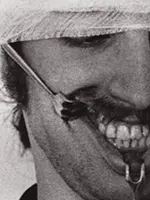
Mag in der Insistenz und Extensität der Produktion Rainers Werk herausragen, die Abwendung von der Anthropologie, die als Negation doch auch mit ihr verknüpft ist, durchzieht die Kunst seit der Mitte des 20. Jahrhunderts. Zum Bestand der kanonisierten Kunst gehören mittlerweile die fotografisch dokumentierten Body-Perfomances der 60er und 70er Jahre (z.B. Bruce Naumann, Jürgen Klauke, Klaus Rinke), die Selbstporträts Gottfried Helnweins der 70er und 80er Jahre, die Video-Dummies von Tony Oursler.
07/13/2024
Ludwig Museum Schloss Oberhausen, Wilhelm-Busch-Museum, Hannover
Beautiful Children
Peter Pachnicke, Gisela Vetter-Liebenow
One Man Show Gottfried Helnwein
07/13/2005
Ludwig Museum Schloss Oberhausen
Ungewohntes Ausstellungserlebnis: Gottfried Helnwein in Oberhausen.
Gabriele Oberreuter
Anmerkungen zu seinen Darstellungen von Kindern
06/21/2005
Universität Hannover - Historisches Seminar, Philosophische Fakultät
„Beautiful Children“
Steffen Runkel
Gottfried Helnwein im Wilhelm-Busch Museum.
"Beautiful Children“ ist die Ausstellung überschrieben, die Werke und Photographien des gebürtigen Österreichers Gottfried Helnwein bis zum 12. Juni 2005 im Wilhelm Busch Museum Hannover zeigte. Und von vorneherein drängt sich die Frage auf, ob dieser Ort, idyllisch inmitten des Georgengartens gelegen, der richtige Ort sei für den Meister des Überdimensionalen, der großen Installationen.
Doch bereits der Blick in den ersten Ausstellungsraum nimmt diese Befürchtung. Es müssen nicht die ganz großen Dimensionen sein, die in ihren Bann ziehen, es ist die Macht der Mischtechnik auf Leinwand, die unabhängig von ihrer Größe fesselt und fasziniert. Zu Beginn das größte Werk der Ausstellung, 2x4 Meter, ein Mädchengesicht mit geschlossenen Augen: „Beautiful Children“. Der Titel der Ausstellung wird zum Programm. Gegenüber das wohl schönste Werk, der Kuss zweier Nymphen. Nicht lasziv oder aufreizend, sinnlich eher, tastend. Die ungetrübte Unschuld des Kindes, seine Unbeschwertheit und Freiheit hat Helnwein wohl nie besser dargestellt als in diesen beiden Werken.
06/19/2005
Ludwig Museum Schloss Oberhausen
„Dass Kunst so mächtig ist, einen Vorgang, den sie zum Thema hat, nochmals hervorzurufen.....
Dr. Antje Vollmer
Vizepräsidentin des deutschen Bundestages
Auszug aus der Rede zur Ausstellungseröffnung „Gottfried Helnwein - Beautiful Children“
im Ludwig Museum Schloss Oberhausen, am 19. Juni 2005
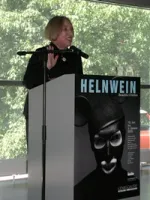
...Bei diesem ersten Besuch habe ich erkannt, dass dieses nur ein Teil von einem Versuch ist, ein Gesamtkunstwerk als Künstler zu schaffen, das nichts ausblendet, nicht die Schönheit der Welt, von Landschaften, von menschlichen Gesichtern, von der Offenheit und Reinheit menschlicher Wesen, bis zum Zauber der selbst von Kindern ausgehen kann, die Gottfried Helnwein immer „diese zarten Geschöpfe“ nennt. Immer ist es eine Art von Vorsicht und außerordentlich großer Sensibilität, die gleichzeitig gekoppelt und kontrastiert wird mit diesem unglaublich intensiven Ausdruck von Schmerz, Verletzung, Zerstörung, Bedrohung, Alptraum, Nachtgesichtern, und Traumfantasie. Diese Mischung, das ist Gottfried Helnwein, er war nie nur das eine.
Dass er bei dem Allem auch außerordentlich politisch ist, das möchte ich gerade bei so vielen Künstlern, die heute ein Programm der reinen Spaßkultur verkörpern, audrücklich lobend erwähnen. Dass es jemanden gibt, der sich als politisches Wesen in seinen Bildern äußert und damit auch politische Wirkungen erzeugt. Die Gegenstände dieser Kunst sind nicht besonders einfache , schöne, gefällige. Sie haben sehr viel Heftigkeit in den Reaktionen erzeugt. Das gehört dazu, wenn man ein politischer Künstler ist. Wer gefällt der lügt. Das größte Verbrechen eines Künstlers ist, wenn er sich der Lüge, der Gefälligkeit aussetzen würde.
05/31/2005
Los Angeles Times
Strange but true
Mark Swed
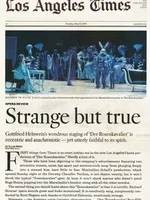
Gottfried Helnwein's wondrous staging of "Der Rosenkavalier" is eccentric and anachronistic — yet utterly faithful to its spirit.
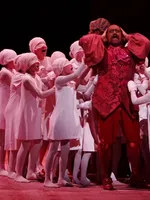
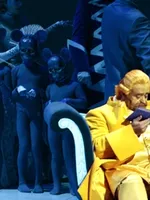
The thing you should know about this "Rosenkavalier" is that it is terrific. Richard Strauss' opera sounds great and looks sensational. It is excellently sung, sumptuously conducted by Kent Nagano and, thanks to Gottfried Helnwein, wondrously strange.
Helnwein — the Austrian artist (painter, photographer, performance artist, filmmaker) who has a studio in downtown L.A. — is known for everything from Marilyn Manson videos to Holocaust installations. He is responsible for the sets, costumes and that ad (which, by the way, looks like an image from a recent staging of a Schumann oratorio that Helnwein designed in Düsseldorf).
Helnwein's vision of "Rosenkavalier" is monochromatic and a riot of color. It is oddly traditional yet seriously odd. It is updated but couldn't be more 18th century. And none of those opposites contradicts.
05/30/2005
Opera-L archives
Discussion of opera and related issues - DER ROSENKAVALIER -
Kirsten Lee
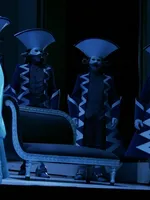
Sorry - thats wrong. The film shown was Robert Wiene's "Der Rosenkavalier"(1925) created in collaboration with Hugo von Hofmannsthal and Richard Strauss who wrote the musik for the film (Op. 59) The set and costumes were created by Alfred Roller who was in charge of the sets and costumes for all the Strauss opera-premières in Vienna.
The rushing troop penetrating through the stone arch are soldiers of the Marshall (- the Marshallin's husband) - But it's true that Robert Wiene also created "Das Cabinet des Dr. Caligari"(1920) for which he became famous.
(the website editor).
05/29/2005
Los Angeles Opera
Der Rosenkavalier - reviews, reactions
A visual triumph
Gottfried Helnwein arouses creative tumult. - Los Angeles Times
05/25/2005
30. Deutschen Evangelischen Kirchentag
In einer bewegenden Ausstellung im Wilhelm-Busch-Museum in Hannover sind zur Zeit Bilder des österreichischen Künstlers Gottfried Helnwein zu sehen.
Dr. Margot Käßmann
Landesbischöfin
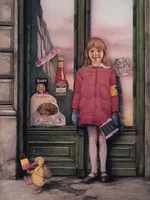
Eins zeigt ein Mädchen mit frechem Gesicht und Blindenband um den Arm, das die Zunge herausstreckt. Erst habe ich gelächelt. Wer den Blick länger verharren lässt, sieht, dass dem Mädchen Blut zwischen den Beinen herunterläuft. Es wurde ganz offensichtlich missbraucht, ihm wurde Gewalt angetan.... Ja, Kinder sind verletzbar. Kindheit kann grausam sein, wenn Kinder ausgeliefert sind. Ich denke an sexuellen Missbrauch, eine unglaublich Form von Folter an Menschen, die lebenslang an dem Trauma leiden werden. Ich denke an Kindersoldaten in Togo, im Kongo, im Sudan. Zerstörte Leben, brutal geopfert für idiotische Machtkämpfe, in denen Zerstörung das oberste Gebot ist, in denen es keine Ziele mehr gibt. Ich denke an Kinder in Indien, die schuften schon mit fünf Jahren um ein paar Münzen zu verdienen, damit ihre Familie überleben kann. Ich denke an die 12-jährigen Judith Wischnajatskaja, die im Juli 1942 in ihrem letzten Brief schrieb: “Lieber Vater! Vor dem Tod nehme ich Abschied von Dir. Wir möchten so gerne leben, doch man lässt uns nicht, wir werden umkommen. Ich habe solche Angst vor diesem Tod, denn die kleinen Kinder werden lebendig in die Grube geworfen.“
05/01/2008
University of East Anglia, Norvich, UK
GOTTFRIED HELNWEIN, MEMORIALISING THE HOLOCAUST
Katy O'Donoghue
Gottfried Helnwein has been described as an artist that has committed himself to reminding the world of the Holocaust. Children are a recurring theme in his work; the strong/weak hierarchy makes them a ready metaphor for the victims of evil. Stripped one by one of their privileges, rights, sustenance, and finally their bodily integrity, the Nazi’s victims were subjected to what Christopher Bollas has called ‘a radical and catastrophic infantilization.’ I first became aware of Helnwein’s work in 2001 when he exhibited at the Kilkenny Arts Festival in Ireland. Large scale portraits of local children and photographs of his paintings conflating Nazi and religious imagery were hung on buildings around the city. I was particularly interested in the intense debate that arose around the installation of the pictures. City Council members objected to the hanging of work on City Hall, the public sent letters of complaint to local newspapers and called in to the local radio station in protest. During the exhibition two of the works were vandalised. Helnwein has maintained that it is important to see a reaction to his work. In February I travelled to Bonn, Germany and met with Helnwein to discuss how, through placing his work in the public realm, he attempts to keep Holocaust memory alive by instigating a dialogue. His subject matter is the repression of the greatest trauma of our century - National Socialism, people’s complicity in it, and its consequences.
05/01/2005
Los Angeles Opera
Note from Der Rosenkavalier Production Designer Gottfried Helnwein
Gottfried Helnwein
Marie Antoinette, for example, was obsessed with the idea of pretending to be a simple innocent peasant girl. Her husband built her an entire life-sized fantasy farmhouse and mill with sheep, shepherds and all - and an idealistic landscape shaped around it. Dressed in theatrical shepherdess attire, she could now play "innocent country folk" with her girlfriends.
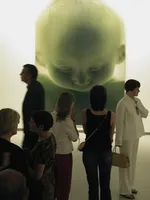
03/01/2005
Ludwig Museum Schloss Oberhausen und Wilhelm Busch Museum Hannover
Gottfried Helnwein - Beautiful Children
Peter Pachnike und Gisela Vetter-Liebenow
Auszüge aus dem Vorwort zu "Gottfried Helnwein - Beautiful Children"
„Ein göttlich Wesen ist das Kind, solang es nicht in die Chamäleonsfarbe der Menschen getaucht ist. Es ist ganz, was es ist, und darum ist es so schön. Der Zwang des Gesetzes und des Schicksals betastet es nicht; im Kind ist Freiheit allein. In ihm ist Frieden; es ist noch mit sich selber nicht zerfallen“
Friedrich Hölderlin
Immer wieder waren es Gleichgültigkeit und Teilnahmslosigkeit der Menschen, die Helnwein zu künstlerischen Aktionen bewegt haben. So führte er in den 70er Jahren Straßenaktionen durch, in denen er Kinder bandagierte und mit chirurgischen Klammern versehen auf die Straße legte. Für die Kinder war es eine Art Spiel; für Helnwein der Versuch, „immer wieder in den Alltag – der so genormt abläuft – Störfaktoren einzubringen, um zu sehen, wie die Leute reagieren.“
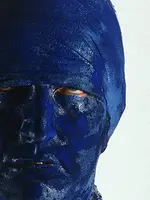
02/13/2005
xforums.net
GOTTFRIED HELNWEIN
oblivion
> ART, de gustibus et coloribus nil disputandum
In fact Gottfried Helnwein made his name by spectacular performances, among them are self mutilations or simulacra of violence inflicted on himself. The violence is often concentrated on the eyes. The artist takes to bandaging the head which deprives the individual of all visual relations with the outside world. An obvious paradox on the part of an artist's whole life and work is closely linked with sight, to apply himself to representing, in various forms, impediments and problems of sight. Undoubtedly the scope of his projects is not limited to the sole artistic domain. His art also takes on an obvious historic dimension. Like a good number of artists of his generation, those born after the war, be they writers, painters, film makers or photographers, Gottfried Helnwein feels intense guilt at belonging to a part of Europe with such an unbearable past.
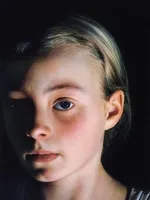
01/13/2005
Victoria H. Myhren Gallery
IN LIMBO
Gwen F. Chanzit
An exhibition of works from the Denver Art Museum’s fractional and promised gift of contemporary art from the collection of Vicki and Kent Logan.
Helnwein’s subject matter involves the complexities of the human condition. His disturbing yet provocative images of physically and emotionally wounded children have been seen as metaphors for larger global issues. He portrays the innocence of adolescence against the backdrop of shameful historical events like the Holocaust to highlight the fragility of humanity in an unstable world. Like Wong from Asia and Sherman from the United States, Helnwein offers up dramatic scenarios featuring youthful protagonists that beg a viewer to complete the equation.
The child’s face – painted in a realistic style yet eerily unreal – may allude to the uncertain (in limbo-like) quality of Helnwein’s own childhood. Helnwein is among a network of contemporary artists expressing visions that embrace and also transcend cultural nomenclature.
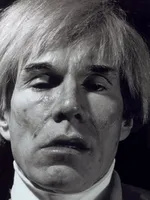
01/01/2005
Laboratorium foto Reportażu
Recenzja: FOTOGRAFII XX WIEKU w Muzeum Ludwig w Kolonii
Anna Konieczna
Jest to album także dla poszukujących, dla tych, których interesuje kręta droga fotografii i chcą ją poznać, dla tych, którzy zaczynają formalną zabawę z fotografią...
Gottfried Helnwein przedsatwiający fotografie Andiego Worhola, Michaela Jacksona, interesował się także pokazywaniem aktów przemocy i jej odbiorem przez obojętne audytorium jak w "Ostatniej wieczerzy", należał w Wiedniu do grupy, która w latach 60-tych eksplorowała temat przemocy w sztuce, działając też na polu performance.
01/01/2005
DZ BANK Kunstsammlung
Raum 38.04 - Gottfried Helnwein - Kinderhand und Kindergesichter
Kunst am Arbeitsplatz
Mit dem im April 1993 eröffneten Hochhauskomplex von Kohn/Petersen/Fox in der Frankfurter Westendstraße, der längst einen unverwechselbaren Platz in der Skyline einnimmt, verfügt die DZ BANK über ein modernes Dienstleistungszentrum.
Wie schon Claes Oldenburgs und Coosje van Bruggens Krawatte - "Inverted Collar and
Tie",1994 - auf dem Vorplatz deutlich macht, versteht das Institut Kunst als Element der Unternehmenskultur. So wurde seit dieser Zeit eine "corporate collection" aufgebaut, die mit über 5.000 Exponaten zu einer der größten und angesehensten ihrer Art zählt.
01/01/2005
Reprinted from Azure
Rammstein’s Rage
Claire Berlinski
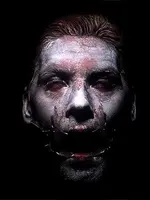
For the portraits in Sehnsucht, the Austrian artist Gottfried Helnwein photographed the musicians in facial bandages, their lips and eyes stretched wide apart by hideous medical instruments. There is an echo of Trakl, again, in these “cold metal straps.” But it is unreasonable, the musicians protest, to think that images such as this might evoke obscene historical memories. “It’s just reverse discrimination because we are German,” says Lorenz. “If we were Spanish or Dutch, there would be no problem.”
11/30/2004
Westfälischen Wilhelms-Universität zu Münster
Der Schrei.
Andreas F. Beitin
Inaugural-Dissertation zur Erlangung des Doktorgrades
Kunst- und Kulturgeschichte eines Schlüsselmotivs in der deutschen Malerei und Grafik des 20.Jahrhunderts
Der Schrei im Selbstbildnis als Gesellschaftskritik -
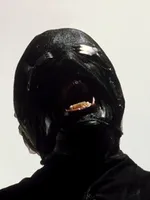
Wohl kein autoporträtatives Schaffen ist in der zweiten Hälfte des 20. Jahrhunderts derart mit einer expressiven Gesellschaftskritik, mit einer Anklage verbunden, wie das von Gottfried Helnwein. Der Künstler macht sich um einer schonungslosen Aussage willen zum schreienden, zum stellvertretend leidenden Objekt seiner Bilder: „Ich will mit meinen Bildern und Aktionen die Menschen aus ihrer Eingefrorenheit lösen, wenn auch nur eine Sekunde lang, will sie verunsichern und zu spontanen Reaktionen hinreißen. Verunsichern, aber nicht destruktiv. Die logische Denkfähigkeit soll zugunsten totaler Selbstöffnung kurz trocken gelegt werden“, stellte der österreichische Maler, Grafiker und Aktionskünstler Gottfried Helnwein zur Intention seines Werkes fest.
11/01/2004
Schumann Festival 2004
Press-reviews of "Paradise and the Peri", multi-media-installation by Gottfried Helnwein and Gregor Seyffert.
Tonhalle Concert Hall
Düsseldorf
BREATH TAKING STAGE VERSION AT DÜSSELDORF CONCERT HALL
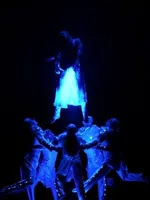
Dance icon Gregor Seyffert, and Gottfried Helnwein, internationally renowned artist and stage designer, came up with a highly intelligent concept for the oratorio, which relied heavily on dance, but also comprised whatever means a modern, multimedia stage design might offer. Consequently, the audience’s eyes almost popped out of their heads. With all the media activities, one might almost forget the enchanting, beautiful music, and singing.
Storming, unceasing applause by an enthusiastic Düsseldorf audience for an evening which is unlikely to be easily forgotten. This was an example of lively music theatre, which, unchallenged, not only stole the glory of Deutsche Oper am Rhein, which presently enjoys a period of profound hibernation, but proved that Düsseldorf may well offer first class art. Why not more often?
(Peter Bilsing)
10/01/2004
Artweek
Gottfried Helnwein at the Legion of Honor
Colin Berry
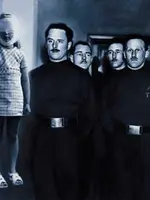
Helnwein is the next generation’s final ally, a skilled provocateur forcing us to confront the legacy we have bequeathed upon our children. Helnwein is our chronicler, our conscience, the antidote to our failing memories. He refuses to let us forget…
Gottfried Helnwein’s first one-man exhibition at a major American museum is long overdue. 35 years in the making, “The Child” is a collection of more than fifty drawings, watercolors, photographs, and paintings (several monumental in size). It’s also a show that shocks, and among the crowds thronging to see it, some patrons will be put off: the day I attended, a few seemed downright uncomfortable, if not hostile, toward the work. This is fine. Art should shock, and provoke, and make us feel queasy sometimes.
“The Child” achieves all three, but also startles us with aching beauty, bedazzles us with painterly skill, and injects a necessary perspective into the culture’s collective conscience.
09/01/2004
AC (ArtCircles)
The Child: Works by Gottfried Helnwein
Peter Frank
curated by Robert Flynn Johnson, California Palace of the Legion of Honor, Lincoln Park, July 31-Nov. 28
Austrian-born and educated and now living Los Angeles, Helnwein employs a hyperrealist manner that will remind Americans of Gerhard Richter but, if anything, works to opposite effect. Rather than re-confirm post-modernist cynicism, Helnwein rekindles post-war anguish. This selection, going back more than three decades, emphasizes his preoccupation with the image of the child, from early Nitsch- and Schwarzkogler-influenced photo-actions (with the requisite bandages) to recent large portrait-like heads and depictions of Christ-child-like babes attracting odd, menacing crowds. A perverse streak runs through the images, but it’s not pederasty: tinged with surrealism, it’s an enduring shame and anger at the Nazi past – and the artist’s suspicion that Naziism hasn’t been eradicated.
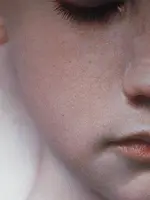
08/15/2004
Robert Flynn Johnson
The Child - Works by Gottfried Helnwein
Fine Arts Museums of San Francisco
..A clarity of vision in his subject matter was emerging in Helnwein's art that was to stay consistent throughout his career. His subject matter is the human condition. The metaphor for his art, although it included self-portraits, is dominated by the image of the child, but not the carefree innocent child of popular imagination. Helnwein instead created the profoundly disturbing yet compellingly provocative image of the wounded child. The child scarred physically and the child scarred emotionally from within.
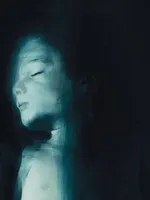
08/10/2004
sf-station
GOTTFRIED HELNWEIN'S THE CHILD - INNOCENCE LOST
Nirmala Nataraj
Beyond his treatment of common children's motifs - dolls, toys and ambivalent nymphets- Austrian painter Gottfried Helnwein's vision is shrouded in an aura of enigmatic darkness. With his giant color portraits of stillborn babies; paintings that juxtapose Nazi-era photographs with his own images; and pictures of deformed, abjectly countenanced children swathed in bandages, Helnwein is preoccupied with the indelible suffering that mirrors the more delicate aspects of youth. His work is hauntingly gorgeous and suffused with pathos, precisely because viewers are immediately aware of the larger threat that looms within the pieces: the rupture of innocence.
08/01/2004
art - frequently asked questions
"The Child" Works by Gottfried Helnwein
Valentina Braschi
Iitalia
Al famoso museo Legion of Honor di San Francisco è stata inaugurata la prima mostra personale negli Stati Uniti dell’artista austriaco. 19 dipinti, più di 20 foto, 13 disegni ed acquarelli documentano il percorso artistico di Helnwein (*Vienna 1948) dagli anni ’70 fino ad oggi.
07/03/2004
Irish and other Landsccapes
Peter Murray
Director, Crawford Municipal Art Gallery, Cork
07/13/2024
Crawford Municipal Art Gallery, Cork
Out of the Apocalypse and Into the Sublime Bursting into Irish Landscapes: Citizen Helnwein
Mic Moroney
Solo Show Gottfried Helnwein, Irish and other Landscapes
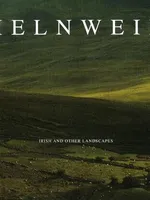
07/01/2004
The Crawford Municipal Art Gallery
Helnwein, Irish and other Landscapes
Peter Murray
Chief Curator
One man show, 01. July 2004 - 01. August 2004
"Helnwein's meticulous Irish landscapes, which are the cornerstone of this Crawford show, are unashamedly aesthetic: gorgeous confections of pure, delicious spectacle. The typically epic but not inhuman scale imitates the subject matter. The tonal realism will make people go "Wow, are they paintings?" - thanks to the photorealist finish which seems free of the foibles of the human hand. Helnwein works with very small brushes - highlighting and subtly magnifying here, muting colours or creating shadows there; pushing some paintings towards momentary sleights of impressionism; and others towards seamless, burnished hyperreality. The bird's eye view suggests a kind of superhuman vision which can simultaneously take in the entire view with breath-taking clarity, like some bionic eagle."
Mic Moroney, from the essay "Out of the Apocalypse into the Sublime - bursting into Irish Landscape: Citizen Helnwein"
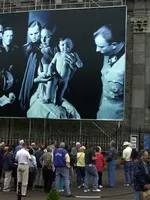
06/19/2004
California State University, Dominguez Hills
Shared Reading: Gottfried Helnwein
Jeanne Curran and Susan R. Takata
Gottfried Helnwein's Epiphany I
* Helnwein's Epiphany I has been up on our site for years now. For a while I used it as wallpaper on my desktop. Perhaps that explains how the first hypertext poem came to be one about the Virgin. But as I struggled with updating the site, I checked all my old resources and came across materials that explain Helnwein's commitments and meanings far better than I could alone.
![ТЕМА: ФОТОГРАФИИ][GOTTFRIED HELNWEIN.](/images/6fdd2dd2a8aa29b74065763b07a91a2dbc624802-900x300.jpg?rect=77,0,182,242&w=150&h=200&fm=webp&fit=crop "ТЕМА: ФОТОГРАФИИ][GOTTFRIED HELNWEIN.")
05/13/2004
www.livejournal.com
ТЕМА: ФОТОГРАФИИ][GOTTFRIED HELNWEIN.
Kira B. Riannon
Еще несколько любимых мной фотографий. Эти три были сделаны человеком по имени Gottfried Helnwein (www.helnwein.com). Фотграф часто снимал детей, причем как раз так, как мне это нравится. А еще он сотрудничал с Мерлином Мэнсоном. Такие дела. Фото сверху входит в серию "Modern sleep". Восхитительная спящая девочка, хочу себе такую же. Эту фотографию гигантских размеров можно было наблюдать в составе инсталляции на Los Angeles ARTshow 2003, Santa Monica. На фотографии справа под текстом - инсталляция Ninth November Night 1988. Дети дети дети, множество фотографий, каждая размером 370 на 250 сантиметров. Красиво.