1984
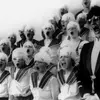
"Helnwein", the film by Peter Hajek, opens the Austrian Week in the Berlin film festival, "Berlinale"
The film is awarded the Adolf Grimme Prize and in the same year wins the Eduard Rhein Prize and the Golden Kader of the city of Vienna for outstanding camera work.
more...
1984
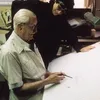
Helnwein meets Walt Disney artist Carl Barks, creator of Donald Duck. Helnwein maintains that he learned more about art and life from Donald Duck than from all the schools he ever attended
more...
1984
A self-portrait collage as a contribution to the "1984 - Orwell and the Present Day" exhibition in the Museum of Modern Art in Vienna
more...
1984
“Kunst und Integration”
Kulturamt der Stadt Wien
Group show
more...
1984
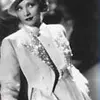
Begining of the friendship with Marlene Dietrich
Gottfried and Renate Helnwein were amongst the few people that Marlene invited to her home in Paris, and stayed in close contact with until the end of her life
more...
1984
In December 1984, The Hindustan Times publishes an article on Helnwein
"Gottfried Helnwein: Called the 'Razor Blade Rembrandt' or 'the Boris Karloff of Art', Helnwein is the man most Austrians love to hate. He schocks people. His paintings are scenes from every-day life, highly realistic, but there's a sharp, morbid streak in many of them. Children with razors, faces under extreme stress or in fear or in pain. Intensly human, often savage, but always stunning.
I found him to be a sensitive, warm human being..."
more...
1984
The office of Soviet foreign minister Gromyko tries to acquire Helnwein's portrait of Gromyko, which appeared as a "Time" cover
But the painting is already part of a collection in the Smithsonian Institute in Washington D.C.
more...
1984
Helnwein's self-portrait is on the cover of the Italian news magazine "L'Espresso"
more...
1984
His self-portrait is shown in the exhibition "Köpfe und Gesichter" (Heads and Faces) in the Darmstadt Kunsthalle
more...
1983
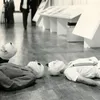
One-man show at Munich Stadtmuseum
The exhibition is seen by more than a hundred thousand people
more...
1983
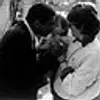
ZDF and ORF (German and Austrian National Television) produce the film "Helnwein", directed by Peter Hajek.
In Los Angeles Helnwein meets Muhammad Ali, who appears in the film
more...
1983
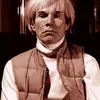
Helnwein meets with Andy Warhol at his factory in New York
more...
1983
"Rettet die Donau" (Save the Danube)
- the Austrian art-collector and patron Hans Dichand finances a campaign with large bill- boards of Helnwein's artwork throughout Austria against the destruction of the last great riverside meadowland woods in Europe by the Austrian power-station company Donau- kraftwerke AG.
more...
1983
Bavarian Television produces a film portrait of Helnwein directed by Hans-Dieter Hartl
more...
1982
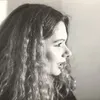
Helnwein marries Renate Kurrer in Vienna
more...
1982
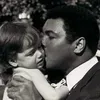
March 25, Helnwein's son Ali Elvis Donald Dagobert Lancelot is born
more...
1982
The Higher College of Visual Art (Hochschule für Angewandte Wissenschaften) in Hamburg offers Helnwein a Chair
Helnwein demands no tests and no age-restrictions as pre-requisites for his students. He wants the freedom to accept anybody, including children. The college rejectes this demand as being against university regulations and Helnwein declines the offer
more...
1982
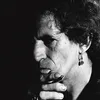
Meets the Rolling Stones in London. Mick Jagger, Keith Richards, Ron Wood, Charlie Watts and Bill Wyman pose for Helnwein
more...
1982
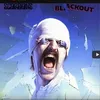
Helnwein's Self-portrait is the cover of the Scorpions album Blackout
1982, auf ihrer zweiten US-Tour, mit Iron Maiden als Support Act, promoten die SCORPIONS als Headliner ihre bahnbrechende LP "Blackout", das Album mit dem spektakulären Helnwein-Cover. Die Single "No One Like You" und die "Blackout"- LP erreichen die Top Ten in den USA. Es gilt als das beste Hard Rock Album des Jahres und wird mit Platin ausgezeichnet.
more...
1982
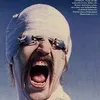
For "Zeit" magazine, Peter Sager writes a cover story about Helnwein
The self-portrait as a screaming blinded man is used for this cover story and later for the cover of the Scorpions' LP "Blackout".
more...
1982
Helnwein meets Joseph Beuys in Düsseldorf
more...
1982
In the National Austrian radio talk-show "Teestunde", Helnwein uses obscenities to insult Sam T. Cohen, the inventor of the neutron bomb
He further accuses Elvis' physician of murder and criticizes the education system, referring to the high number of student-suicides. Helnwein calls upon students to simply stay away from school.
The director of Austrian Radio (ORF) is appalled and cancels the show
more...
1982
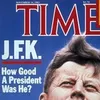
Helnwein's portrait of Kennedy makes the cover of "Time" for the 20th anniversary of the President's death
more...
1981
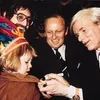
Helnwein meets Andy Warhol in Vienna
more...
1981
First monograph, texts: H. C. Artmann, Botho Strauss, Wolfgang Bauer and Barbara Frischmuth
more...
1981
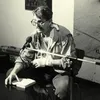
Begin of the friendship with Austrian poet H.C. Artmann
more...
1981
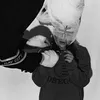
Berween 1981 and 1985 Helnwein works on a series of photographic self-portraits - often in connection with performances, and sometimes including his children
more...
1981
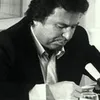
Austrian poet and playwright Wolfgang Bauer writes the ballad "Song for Helnwein - Boulevard of Broken Dreams"
Begin of the friendship with Wolfgang Bauer
more...
1979
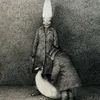
One-man show with pen-and-ink drawings in the Albertina Museum, Vienna
more...
1979
Aktion in the International Year of the Child
R. Höpfinger and E. Regnier hand out sweets and toys bearing Helnwein pictures of wounded children to passers-by in Zürich.
more...
1979
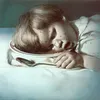
"Life not Worth Living"
Spurred into action by an interview in the Austrian newspaper "Kurier" in which the country's top court psychiatrist, Dr Heinrich Gross, admits killing children at Vienna's "Am Spiegelgrund" Pediatric Unit during the war by poisoning their food, Helnwein paints "Life not Worth Living" - a watercolour of a little girl "asleep" on the table, her head in her plate. The painting gets published in Austrias leading newsmagazine Profil and sparkes a nationwide debate that finally leads to Gross' appearing before a Vienna court . The judge rules Gross is mentally unfit to be tried.
more...
1979
November 12, Helnwein's daughter Mercedes Xenia is born
more...
1977
Helnwein travels through the United States for several months
more...
1977
April 5, Helnwein's son Cyril is born
more...
1977
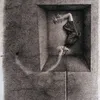
More pen-and-ink drawings
more...
1977
Beginning of his relationship with Renate Kurrer, whom he marries 1982
more...
1976
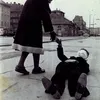
Aktion "Allzeit Bereit" (Ever Ready) at the Naschmarkt, Vienna
more...
1976

Aktion "Cafe Alt Wien"
more...
1976
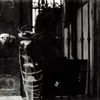
Aktion "St. Stephn" with Robert Schoeller in Vienna
more...
1975
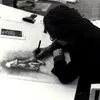
1975 -1985 Helnwein works on a series of pen-and-ink drawings
"Unser Entenbischof" (Our Duck-Bishop),
"Zwei amerikanische Ärzte behelligen eine Patientin" (Two American Doctors teasing a Patient),
"Mulattin Erika in ihrem Haus" (Mulato-girl Erika in her House),"Das Wannenwunder von Watras" (The Bathtub Wonder of Watras),
"Metallippe zum Lächeln" (Metal Lip for Smiling),
"Das Grubenunglück" (Mine Disaster),
"Korrekturspange" (Corrective Brace),
"Assistent Assmann" (Assistant Assmann),
"Hilfe für Mann ohne Kinn" (Help for Man with no Chin).
more...
1974
Theodor Körner Prize
more...
1974
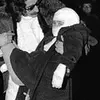
"Weisse Kinder" (White Children) Aktion with 15 bandaged children in Kärntnerstrasse, in the centre of Vienna
more...
1974
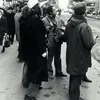
ZDF (German national TV) film portrait "Helnweins Sehtest" (Helnwein's Eye Test), directed by Heinz Dieckmann
more...
1973
First edition of an etching "Meine Buben haben einen Türken in die Schlucht gestossen" (My Little Rascals Have Shoved a Turk into the Ravine)
more...
1973
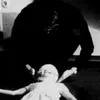
Aktion "Sandra" at Gallery over the Stubenbastei, Vienna
more...
1973
First cover for the political and cultural magazine "Profil"
"Suicide in Austria" (Selbstmord in Österreich), showing a little girl slashing her wrists. - many readers are outraged and cancel their subscriptions.
more...
1973
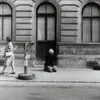
Aktion "Hallo Dulder!"
more...
1973
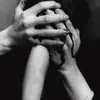
Aktion "Pinocchio"
more...
1973
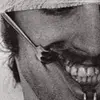
Self-portrait with Smiling-Aid (Selbstportrait mit Schmunzelhilfe)
more...
1973
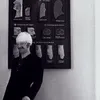
Aktion "Gifttanz" (Poison-Dance), Vienna
more...
1972
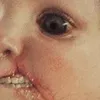
Helnwein exhibition in Vienna canceled after 5 days because of protests
A Helnwein exhibition in the Gallery of the "House of the Press" in Vienna, headquarters of Austrias biggest newspapers, is discontinued after five days because of strong protests by visitors and employees and finally strike threats by the workers council
more...
1972
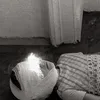
Scratches and scrapes a series of self-portraits and child-photos with luminous stigma
more...
1972
Works on a series of pen and ink, crayon and pencil drawings
more...
1972
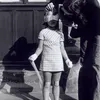
Aktion "Sorgenkind" in Vienna
more...
1971
Wo die Faust argumentiert
more...
1971
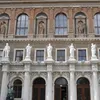
Aktion "Die Akademie brennt" (Academy Burning)
With few fellow students and several activists, Helnwein stages a rebellion at the Akademy of Fine Arts in Vienna. The trigger was the refusal of the professors to allow student representatives a say in the entrance examinations. The event is carefully planned and choreographed by Helnwein. Professors are locked in, doors are set a blaze, the building is filled with smoke, paint splattered on the walls, windows smashed and serious damage is done. Panic breakes out and Riot police moves in. The Austrian media reported on the “student revolt at the Academy of Fine Arts". The next day Helnwein and his colleagues get picked up by custodians of the university and charged.
Hertha Firnberg, Austrian minister of art and science, declares their action to be political and all investigations and criminal proceedings are dropped.
more...
1971
In the exhibition "Zoetus" at the Kunsthalle "Künstlerhaus" in Vienna unidentified people put stickers with the words "Entartete Kunst" (degenerate art) on Helnwein's paintings
more...
1971
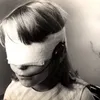
First performances ("Aktions") with children. At first in his studio and later in the streets of Vienna
In his essay "The Divided Self", art-historian Peter Gorsen states: "As shown by his many actions with children in public, the group portrait with children has become a permanent subject for Helnwein. His commitment to the rights of children has nothing to do with "infantomania", as manifested in a socially isolated "children's culture", in a commercialized "children's media", in the child as a pedagogical subject, and in the ideological transfiguration of one's own childhood.
Helnwein must also be set apart from Viennese Actionism as he does not reduce the child's body to mere aesthetic material (as in the "material actions" of Günter Brus, Hermann Nitsch, and Otto Muehl), but instead endows it with a symbolic function in representing defenceless, sacrificed man. The sexualistic concept of the child in (Freud-influenced) "Viennese Actionism" is countered by the moralist and utopian Helnwein with the child as a sexless salvation figure. The tendency to a patriarchal transfiguration and idealization of an innocent, sacrificing child-man embracing children and artists as the sole creative interest group is the main feature distinguishing Helnwein's world of pictures from the pan-sexualism and libido anarchy of the Vienna action group of old."
more...
1971
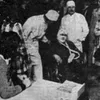
At the opening of an exhibition at Galerie D in Mödling, near Vienna, the mayor has Helnwein's paintings confiscated by the police
more...
1971
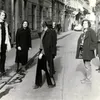
Founding member of the artist group "Zoetus" in Vienna
more...
1971
Konfrontationen
Group Show
more...
1971
Kardinal König Prize
more...
1970
1970 Prize of the Academy for Fine Art, Vienna (Meisterschul-Preis)
more...
1970
Helnwein begins to work on a series of hyper-realistic watercolor-paintings of bandaged and wounded children
more...
1970
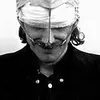
First photographic self-portraits with bandages and surgical instruments
more...
1970
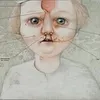
Works on a series of hyper-realistic paintings of wounded children.
Intensive research into the various forms of trivial aesthetics such as comics, advertising, and film; puts this experience into his work. Watercolor: "Unkeusches Kind" (Unchaste Child), "Peinlich" (Embarrassing), "Gemeines Kind" (Mean Child), "Der Eingriff" (Intrusion). First oil paintings: "Mutter, Du hier?" (Mother, Is It You?); "Führer, wir danken Dir!" (Führer, We Thank You!).
more...
1970
First one man show at Galerie Atrium, Vienna
more...
1970
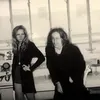
Helnwein marries Ilse R
more...
1969
Helnwein studies at the University of Visual Art in Vienna (Akademie der Bildenden Künste, Wien).
more...
1969
Helnwein travels to Istanbul
more...
1969
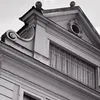
Helnwein moves into his first studio in Vienna
more...
1968
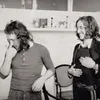
Walks with his friend Manfred Deix from Venice to Vienna over several days without eating or sleeping
more...
1967
With his own blood Helnwein paints a picture of Adolf Hitler ("Führer"). The Professors are discomposed and the school administration confiscates the painting
more...
1966
First "Aktions" for small audiences
Helnwein cuts his face and hands with razor blades, etching- and wood-engraving tools. First bandaging happenings.
more...
1965
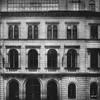
1965 to 1969 Studies at the "Higher Federal Institution for Graphic Education and Experimentation" in Vienna
("Höhere Bundes-Graphische Lehr- und Versuchsanstalt, Wien" )
more...
1960
Helnwein tries different high-schools but doesn't really understand what for and fails.
more...
1956
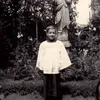
Strict Roman Catholic upbringing
Kindergarten with nuns, becomes altar boy, goes to school with the "School-brothers"...
more...
1955
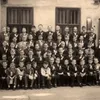
First year at school with the Roman Catholic "School-Brothers"
more...
1954
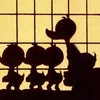
His father hands him his first Donald Duck comic-book
And Helnwein has his Damascus experience:
"Opening my first Donald Duck comic book felt like seeing the daylight again for someone who has been trapped underground by a mine-disaster for many days. I squinted cautiously because my eyes hadn't gotten used to the dazzling, bright sun of Duckburg yet, and I greedily sucked the fresh breeze that came drifting over from Uncle Scrooge's money bin into my dusty lungs. I was back home again, in a decent world where one could get flattened by steam-rollers and perforated by bullets without serious harm. A world in which the people still looked proper, with yellow beaks or black knobs instead of noses. And it was here that I met the man who would forever change my life - a man who, as the Austrian poet H.C. Artmann put it, is the only person today that has something worthwhile saying: Donald Duck."
more...
1950
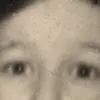
Helnwein spends his childhood between depressed post-war Vienna and the farm of his grandparents in the countryside of rural Lower Austria
more...
1949
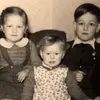
His father Joseph Helnwein works at the Austrian Post and Telegraph administration, his mother Margarethe is a housewife
more...
1948
Born October 8, 1948 in Vienna
more...