05/01/2013
Albertina Museum Vienna
Looking Inside: A Conversation with Gottfried Helnwein
Howard N. Fox
On the Occasion of the Retrospective of Gottfried Helnwein at the Albertina Museum, May 25, 2013
GH: Vienna, the city I was born into right after the Second World War was a dreary place. The long shadows of the Third Reich were still cast over the city and the smell of death was in the air. I remember the empty streets, ruins of bombed houses, rust, rubble, no colors, no sound. There was a sense of despair. All the grown-ups I saw seemed silent, dark and broken. I never saw anybody laugh, I never heard anybody sing. It was a world that stood still, as if undecided yet if life should go on. What I didn't know then, was that my parents’ generation had recently lost two World Wars in a row and just completed the biggest genocide in history. The only art that I saw in my early childhood were 19th century paintings of tortured, blood-soaked martyrs and saints on the wall of cold churches were I spent a good time of my childhood. Until one day some PR-officers of the occupying American forces, God bless their hearts, thought it a good idea to bring some American culture, say Walt Disney's comic books, to us Nazi-kids in Germany and Austria to re-educate us. Especially the Donald Duck stories by the ingenious Disney artist Carl Barks hit us children like a comet and turned our world upside down. It was a culture shock. For me it was also an epiphany, a religious experience. Opening my first comic book was like leaving my parents’ yesterday-realm of death and darkness and stepping into a bright and infinite future. For the first time I experienced color and speed and the power of fantasy and imagination.
12/01/2012
Auxiliary Magazine
GOTTFRIED HELNWEIN
Jennifer Link
Editor in Chief
INTERVIEW
Auxiliary Magazine: Many pieces of your work are intimate glimpses to fascist figures and groups. Is this a theme you still feel is relevant?
Helnwein: Mussolini once said: "Fascism should rightly be called Corporatism, as it is the merger of corporate and government power". Well, look around - does it look like there is a growing influence of bankers and big corporations on our governments and our lives? The new Fascists will not come as grim looking brutes in daemonic black uniforms and boots, they will wear slick suits and ties, and they will be smiling.
10/18/2012
Milenio
“El arte, un medio para tomar conciencia” Gottfried Helnwein
Emiliano Balerini Casal
Cultura
El artista austriaco expone en el Museo Nacional de San Carlos su muestra 'Fe, esperanza y caridad', compuesta por 34 imágenes que provocan gran impacto.
Ciudad de México • Considerado uno de los artistas plásticos y fotógrafos hiperrealistas más polémicos de la actualidad, Gottfried Helnwein (Viena, 1948) se encuentra de visita en México para inaugurar hoy la exposición Fe, esperanza y caridad en el Museo Nacional de San Carlos.
Se trata de una retrospectiva integrada por 34 imágenes intervenidas que muestran la realidad humana, en especial la de los niños. Sus obras también se podrán ver en la Galería Hilario Galguera y en el Monumento a la Revolución.

10/16/2012
Esquire
Gottfried Helnwein y su Canto de la Aurora
Sandra Cerisola
Redacción
El artista vienés se presenta en la ciudad de México. Hablamos con el galerista Hilario Galguera sobre la relevancia de estas exhibiciones
Para Gottfried Helnwein el arte tiene un sentido humano y altruista. Pero en la exposición llamada El canto de la aurora, que se presentará en la galería Hilario Galguera, no esperen encontrar escenas obvias. El artista vienés -conocido ampliamente por su trabajo con músicos como Rammstein y Marilyn Manson- mostrará 12 pinturas hiperrealistas, inspiradas por el espíritu de la Europa de la post guerra, donde vemos imágenes de niñas que muestran la inocencia de la infancia, pero de una manera sutil pero conmovedora también la violencia y la destrucción. Hablamos con Hilario Galguera sobre lo que propone Helnwein en esta exposición.
10/16/2012
Esquire
Interview with Gottfried Helnwein
Sandra Cerisola
English Version
GH: People are constantly bombarded with millions of images of the daily horror from around the world, through mass media, television, internet, which makes us feel helpless, because it tells us there is nothing we can do about it.
Art is the exact opposite; with art you can approach any subject, no matter how horrible, because aesthetics can transcend and transform any uglyness, into something beautiful, it can elevate, inspire and might be able to open doors to understanding. My images always dealt with what's happening around me, I wasn’t making things up.
From early childhood on when I looked at people around me I perceived them as suffering in some way, without being conscious about it. I thought that most people seemed to be somewhat damaged , and that’s what I started to show in my paintings.
10/12/2012
Deutsche Zeitung in Mexico
„Es ist die Welt die schockiert, meine Arbeit ist nur die Antwort darauf.."
Lisa Hagen
Interview mit Gottfried Helnwein
Helnwein: "Ich war 18, als ich beschloss Künstler zu werden. Davor sah ich keinen Platz für mich in der Gesellschaft. Ich konnte zwar immer gut zeichnen, aber Künstler wollte ich nie werden, die Vorstellung, ein Leben lang mit Rauschebart vor einer Staffelei zu stehen und irgendwelche abstrakten Bilder zu malen, erschien mir grauenhaft. In meinen Tagträumen in der Schule sah ich mich eher als Revolutionsführer, der das ganze System zum Einstürzen brachte".
10/10/2012
Chilango Magazine
Interview with Gottfried Helnwein
English Version
My work process is based on passion, intuition and curiosity. I don't have a specific plan or method. I just keep moving forward, and each work is a new attempt to get closer to my basic vision, knowing that I will never fully reach it.
04/06/2012
NEWS
Interview - Gottfried Helnwein spricht über die Rolling Stones
Evie Sullivan
Los Angeles
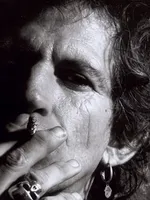
Ich kann mich erinnern, als dann die Beatles kamen, war das eine Erschütterung, eine Ungeheuerlichkeit, die bei der Generaton meiner Eltern Panik auslöste. Immer wieder hörten wir die Rufe: ‚Die gehören vergast, unterm Hitler hätte es das nicht gegeben!’ Wir ließen uns die Haare wachsen und wurden auf der Straße auch immer so begrüßt: ‚Ihr Gesindel, Ihr gehört's vergast!’ Ich war eigentlich kein Beatles-Anhänger. Ich fand sie interessant, aber erst der Auftritt der Stones war für mich das Schlüsselerlebnis.
Es gab ja damals zwei Lager, die Beatles und die Stones Anhänger, die sich eine Zeitlang feindlich gegenüberstanden. Ich war immer auf der Seite der Stones. Die Beatles hatten ja am Anfang dieses gestylte, uniforme Band-Image mit ihren Pilzköpfen, schmalen Krawatten und den schicken Anzügen.
Die Stones waren ganz anders, wild, verwahrlost, ungezügelt, verwegen. Es war die Ahnung einer Zeit des Ungehorsams, des Widerstands, der Rebellion. Sie haben uns den Geschmack von Freiheit vermittelt. Ihre Lieder waren härter, aggressiver, anarchistischer. Sie nahmen sich einfach alle Freiheiten und alle Mädchen und verhöhnten die Welt unserer Eltern. Und sie sahen vor allem genau so aus, wie wir gerne ausgesehen hätten. Für uns biedere, eingeschüchterte Nachkriegskinder, die wir wie Ministranten da standen, mit roten Ohren und Hitlerjugend-Haarschnitt - vorne ein Schopf und hinten bis zum Wirbel hinauf geschoren - für uns waren sie wie Götter, die aus einer höheren Welt zu uns heruntergestiegen waren.
03/01/2012
Playboy
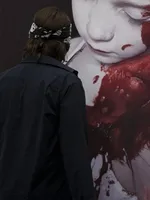
Ich bin gläubiger Donaldist
Stefan Skiera
Interview mit Gottfried Helnwein
Helnwein: Schmerz und Gewalt gegen Wehrlose sind die zentralen Themen meiner Arbeit.
In den Siebzigern haben meine Bilder und Aktionen Entsetzen hervorgerufen, weil man dachte, ich sei pervers. Der Missbrauch von Kindern wurde damals von der Gesellschaft und den Medien vollkommen verschwiegen. Mittlerweile ist einiges von diesem systematischen Terror gegen Kinder ans Licht gekommen. Sie wurden in der Psychiatrie gefesselt und in dunkle Räume gesperrt und Bettnässer mit Elektroschocks behandelt. Die österreichische Psychiaterin Maria Nowak-Vogl hat Kinder absichtlich mit Malaria infiziert und in ihrem "Kreuzzug gegen Onanie" Röntgenstrahlen, Psychopharmaka und Tiermedikamente bei kleinen Mädchen eingesetzt.
02/10/2013
VICE
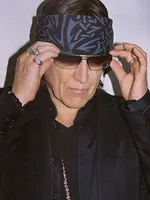
Gottfried Helnwein
David Bogner
Interview David Bogner, Fotos von Bree Zucker
11/01/2011
Partime Magazine
Interview mit Gottfried Helnwein
Linda Cooper
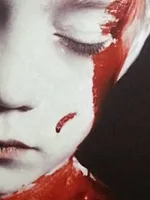
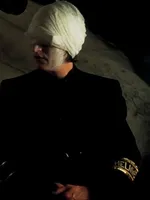
Well, I grew up in an interesting religion, called Christianity. The first art I saw as a little child were the paintings of tortured saints in the church; blood drenched, squirming people in colorful drapery, gazing towards heaven, grinning in ecstasy. The center of the worship was a man nailed onto a wooden cross, crowned with a crest of thorns piercing his head. And again, blood is dripping all over his skinny body. For 2000 years people in the western world grew up with iconography, songs and rites that glorify blood, pain and death, and God, the creator of the whole universe is allegorized as a bearded man dying in anguish. In this tradition, blood got a deeply symbolic and mystic significance and meaning.
The greatest artists of the Occident have depicted blood in so many aesthetic variations in the most beautiful paintings, so that these images are now deeply imbedded in our collective subconscious memory.
10/11/2011
FIRST magazine
Der Malerfürst
Susanne Rabl
Interview mit Gottfried Helnwein auf seinem Irischen Schloss
"Als ich in den 1990er Jahren nach Irland kam, war es das freieste Land der westlichen Welt. Es gab nicht einmal den Ansatz irgendeinereiner Bürokratie. Es existierten überhaupt keine Formulare, die man hätte ausfüllen können, man konnte ohne Führerschein Autofahren und Künstler waren von der Steuer befreit. Ich hatte 10 Jahre lang keinen einzigen Polizisten gesehen, ich war mir gar nicht sicher, ob es soetwas hier überhaupt gibt. Das war mein Land. Ich komme nämlich sehr gut ohne Bevormundung, Überwachung und Kontrolle irgendwelcher Behörden zurecht. Die EU hat aber in den letzten Jahren dafür gesorgt, dass die Party hier vorbei ist und einige Banker haben das Land vor kurzem auch noch bankrott gemacht. Sonst ist es aber immer noch gemütlich hier."
02/03/2011
Sacramento News & Review
Painting innocence
Shoka
Photo-realist Gottfried Helnwein uses children for perspective in his artwork